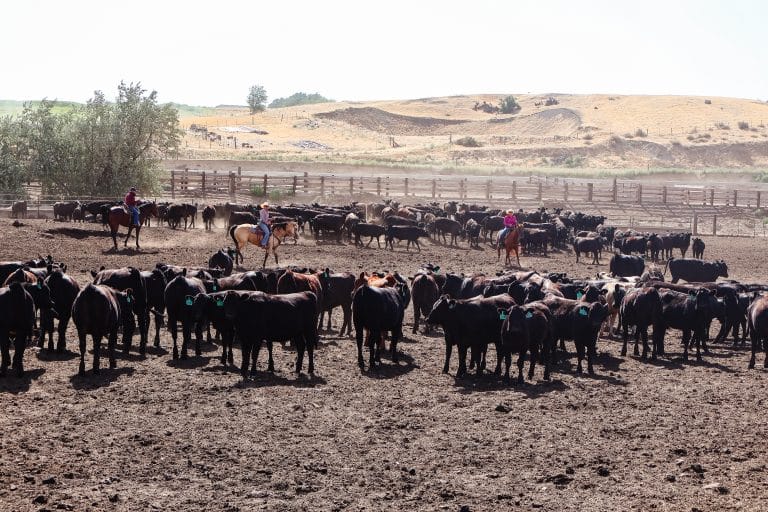
Congestive heart failure in finishing beef calves is increasing, a condition that used to be known as “brisket disease” and only described in cattle populations at higher elevations of over 5,000 to 7,000 feet. Recently, deaths from congestive heart failure have been reported in feedlots at low and moderate elevations.
It has been estimated that congestive heart failure is responsible for 4% of feedlot mortality, causing significant economic losses to the feedlot industry, because the majority of these deaths occur late in the finishing period right before slaughter and there appears to be more impact on the highest performing cattle of mostly Angus ancestry.
An analysis in the Journal of the American Veterinary Medical Association of the risk factors and timing of heart failure in feedlots in the U.S. and Canada showed that average heart failure occurred at 179 days on feed. Beef breeds had higher rates than dairy or dairy/beef crosses in each year of the analysis.
The impact of risk category for bovine respiratory disease (BRD) was influenced by feedlot elevation, where high risk cattle for BRD had the lowest heart failure rate at low elevation, but risk categories for BRD did not affect rate of heart failure in moderate and high elevation. The authors concluded that risk of heart failure has increased over the last 10 years and that these deaths are occurring later in the feeding period.
Another study published in the journal Frontiers in Genetics analyzed a heart scoring system and showed that increasing heart scores were correlated with the percentage of Angus ancestry in commercial finishing cattle and can be used as a selection tool to reduce heart failure risk that would not interfere with selection for carcass and production traits.
Pulmonary arterial pressure (PAP) is also considered a marker for congestive heart failure risk. PAP has been used as an indicator trait for pulmonary hypertension at high altitudes (i.e., brisket disease) and the American Angus Association publishes an EPD for PAP as a selection aid. It is thought that PAP can also be used as a selection tool for heart failure at lower altitudes.
The relationship between PAP and feedlot and carcass performance at moderate elevations was examined by Briggs and others at Colorado State University. This analysis also shows that PAP is similar in heritability to production traits like feedlot performance and feed intake and will not negatively affect feedlot performance and carcass quality.
The increasing incidence of congestive heart failure in feedlot cattle is a challenge to the beef industry for economic reasons like death loss and reduced performance but also because of reduced animal welfare. The genetics of heart failure appear to be unrelated to performance and carcass quality traits, so genetic selection and breeding will reduce heart failure rates without compromising performance and beef quality. — Paul Beck, Oklahoma State University Extension beef cattle nutrition specialist