The California Beef Council (CBC) recently hosted its Pasture to Plate Beef Tour, an immersive experience designed to educate foodservice, retail and nutrition professionals about the beef production process.
“The tour offers the beef industry a chance to tell the true story of the beef lifecycle to the people that work to keep beef on consumer’s plates,” Bill Dale, CBC executive director, told WLJ. “For over a decade, the CBC has continued to support this immersion experience as it has proven time and again that opening our doors generates trust in what we do, solidifying attendees’ commitment to our product.”
The tour, which started in 2013 with a grant from the Federation of State Beef Councils, reached its peak this year in April with a record-breaking 40 participants. The tour serves as a platform for an open and transparent dialogue about the beef industry, featuring a diverse range of stops, including a cow-calf ranch, dairy farm, feedyard and beef processing plant. Attendees also heard from guest speakers shedding light on current beef topics and had opportunities to interact with cattle ranchers and dairy producers throughout the tour.
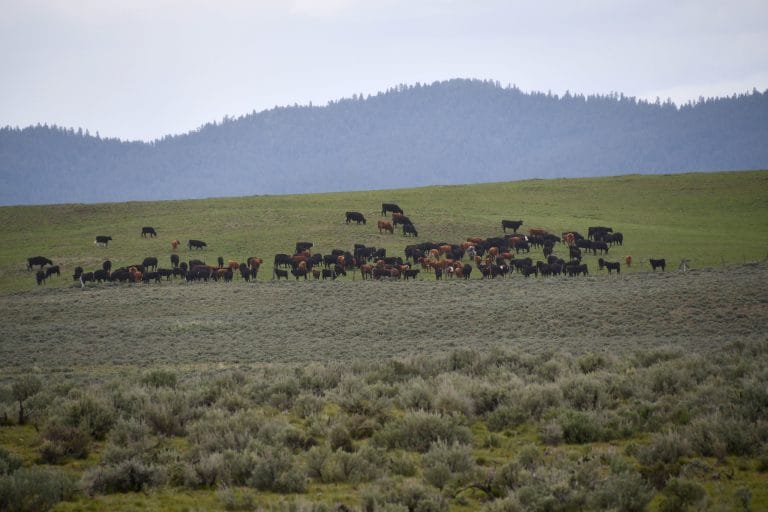
The first evening was a unique experience at Buchenau Ranch in Madera, CA. Michele Lasgoity and her husband, Mark Peters, shared the story of their ranch and beef stocker cattle herd and cow-calf herd. Participants witnessed a cattle handling demonstration, where a few head were run through the chute and onto a scale. Lasgoity explained their sustainable cattle-raising methods, which include rotational grazing based on grass conditions and raising cattle with the goal of no antibiotics.
The second day began with a visit to Rib-Arrow Dairy, a fourth-generation operation in Tulare, CA, that ships its milk to Land O’Lakes. Attendees were given a tour of the milking parlor, an explanation of the dairy cow life cycle and the importance of the cow’s comfort, and the commodity barn, where they learned about upcycling byproducts for cattle feed and the diets of dairy cows.
The next stop was Grimmius Cattle Company in Strathmore, CA, where participants were given a tour of the facility hosted by Chief Operating Officer Austin Flores and Dan Altena, a veterinarian at Valley Veterinarians Inc. Attendees were told about the importance of dairy calves and beef-on-dairy crosses. Calves are raised in calf hutches for 60 days and heifer calves are sent back to local dairies while the steer calves are raised longer and then sent to feedyards.
The afternoon’s first stop was at Overland Stockyard in Hanford, CA, where participants could witness a dairy auction. They also learned about what types of cattle come to the auction, who the buyers and sellers are at the sale barn and on video auction, and about price discovery by understanding what determines cattle prices.
The second day’s tour concluded with an enlightening talk from Frank Mitloehner, director of the CLEAR Center and professor and air quality specialist in the Department of Animal Science at the University of California, Davis. Mitloehner’s discussion on methane emissions from cattle and the industry’s efforts to reduce greenhouse gases provided an educational component to the tour, dispelling myths and providing a deeper understanding of the industry’s environmental impact.
{{tncms-asset app=”editorial” id=”e39cae6c-1d2e-11ef-82fa-6b0119c95804″}}
The final day began with a tour of Harris Ranch Feeding Company in Coalinga, CA, an 800-acre facility with a capacity of 120,000 head rotated twice every year. Many of the facilities were designed by Dr. Temple Grandin for better cattle handling and attendees were taught about the health of the animals when they arrived at the facility. Participants also learned about the ration cattle are fed, watching the mill blend thousands of tons of dry materials used daily.
The tour finished at Harris Ranch Beef Company in Selma, CA. The plant processes about 1,000 head per day and attendees witnessed the slaughter process from where they arrived in the Grandin-designed yard to the finished product of boxed beef cuts. They saw the grading process, fabrication/cutting line, cold storage and the value-added products produced under the Harris Ranch name.
“The Pasture to Plate Tour was incredibly informative and beneficial,” Courtney Hernandez, Harris Ranch Beef Co. account manager, told WLJ. “Each stop provided a comprehensive understanding of various aspects of the beef industry. For me, the highlight was the guest speaker, who offered valuable insights that equipped me to advocate for our industry. This tour is particularly eye-opening for those unfamiliar with the intricacies of the beef industry.” — Charles Wallace, WLJ contributing editor