Editor’s note: Since publication of the story, the Dixie Fire has grown to over 450,000 acres and destroyed 545 structures, including most of the historic town of Greenville. CAL FIRE has reported the Dixie Fire is now the sixth largest in the state and that 6 of the 7 largest wildfires in California have occurred since 2020.
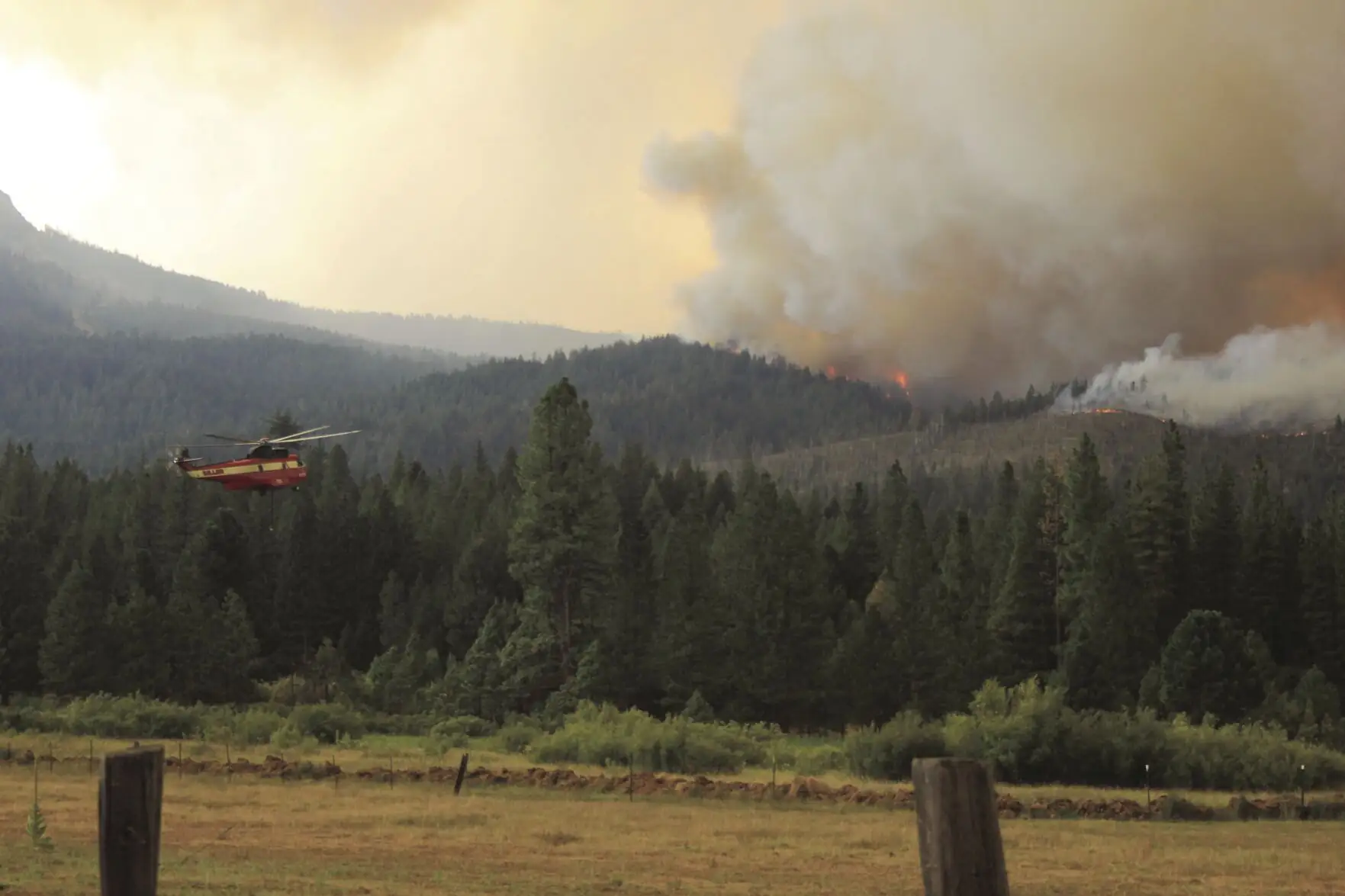
While California has largely been spared of disastrous wildfires affecting livestock producers, the livestock pass, or Ag Pass program, has proven valuable with the Dixie Fire burning in Butte and Plumas counties.
The Ag Pass program provides an opportunity for ranchers to access their cattle for welfare checks during disasters. Access is granted by the coordination of emergency personnel, law enforcement, Extension agents and the county agriculture commissioner. These personnel can provide alternate routes for ranchers to do welfare checks in the event of a problem with access due to backfires or fire personnel.
According to the California Department of Forestry and Fire Protection (CAL FIRE), as of Aug. 4, the Dixie Fire was 274,139 acres and 35 percent contained. Tracy Kay Schohr, University of California (UC) Cooperative Extension (UCCE) livestock and natural resources adviser for Butte, Plymouth and Sierra counties, told WLJ some livestock producers are in the mandatory evacuation area, particularly in the burn area of Greenville/Indian Valley of Plumas County.
Evacuations included the communities of Prattville, Big Meadows, Lake Almanor West and portions of High Lakes and Highway 70 along the Plumas/Butte County line. Evacuation warnings and stay-in-place warnings have been issued for portions of Butte and Tehama Counties. CAL FIRE reported 67 structures had been destroyed and 12,182 structures are threatened.
Schohr said the livestock pass program was developed last fall after the North Complex fire. The North Complex fire started by lightning on Aug. 17, 2020 and burned over 318,000 acres and resulted in the deaths of 16 people. Schohr said after legal review and training at the beginning of this year, about 50 passes were issued to ranchers in March. The Dixie Fire is the first incident to test the effectiveness of the program for Schohr.
“The concept of it is completely working,” Schohr said. “Before the fire became a major incident and was being managed by just the Butte County CAL FIRE, I got a phone call from a CAL FIRE captain who asked me, ‘Hey, I know there are cattle in this area, can you figure out whose cattle they were in Plumas County? The fire is headed that way. They probably have two days to get their cattle out.’ And so the relationships that we had built, working with CAL FIRE to develop the Ag Pass program really facilitated that communication back to me.”
Schohr said as the fire grew from a Butte County CAL FIRE incident, she, along with the Butte County agriculture commissioner, had been at the incident command center in Chico every day discussing livestock needs. She noted that this is something that did not occur during the North Complex and Camp Fires.
“When we have ranchers that have a need to get in to check livestock, or move livestock or transport them out, we are at the table and it’s a streamlined process to make that happen,” Schohr said.
Schohr provided examples of ranchers who were able to evacuate their cattle. A rancher was able to move his cattle out that were under contract with Western Video Market. Through the program, they were able to bring in the brand inspector, sales representative, a semi-truck and additional help for the rancher to fulfill the contract and sale. Another rancher who sold cattle due to drought was also able to move their cattle.
How the program works
Dan Macon, UCCE Livestock and natural resources adviser, told WLJ the livestock access program for Placer/Nevada/Yuba counties was developed based on examples from other counties in the state.
Macon stated the biggest difference is that the program encompasses three counties because of how CAL FIRE is organized administratively. Macon said that producers in his area also lease acreage in two if not three counties and it made sense to have a program that overlaps with CAL FIRE.
Another difference is the definition of a qualified commercial livestock operator, which includes 50 head of livestock (including in utero), 100 poultry or rabbits, or 50 beehives.
To become enrolled in the program, qualified commercial operators must complete an application with their contact information, assessor’s parcel number (APN) and/or physical addresses of grazing sites, livestock description and count, and season of use. Mandatory four-hour training is required initially and a one-hour refresher annually. Producers are also required to update registration annually and complete a questionnaire on the program use.
Qualified commercial livestock operators must also sign a release of liability acknowledging the risks and holding the county harmless.
Upon submitting a completed application and verification of training to UCCE, the County Agricultural Commissioner’s Office in the county in which the operation is headquartered will issue a Livestock Access Pass valid for the current calendar year.
Commercial Livestock Access Pass holders may be required to place a sign at the entrance to the property where commercial livestock are located to notify emergency personnel and animal control. The sign will state the animals are under the care of a “Commercial Ag Pass Holder.”
Macon said signage is in the early development stage and anticipates it will be rolled out next year after sponsorship or grant funding.
In the event of a wildfire where livestock are located in an evacuation zone, producers need to notify the County Agricultural Department and/or UCCE. As with the case with Schohr, UCCE will coordinate with emergency personnel and the Sheriff’s Department for the producer to use the Livestock Access Pass. The pass will need to be provided to law enforcement, fire personnel, or other emergency personnel at a point of entry to gain entrance to an evacuation zone or other restricted areas. If you intend to remove livestock from the evacuation zone (e.g., for veterinary care or an alternate location), notify UCCE or the county Agriculture Department.
Macon said there are about 80 producers who enrolled for training earlier this month and he hopes to have the program fully operational by Sept. 1. Macon noted that the Ag Pass would work for all three counties and producers who receive their Ag Pass this year will only need to complete a one-hour certification next year.
Schohr stated Plumas County has not officially launched the Ag Pass program, but conversations have happened. Schohr stated it had been a learning curve, but emergency personnel have recognized livestock and livestock producers “as a priority as this [Dixie Fire] goes on as it’s their livelihood, as well as an important part of the rural economy.” — Charles Wallace, WLJ editor