The latest weekly carcass weight data for the week ended Nov. 18 showed steer carcass weights at 902 pounds for the third consecutive week. This is likely the seasonal peak in carcass weights and is up 70 pounds from the seasonal low of 832 pounds in early May. The seasonal increase is typical but a bit stronger than the average seasonal increase of 55 pounds from the April/May low to the October/November peak over the last five years. Nevertheless, the current steer carcass weight is 16 pounds less than the same week last year. Steer carcass weights have been lower 44 of 46 weeks this year and the average decrease for the year to date is 14 pounds below last year. Heifer carcass weights are currently 13 pounds below last year and have been lower every week of the year, resulting in an average of 12 pounds lighter year-over-year for the year to date.
The decrease in carcass weights partially offsets increased cattle slaughter and moderates the increase in beef production in 2017. Steer slaughter is up 2.1 percent for the year to date; an increase of 310,000 head year-over-year. Lower steer carcass weights is the equivalent of 234,818 fewer head at last year’s carcass weights, meaning that the reduction in carcass weights is equivalent to increasing steer slaughter by 81,154 head or just 0.6 percent this year. Decreased heifer carcass weight is equivalent to a 110,067-head reduction in heifer slaughter, reducing the increase in heifer slaughter from the actual 12.2 percent year-over-year increase to an equivalent level of 10.5 year-over-year increase. As a result, year-to-date beef production is up 4.1 percent compared to the 5.3 percent increase in steer and heifer slaughter.
The drop in carcass weights in 2017 primarily has a short run effect on beef supplies. However, longer run, carcass weights also have implications for beef demand. Steer and heifer carcass weights have increased an average of 5 pounds per year for the last 50 years. Current production systems, technology, and genetics would suggest that there is no end in sight to just how big cattle can get from a production standpoint. There is no reason to believe that the drop in carcass weights in 2017 is a change in the long run trend of bigger carcasses, though it could represent moderation or a peak in carcass size. However, carcass size is more than just a question of pounds.
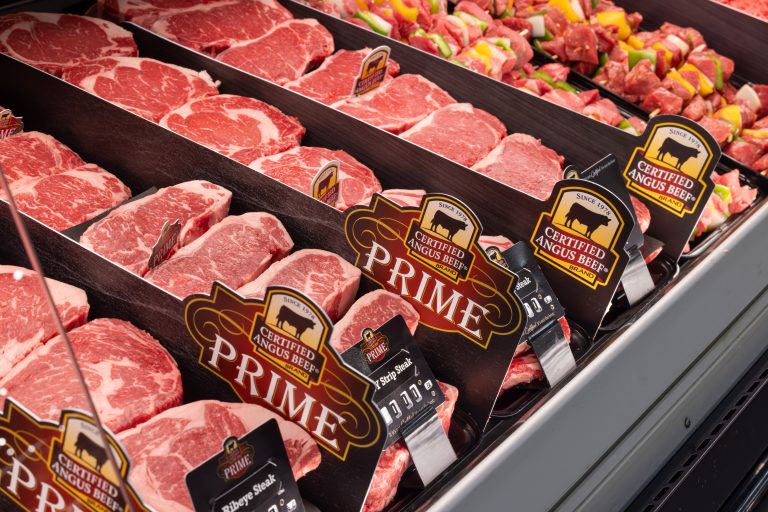
Bigger carcasses mean more pounds of meat per animal but it also means bigger product size for muscle cuts such as steaks. The industry has been hearing from consumers for at least two decades that they did not want bigger and bigger steaks. Grocery stores and restaurants both market beef, not just on a price per pound, but on a cost per package or plate. Big steaks are increasingly too big for a meal and are too expensive to purchase. Sometimes steaks are simply cut thinner to offset the increasing surface area and thereby reduce package or plate weight and cost. However, recently published research conducted at Oklahoma State University confirms that consumers prefer thicker steaks and cutting steaks thinner will ultimately have a negative impact on steak demand. Of course, bigger carcasses also increase other products such as trim for ground beef. More research is needed to determine the balance of products that optimizes carcass value relative to carcass size, but the tradeoff between lower steak demand and increased ground beef production suggests that the industry should pay attention to the demand limits of carcass size. — Derrell S. Peel, Oklahoma State University Extension livestock marketing specialist