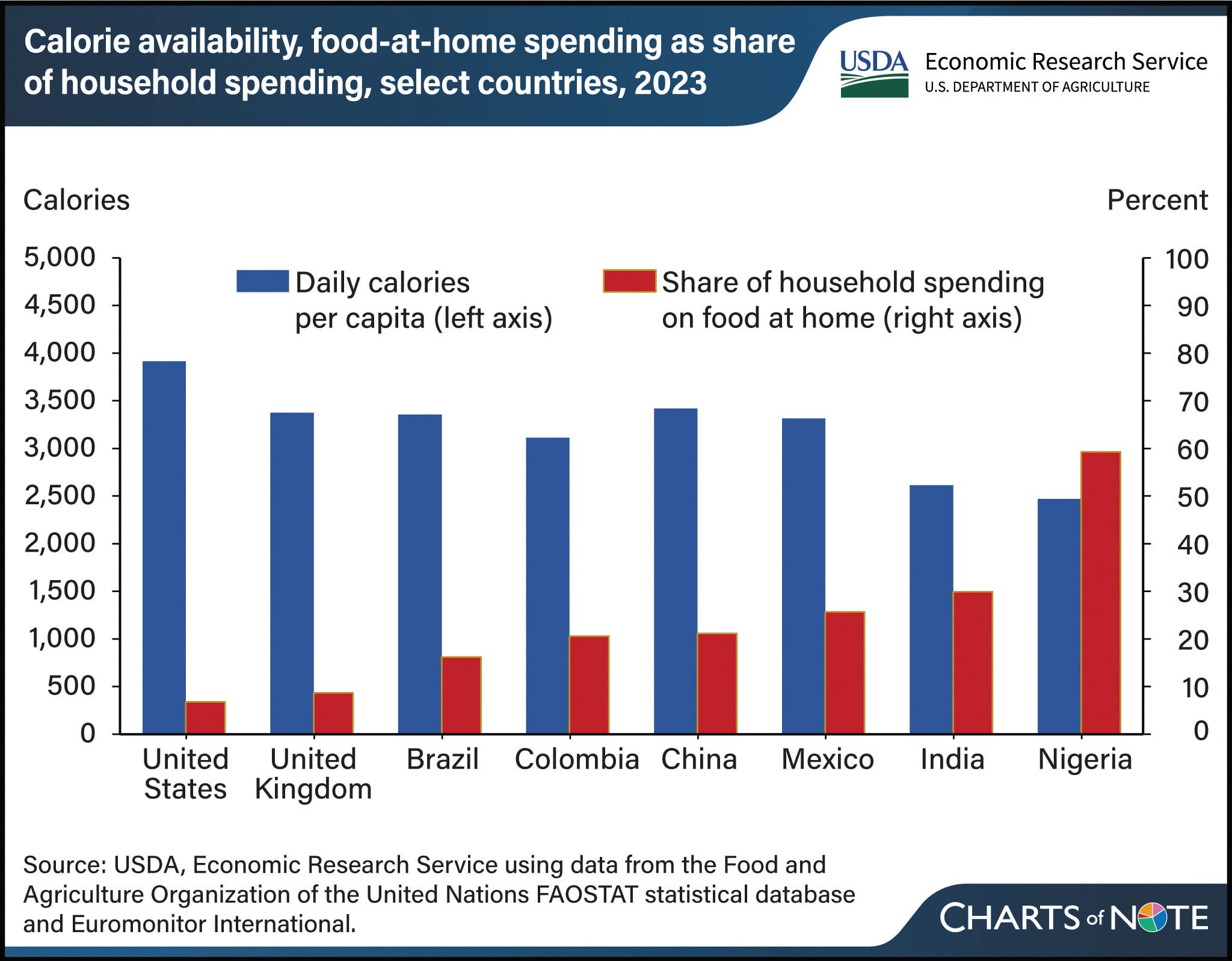
The way people allocate income to food varies widely around the world, reflecting economic disparities and different standards of living. In countries with higher disposable incomes, the share of household spending devoted to food purchased for preparing and eating at home is relatively low because food cost is smaller relative to income and people eat out more often.
In the U.S. and the United Kingdom, for example, food at home accounts for less than 10% of household spending. In lower income countries, at-home food’s share of household spending is much higher, with the share in Nigeria at nearly 60%.
Per capita calorie availability follows the reverse pattern, reflecting differences in supplies of food available for people to eat. U.S. per capita calorie availability in 2023 was among the highest at 3,914 calories per person per day, according to the most recent available data. Nigeria’s was estimated at 2,469 calories per person per day, an amount that reflected slight increases in recent years. — USDA Economic Research Service