
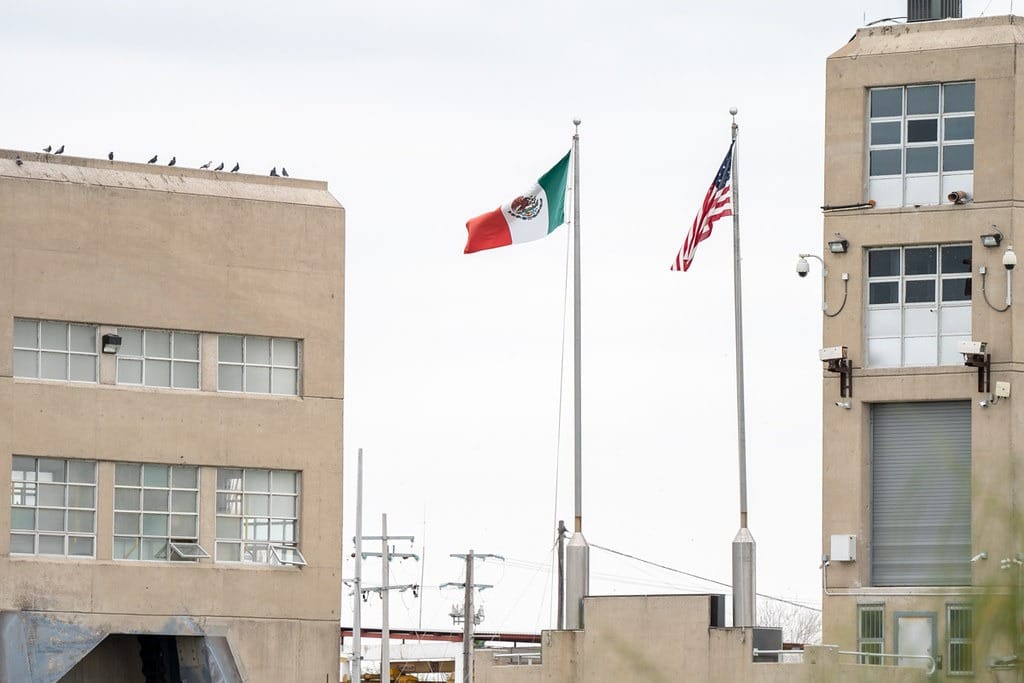
July 1 marked the start of the six-year review of the United States-Mexico-Canada Agreement (USMCA), when the three countries will decide whether to extend the trade pact or allow it to enter an annual review process that could lead to its expiration in 2036.
U.S. officials from the Office of the U.S. Trade Representative were expected to meet virtually with their counterparts from Mexico and Canada to launch the agreement’s review process.
“The Trump administration is expected to announce Wednesday that it will not extend the U.S.-Mexico-Canada Agreement (USMCA),” Reuters reported July 7. The move would start a 10-year clock toward the expiration of the 32-year-old North American free trade pact.
Signed into law in 2020, USMCA created one of the world’s largest free-trade blocs, supporting integrated North American supply chains for produce, meat and grain.
Mexico is the largest buyer of U.S. corn and the No. 1 destination for U.S. pork exports, while Canada is the top export market for U.S. ethanol and the No. 4 market for U.S. pork. Canada and Mexico make up nearly one-third of agriculture exports, valued at $60 billion, according to the Agriculture Coalition for USMCA.
“There are so many pieces of agriculture that are inherently uncertain, whether it’s weather, yields,” said Samantha Ayoub, director for workforce and business policy at the International Fresh Produce Association. Trade, she said, “is really the one space that provides certainty.”
Farm organizations across North America are urging an early renewal. The Agriculture Coalition for USMCA submitted a letter to President Donald Trump signed by 2,376 farmers after nearly 350 organizations from the three countries issued a similar appeal, arguing an early commitment would provide market certainty.
Canadian Federation of Agriculture President Keith Currie told DTN during his Washington visit, “It’s been in place for over 30 years, and it’s working very, very well for all three countries. Any disruption of that will affect everybody on all parts, all three borders, and we certainly don’t want to see that happen.”
Mexico has taken a more collaborative approach with the Trump administration ahead of this deadline, while relations with Canada have remained more strained.
Michael Harvey, executive director of the Canada Agri-Food Trade Alliance, said there is little indication the review will resemble the 2018 renegotiation. He represents 90% of farmers, ranchers, producers, processors and exporters who depend on trade in Canada.
“We’re not facing a situation right now where we’re talking about the treaty ending. What’s going on right now is if the three countries don’t decide to extend the treaty, then the treaty would expire in 10 years,” he told DTN.
Bilateral, not trilateral
Early signals suggest the administration is more interested in resolving trade disputes through bilateral agreements and executive trade actions than reopening the USMCA itself.
Harvey said separate U.S. negotiations with Canada and Mexico over trade irritants make another comprehensive renegotiation unlikely.
“There isn’t one of those big negotiation tables like there was the last time the treaty was renegotiated, but I don’t think one of those tables will take place, because I don’t think the treaty is going to get negotiated, renegotiated,” he said.
Trade irritants for Trump include reshoring auto manufacturing back to the U.S. For agriculture: Canada’s dairy quotes, Southeast American produce antidumping requests and current Mexico disputes with U.S. apples.
Harvey said recent comments from U.S. Trade Representative Jamieson Greer reinforce his approach.
“When looking at Greer’s statements, there’s a list of topics that they’re working through with Mexico and a list of topics that they’re working through with Canada,” he said, “but there’s no real indication that there’s going to be a renegotiation,” just individual deal-handling irritants in the short term.
Politico reported week that many senators and members of Congress would be OK with not approving the trade deal via congressional authorization, if it meant getting one extended quickly.
Sylvain Charlebois, an agrifood economist from Dalhousie University in Nova Scotia, argued that Canada has been too slow to engage the U.S., writing, “Diversification should remain an objective, but it cannot become an excuse to underestimate the importance of our largest customer.”
Ontario farmer Currie disagreed. “He (trade designee Dominic LeBlanc) assures me that conversations are happening, they’re quiet, they’re behind the scenes, they’re happening all the time. They’re not trying to trade through the media,” Currie said.
Trump and his advisers have also emphasized negotiating directly with trading partners, instead of renewing USMCA.
“There are parts of Mexico that are fundamental to us. There are parts of Canada, you know, their energy and other things that are important to us,” said Commerce Secretary Howard Lutnick defending Trump’s anti-USMCA comments. “It needs to be re-imagined. It needs to be readdressed,” Lutnick said.
Even if USMCA remains largely intact, the administration has demonstrated an increasing willingness to rely on executive trade authorities, unraveling the principles of free trade.
“I think what we have seen over the last year to 18 months is … a willingness to use, in the pursuit of creating that trade balance, a wider variety of trade tools,” said Darci Vetter, a former U.S. agricultural trade negotiator during the Obama administration, during a USMCA event at the Center for Strategic and International Studies.
Those authorities include Section 232 tariffs, which allow the president to impose import duties on products deemed a threat to U.S. national security; Section 301 investigations, which examine unfair foreign trade practices and can lead to retaliatory tariffs, such as current investigations involving Brazil; and antidumping and countervailing-duty cases, which address imports sold below fair value or benefiting from foreign government subsidies.
“I think you know that can be attractive when you are competing in a hard way,” said Vetter, who is now vice president of public affairs at Driscoll’s.
“It signals politically there’s much more openness to trade restrictions on products,” she said, with those tools providing “some certainty or advantage where they can.”
Vetter cautioned that greater reliance on targeted trade actions could eventually weaken broader trade agreements, the fully intact and free trade agreement farmers are requesting. — Jake Zajkowski, DTN ag policy editor


