
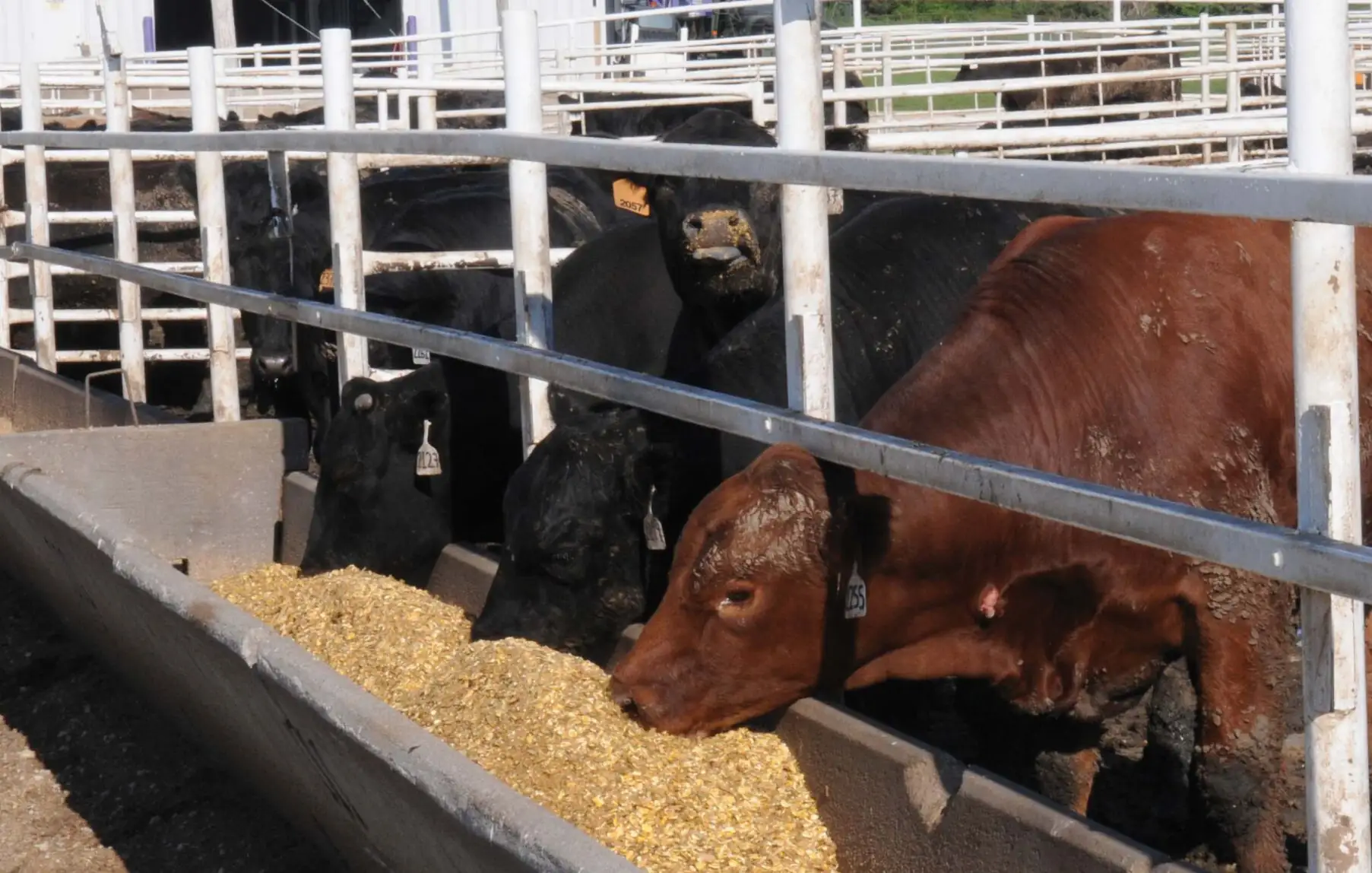
To help combat burgeoning costs for producers, Virginia Tech researchers are creating advanced computer algorithms and models to optimize cattle feeding.
Currently, dairy cattle are kept in different pens based on production and are fed according to those specific populations. But even within those pens, some cows are genetically inferior and require additional nutrients, such as protein, and others will require less than average. The economic impact of these variances is estimated to be between $2 billion and $10 billion yearly in the U.S.
The goal of this research is to deploy a self-learning control and diagnostic system that can identify cows with health or production problems, control feeding at the milking robots to generate individualized diets, optimize diets for each cow in the entire herd, and discover individual animal requirements for multiple nutrients.
“With the advancement of technology, our idea was that we now could tailor the feedings to the individual cow instead of the average population,” said Mark Hanigan, the David R. and Margaret Lincicome Professor of Agriculture in the Department of Dairy Science and a fellow in the Center for Advanced Innovation in Agriculture. “With our algorithm, we can feed each cow to their true requirements, and we should save money on at least half of the cows by not overfeeding them.”
Additionally, cows that are being underfed protein and other nutrients could produce better with these individually tailored feedings.
Robotic milking systems, along with other automated feeders, are being installed on farms and at production facilities. The advent of these feeders presents the opportunity to use an advanced feeding system to feed individual animals and assess individual animal responses to protein and amino acid supplies, which has not previously been conducted with dairy cattle, according to Hanigan.
A bonus to using these innovative algorithms is that by optimizing cattle nutritional intake, it could also reduce the animal’s excretion of nitrogen, potentially reducing emissions and lessening the animal’s environmental impact.
The researchers, including graduate students Letнcia Marra Campos in the Department of Dairy Science, Hayden Ringer in the Department of Mathematics and Sonal Jha in Synergistic Environments for Experimental Computing, will do fieldwork at Hillside Farm in Dublin, VA.
The work is being done in partnership with the College of Engineering’s Department of Computer Science, where faculty members are assisting with the software development and the aggregation of various data collection systems.
The collaboration doesn’t stop there.
An additional partner on the research is the University of Tennessee’s Department of Animal Science. Other campus partners include the Department of Mathematics, which is helping with the diet optimization algorithm. The Department of Computer Science is also assisting with anomaly detection.
“We’re starting to phenotype these cows,” Hanigan said. “We’re working with a couple geneticists because our plan is for this project to run for at least a decade and collect information on hundreds of thousands of cows so we can develop breeding values for nutrient efficiencies that are used in the industry.” — Virginia Tech Extension


