The American Sheep Industry Association (ASI) concluded its 2026 Annual Convention in Reno, NV, convening producers and partners for four days of working sessions focused on production realities, market dynamics, and policy priorities shaping the U.S. sheep industry. The week brought together 425 attendees for 60-plus meetings, alongside seven affiliated organizations meeting in parallel with ASI: American Lamb Board (ALB), National Sheep Improvement Program, National Sheep Industry Improvement Center, National Livestock Producers Association, National Lamb Feeders Association, Make It With Wool and Western Range Association.
“Convention is where our best ideas get pressure-tested and then sent back home to work,”
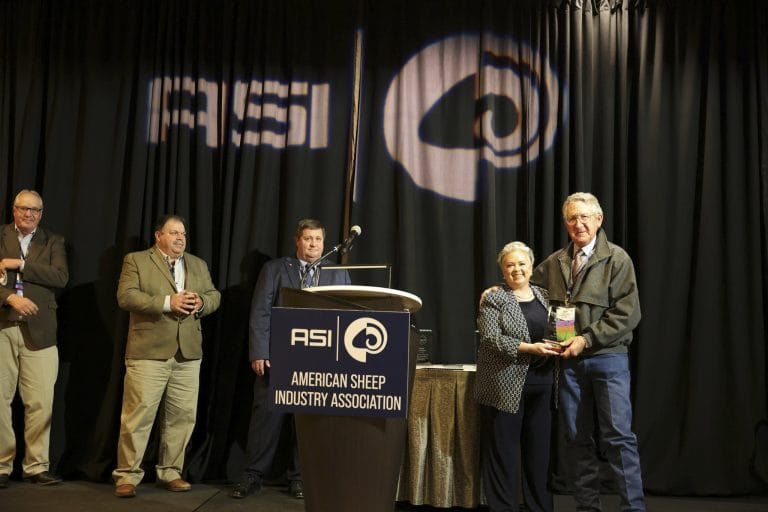
said Ben Lehfeldt, ASI president. In addition to council and committee work, convention week included a University of Nevada, Reno agricultural tour with 40 participants, member-driven fundraising that raised funds through ASI’s political action committee (RAMPAC) auction, and recognition of 10-plus industry awardees.
Policy programming at Convention reflected coordination across key legislative and agency stakeholders. Members heard a Washington, D.C. update from Rep. Mark Amodei (R-NV-02) and received additional perspective from Kate Covington (U.S. Senate Committee on Agriculture, Nutrition and Forestry legislative aide) and USDA Wildlife Services Deputy Administrator Jessica Fantinato, with discussions spanning policy, public lands, predator management and the continued growth of solar grazing.
Producers also heard directly from senior federal leadership on the challenges facing sheep operations and the role of partnership in turning producer input into action.
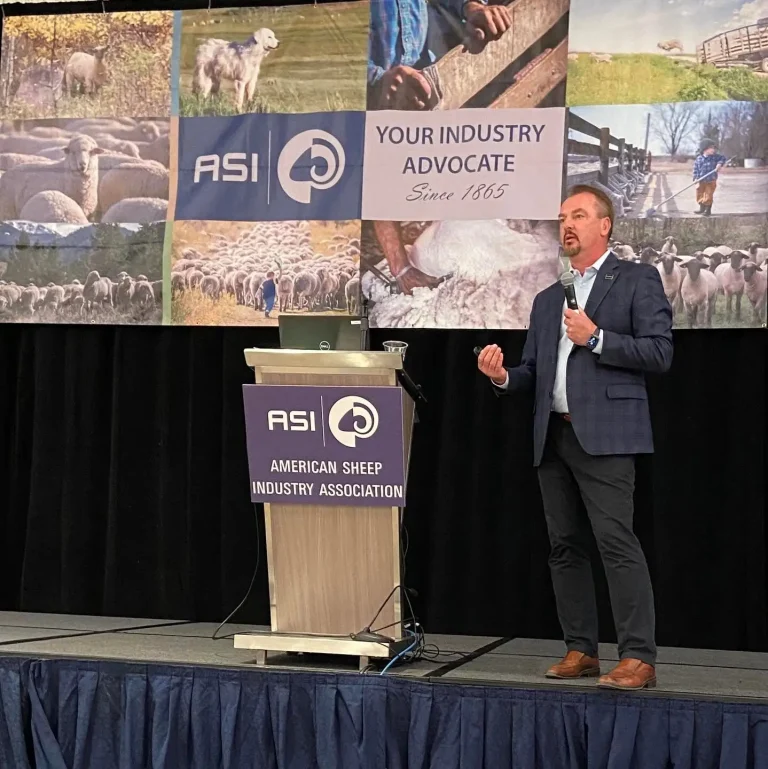
“Our job is to make your job easier,” said Dudley Hoskins, USDA under secretary for marketing and regulatory programs.
Hoskins oversees USDA’s marketing and regulatory programs, including the Agricultural Marketing Service and Animal and Plant Health Inspection Service (APHIS), the agencies most directly tied to animal health protection, market oversight and how regulations are implemented. His remarks stayed practical, focusing on the issues producers are managing right now: predator control, parasite challenges and the competitive reality that U.S. producers often operate under different rules than imported production systems.
Natural resources discussions addressed public lands, predators, the rise of solar grazing and updates from USDA Wildlife Services and ASI partners on regulatory and legislative issues affecting grazing access and producer tools.
American lamb
A major focus of the week centered on the American lamb supply chain and what it will take to expand reliable domestic availability while protecting and rebuilding demand across foodservice, retail and consumers. Conversations tied to long term industry planning emphasized the importance of collaboration, aligning productivity, product consistency and demand building so the full supply chain can respond when market opportunities grow.
“When demand grows, our job is to help the whole industry be ready for it, through smarter education, practical tools, and consistent marketing that keeps American lamb top of mind,” said Lynn Fahrmeier, ASI Lamb Council chair
ALB also previewed a new consumer storytelling video and shared early information on Sheep IQ, an upcoming educational hub designed to share best practices that support producer efficiency and long-term profitability.
Convention programming elevated New World screwworm (NWS) as an urgent preparedness issue. USDA APHIS veterinarian Dr. Linda Detwiler reviewed the current outbreak activity in Mexico and parts of Central America and the steps underway to prevent NWS from reaching the U.S. While there are currently no cases in the U.S., the outbreak region has reported impacts across livestock, wildlife, pets and even humans, with the Centers for Disease Control and Prevention noting more than 148,000 animals affected. ASI reinforced the message shared at convention: use official sources (including screwworm.gov) for updates and report concerns quickly.
“We’re closer than ever to ‘scrapie-free’ and we intend to keep it that way. At the same time, screwworm is a reminder that animal health threats can move fast. The best defense is staying prepared, informed producers, strong reporting, and staying connected to verified updates and guidance,” said Amy W. Hendrickson, ASI animal health, science and research programs manager.
Geneticist Dr. Brad Freking addressed a pivotal question: If the U.S. reaches “scrapie-free” status, how does it stay there? Key takeaways emphasized continued surveillance, traceability and producer participation, paired with ongoing use of scrapie-resistant genetics as a practical risk-reduction tool.
The most recent classical scrapie positive was detected in sheep in 2021 (and goats in 2019). A key “scrapie-free” benchmark is seven years without a classical case, which points to 2028 in sheep if no new cases occur. Annual national surveillance targets remain at 30,000-40,000 samples.
Wool
Wool-sector sessions reinforced the importance of domestic first-stage processing, including scouring and topmaking, as a foundational requirement for a resilient U.S. wool supply chain for consumers and the U.S. military. At ASI’s Wool Policy Forum, speakers discussed the behind-the-scenes forces shaping wool markets: domestic capacity, military demand, impact of tariff policy and innovation that expands end uses and new markets.
“Wool is moving into a specialty-fiber future, so our job is to understand the market forces, protect the supply chain that supports national defense, and make sure American wool stays in the conversation,” said Ashley Bullock, International Textile Group. — ASI