In the high desert sagebrush just north of Jordan Valley, OR, you will find Cow Creek Ranch Inc. The cow-calf ranch is always a busy place for Russell Martin and Marta Stoddart, who, along with their family, are dedicated to the cattle industry. Cow Creek Ranch is always seeking to increase its profit margin and stay ahead of the curve by using many tools to its advantage, including Red Angus genetics, crossbreeding and marketing programs.
Why Red Angus
Cow Creek Ranch has a rich history in the industry, as the multi-generation ranch started with Marta’s father, John Stoddart, who grew up cattle ranching in California. Later, he purchased a ranch in Oregon, and the family went back and forth until settling in Oregon. In 1978, the family purchased Cow Creek Ranch, located north of Jordan Valley, OR, to continue their passion.
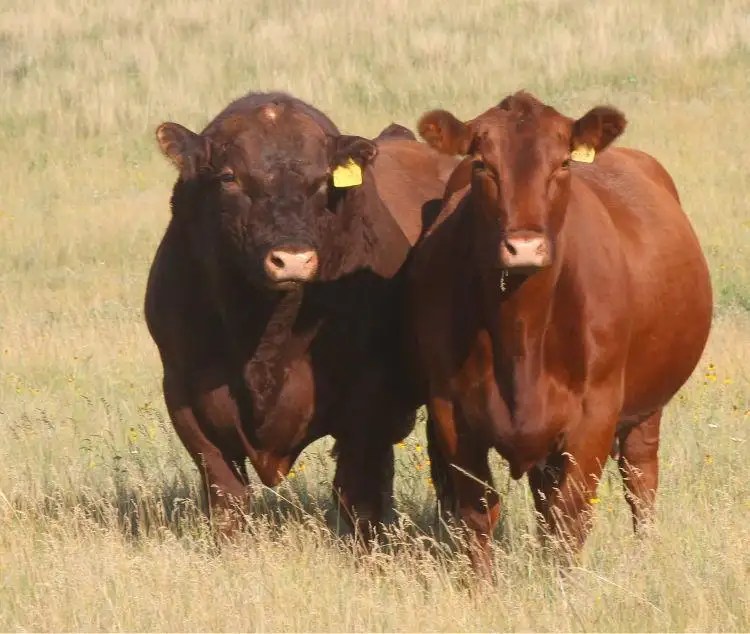
Originally, the cow-calf operation consisted of Hereford and Angus crossbred cattle. Brangus cattle were also thrown into the mix for approximately 10 years. Around 1990, John began looking in a new direction and researching the Red Angus breed. In 1992, they made the switch to Red Angus bulls.
“He was after the maternal carcass traits that breed is renowned for. This would have been when EPDs became the genetic selection tool of choice for producers,” said Marta.
To her advantage, she understood EPDs from her courses in college while completing her ranch management degree, whereas her father had to learn about EPDs through experience.
“We aimed to have cattle that would perform as mother cows and produce quality products on the rail through feedlot,” Marta added.
While attending college, Marta often traveled home to assist with the operation. After graduating, she worked at a feedyard for five and a half years. This exposed Marta to the other side of the cattle industry, which was vastly different from her cow-calf upbringing. During this time, John sent a pen of their Red Angus fall-born calves to that feedyard.
“In the early 1990s, they hung up pretty well in relation to where the cattle industry and genetics were at that time. They were about 70-75 percent Choice and Prime carcasses. Red Angus produced good quality and yield grade,” explained Marta.
Throughout the years, Marta’s family continued to utilize Red Angus genetics. “We have black cattle too, but we have always liked Red Angus, and they have done very well for us,” said Marta.
As the breed expanded, more Red Angus seedstock became available across the country. This allowed Marta to expand the bloodline in the herd and be more selective when purchasing bulls.
Today, Marta juggles numerous responsibilities, including all aspects of running the family business, ranch work and raising her kids. Oldest daughter Michaela and husband Sam Redmon support the family ranch while balancing college, breaking colts and work. Outside of school, sports and rodeo, Kaylee, Kaitlyn and Mathew work alongside their parents.
The power of heterosis
The Cow Creek Ranch herd remained primarily Red Angus until 2015, when the family added composite Simmental to the breeding program. The herd changed quickly by adding one-half to three-quarters blood Simmental bulls that are crossed with black or Red Angus. Heterosis used the strengths of the Simmental breed to complement the many great traits of Red Angus, creating a high-performing package and a heavier calf at sale time.
The ranch continued to run composite bulls for the next three to four years until they noticed the absence of some necessary maternal traits. To counter this, they backed off the composite bulls and ran straight Red Angus bulls, in addition to three Hereford bulls.
“This has created us a nice three-way cross with a current bull base of 25 percent Red Angus, 75 percent composite Simmental, plus the three Herefords,” says Marta.
The performance of the three-way cross continues to be used to Cow Creek Ranch’s advantage to this day.
“What we have seen from the carcass data, our Red Angus and composite cattle on feed have done really well. We know where we are heading with our genetics, and we are just trying to hold that line of maintaining maternal traits with quality carcass and yield grade in check while not falling too far one way or the other,” she adds.
Cow Creek Ranch aims to stay on top of carcass traits, raising cattle that produce Prime-Choice carcasses on the rail to maximize profit.
“With the Choice-Select spread being several dollars, we want to produce quality protein that performs in the feedyard and make several dollars when they hang them up,” said Marta.
Allied Access program
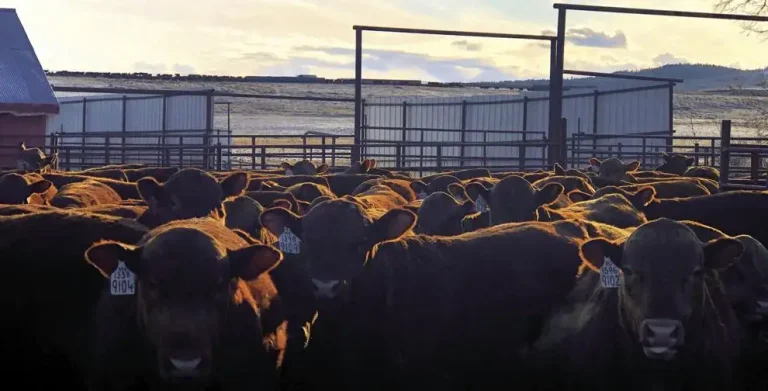
When the ranch was straight Red Angus, it participated in the reputable Red Angus Feeder Calf Certification Program. In 2015, Cow Creek Ranch added crossbreeding to the program, swapping the yellow tags for green Red Angus Allied Access tags.
Beginning in 2012, the Red Angus Allied Access program allows producers to effectively use crossbreeding while still being able to enroll those calves into a Red Angus Association of America age and source verification program. This value-added solution allows Cow Creek Ranch to take advantage of Red Angus programs while reaping the benefits of crossbreeding.
In the Allied Access program, calves qualify the day they are born, as long as calving dates are recorded and the calves are managed separately from other herds. Utilizing the Allied Access program allows producers to enroll in other verification programs. This low-cost program provides tremendous return on investment through its age and source verification benefits. There is no enrollment fee, and the only cost is a program dangle tag or program EID dangle tag combination.
“We started off with just the dangle tags but switched to EID when large packing plants like Tyson began to wand cattle, making it easier for our customers to retrieve their data,” said Marta.
According to the National Cattlemen’s Beef Association’s 2019 Consumer Beef Tracker, consumers consider how their food was raised when making meal decisions. Red Angus marketing programs provide transparency and validate the hard work producers put into raising a safe, high-quality protein.
“Using Red Angus program tags has provided us a way to have the cattle verified by a third-party verification system. That’s what buyers and the beef industry were pointing to. People want to know the origin and how the cattle were being raised,” said Marta.
The premise ID number tied to Cow Creek Ranch is recorded on all of the paperwork that follows the cattle from time of sale to slaughter.
Cow Creek Ranch has been selling their calves and yearling cattle on Superior Livestock for the last 33 years.
“Consumers or buyers can know that these are Red Angus-influenced cattle, and we think that has its advantage when marketing our calves. Anybody who follows Red Angus cattle or runs them knows that they perform,” explained Marta.
Reds at work
In southeastern Oregon high desert country, Marta believes that red-hided cattle perform better than black in the sagebrush terrain.
“They are a little more heat tolerant,” said Marta.
[inline_image file=”6ec8679be7f3413e1a613522393fb310.jpg” caption=”Moving pairs on the Cow Creek Ranch.”]
Summer conditions are hot and dry with little rain. Winter conditions feature cold snaps and varying amounts of snow.
“When it’s a below zero, cold and dry morning, we don’t typically start to feed until it has warmed up a bit. We have tried to feed in those cold conditions, and it’s tough. Cattle don’t want to move around exerting energy. They want to maintain body heat,” said Marta. They see a difference when they wait until the sun and temperature rises to roll out hay. “These cows have to adapt to a wide range of temperatures,” said Marta.
When selecting bulls, Marta prefers to find ones in a similar environment, but she has been pleased with the performance of Red Angus bulls from across the country. Phenotype is the most important factor she observes.
“I want those bulls to be thick from the girth to the flank, thick through the midsection and ability to carry that weight for a higher-performing bull,” says Marta.
Cow Creek Ranch double seasons their bulls with spring and fall breeding.
“It takes a little bit to keep those bulls in shape. They come off the mountain and they are hot or thin and just want to come home and lay around,” said Marta. The bulls are taken care of on pasture or with hay and protein blocks to recoup.
“If I don’t feel that they are where they need to be, we will rest them until the next breeding season and send others out. We have enough bull selection out there, so we can be selective,” said Marta. — Rudy Pooch