A federal appeals court has sided with New Mexico officials in a dispute over stream access, ruling that landowners cannot block the public from using waterways that cross private land and affirming the state’s authority to enforce public access rights.
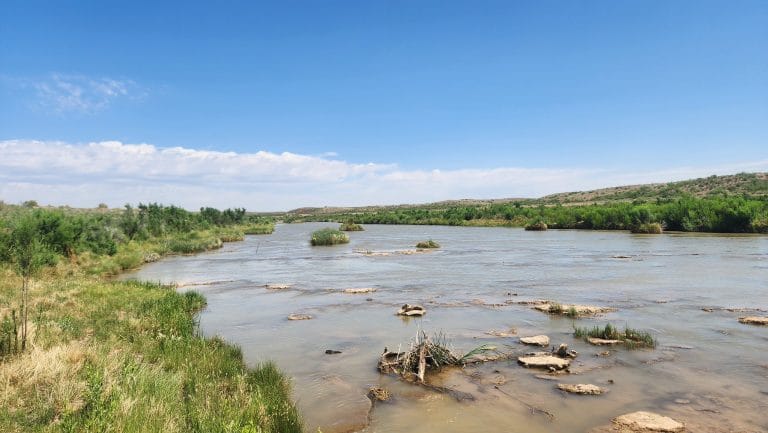
The case stems from a dispute between private property rights and public access. Erik Briones, Richard Jenkins and Roland Rivera own neighboring properties along the non-navigable Pecos River in San Miguel County, NM, while siblings Lucia and Michael Sanchez run a family ranch along the non-navigable Rio Tusas in Rio Arriba County. All five hold title to the streambeds beneath those rivers and say they long operated under a clear understanding that they could keep the public off that private ground.
That changed in 2022 after the New Mexico Supreme Court’s Adobe Whitewater decision, which expanded public access rights and allowed walking and wading along streambeds. In June 2024, the landowners filed suit against Attorney General Raúl Torrez and state officials, arguing the shift amounted to an unconstitutional taking. They sought to stop enforcement rather than pursue damages.
A federal district court dismissed the case in early 2025, citing a lack of standing and sovereign immunity, prompting the landowners to appeal.
Court addresses standing, rights
In its decision, the U.S. Court of Appeals for the 10th Circuit first worked through several key legal questions before getting to the heart of the case. The court said the landowners had standing, meaning they had shown sufficient harm to bring the case in federal court. It also rejected the state’s argument that sovereign immunity protected officials from being sued, allowing the claims to move forward against them.
However, despite clearing those hurdles, the court ultimately sided with the state. It found that the landowners’ arguments did not justify stepping in to override New Mexico’s definition and management of public access to its waterways. The landowners had argued the state’s new interpretation stripped them of their right to keep people off their property, which they say is a fundamental part of private ownership.
The court was not persuaded, holding that the dispute largely turned on questions of state law and the New Mexico Supreme Court’s authority to interpret those laws. The panel declined to override, which had opened the door to broader public access.
In a separate opinion, Judge Richard Frederico outlined the court’s reasoning and emphasized the limits of federal judicial review in disputes grounded in state law.
Federico wrote that while the plaintiffs raised real concerns about property rights, it is not the job of federal courts to rewrite state property law. Instead, he said their role is to decide whether a constitutional violation occurred; in this case, the plaintiffs did not meet that standard, leaving the New Mexico Supreme Court’s interpretation of the stream access law in place.
Reactions from parties
In response to the ruling, Pacific Legal Foundation (PLF) Senior Attorney Christopher Kieser told WLJ in an email that the decision did not adequately protect private property rights.
“While the Court of Appeals properly recognized that my clients have standing and that sovereign immunity does not protect the state officials, it unfortunately gave short shrift to my clients’ longstanding property rights,” Kieser said. “As we alleged in the complaint, New Mexico law recognized my clients’ rights to exclude the public from walking and wading on their private streambeds until 2022. We are disappointed that the Court of Appeals decision allows the state supreme court to cast aside these longstanding rights so easily.”
Kieser added that the plaintiffs are considering their options moving forward.
Torrez, meanwhile, called the ruling a “significant victory” for public access.
“The U.S. Court of Appeals for the Tenth Circuit upheld the State’s position, affirming that New Mexicans have a constitutional right to use and enjoy public waters,” Torrez said.
According to the statement, Torrez secured an injunction preventing them from erecting fences or other obstructions that interfere with public fishing and recreation on the Pecos River, posting signs suggesting public access is trespassing, or otherwise interfering with lawful use of the waterways. Landowners may still construct fencing for livestock management, provided it complies with guidelines set by the New Mexico Department of Justice (NMDOJ).
“The ruling supports New Mexico’s longstanding constitutional protection of public waters, and NMDOJ will continue to closely guard the public’s right of access to these cherished waterways,” Torrez said. — Charles Wallace, WLJ contributing editor