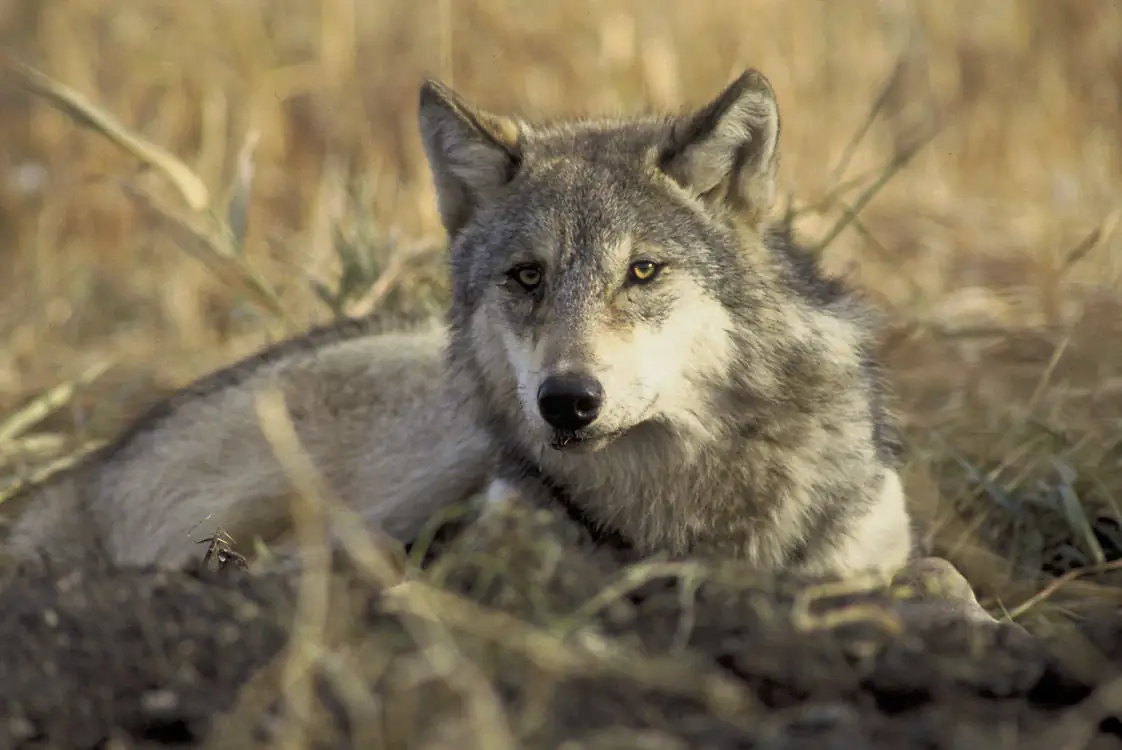
The Oregon Department of Fish and Wildlife (ODFW) has authorized the removal of four wolves from the Chesnimnus Pack in response to continued livestock depredations in Wallowa County. The move comes as depredations are increasing in the state and throughout the West.
ODFW’s authorization on June 17 comes after the department lethally removed a yearling male wolf from the Chesnimnus Pack on June 13. Despite the rancher using nonlethal measures along Crow Creek in Wallowa County and the removal of one wolf by the producer on May 3, the Chesnimnus Pack continued depredations. ODFW confirmed a calf was euthanized due to injury, and another calf was killed in a separate pasture on June 4. Both were attributed to the Chesnimnus Pack.
ODFW also confirmed other depredation incidents throughout the state in the last few weeks. On June 6, a livestock producer in Baker County found three injured calves with bite marks consistent with wolf attacks. According to ODFW, the attacks appear to be from the same event, and ODFW attributed the attacks to the Lookout Mountain Pack. The attacks are the first attributed to the pack since October 2021.
In Union County on May 31, the remains of a calf were found in the same pasture where depredations occurred earlier that month. Due to the lack of hide and muscle tissue, ODFW listed the attack as probable and did not state what pack could be responsible. Two separate incidents took place on May 30. One was in Umatilla County and was attributed to the Ukiah Pack, causing the loss of one sheep and a lamb. The second was in Grant County and was attributed to the Desolation Pack, which injured a calf with multiple previous bite wounds.
In northeastern Washington, the Togo Pack has injured or killed four calves within the last 30 days, resulting in the Washington Department of Fish and Wildlife (WDFW) issuing a lethal removal permit. WDFW Director Kelly Susewind said in a statement the department considered using nonlethal measures, but lethal removal was considered because the Togo Pack has been involved in five depredations in the past 10 months. Susewind issued a lethal removal permit on June 13 for the removal of one to two wolves.
“The lethal removal of one to two wolves from the Togo Pack territory is not expected to harm the wolf population’s ability to reach the statewide or local recovery objective,” stated WDFW.
WDFW said there were seven wolves in the pack as of their last count in 2021.
Two wolves from the Togo Pack—an adult male and a yearling female—were removed by WDFW in mid-June.
“It’s past time that something gets done to protect livestock, but unfortunately, I do not think that killing one or two of the pack is going to slow the attacks at this point,” Scott Nielsen, president of the Stevens County Cattlemen’s Association, told the Center Square. “(WDFW) waited too long, and they’ve now got a chronically depredating pack of wolves on their hands.”
Nielsen believes there are many other injuries and deaths to livestock that WDFW has not confirmed due to pressure from Gov. Jay Inslee (D), who has asked WDFW to find ways to reduce the number of wolves being euthanized.
In California, six incidents were investigated by the California Department of Fish and Wildlife (CDFW) on private land in eastern Siskiyou County in May. The department determined three incidents were not depredations, despite finding cow and calf carcasses. CDFW stated in their investigations there were no wolves present near the estimated time of death. A confirmed depredation occurred on May 29 with a calf that had bite wounds on its carcass, and CDFW confirmed the presence of wolf tracks, and the GPS collar from OR85 showed the wolf was in the area. OR85 was also attributed to an attack on May 1, as GPS data showed the wolf was in the area. A trio of wolves drove yearlings through several pastures and killed one on May 1 in southern Lassen County. LAS09F’s GPS collar was in the general area of the carcass on the night of May 1 and early morning of May 2.
The CDFW has launched an Interim Wolf Livestock Loss Compensation Grant Program. Livestock producers who lost animals to confirmed or probable wolf predations, as verified by CDFW, can apply for compensation at fair market value for losses incurred on or after Sept. 23, 2021. Producers can find information at wildlife.ca.gov or email wolfprogram@wildlife.ca.gov with questions. — Charles Wallace, WLJ editor