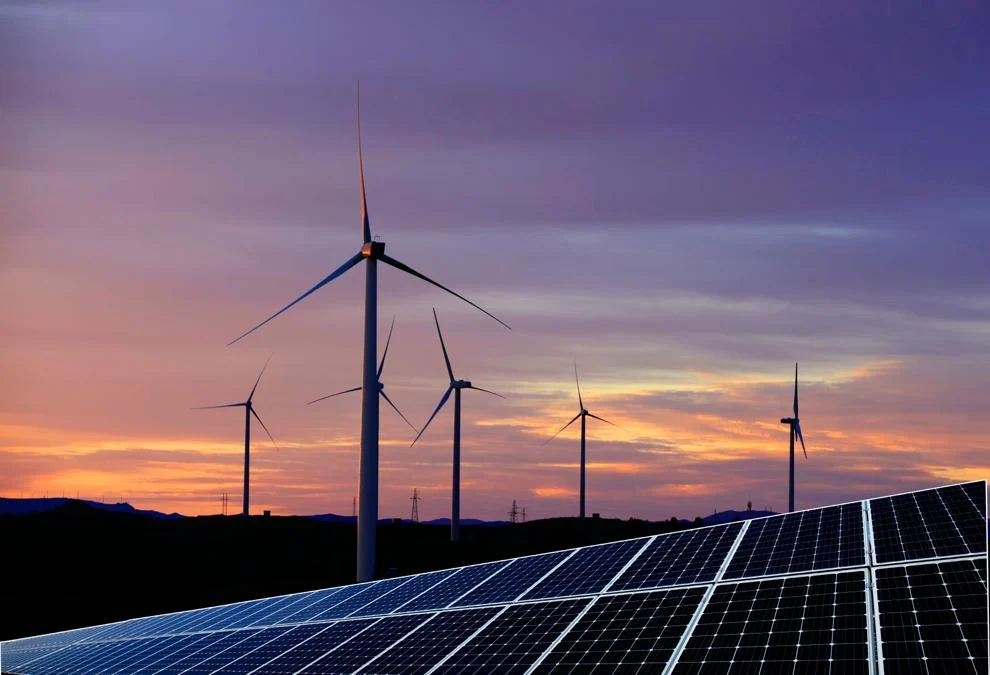
Building large solar energy plants in Utah may become a more arduous endeavor this year, especially if they are located on certain farmland.
That’s if House Bill (HB) 241 passes this legislative session. The bill, sponsored by Rep. Colin Jack (R-St. George), eliminates incentives meant to fund big solar developments if they are located on what the Utah Department of Agriculture and Food defines as “productive farmlands.”
The bill “attempts to find the balance between having food to eat and not having food to eat,” said Jack, who has successfully run a number of proposals to ensure the state has enough on-demand energy, especially from coal-fueled power plants.
After the full House voted 54-12 to approve the bill, it now goes to the Senate for its consideration.
Incentives restricted from projects in farmlands include a clean energy systems tax credit, a tax credit for high-cost infrastructure projects, and an alternative energy development tax credit. According to Jack, his bill is a solution addressing a concern that his constituents brought to him—“a lot of their productive farm and ranch land was being consumed with large solar fields,” he said.
The legislation changed a lot from its original version, which set strict requirements for lot size, height, setbacks, noise levels and visual appearance that some considered to be too restrictive for most large solar plants. But those are now gone, and the bill now only removes state financial incentives.
Additionally, HB 241 requires the solar energy industry to consult with state biologists about migrations and endangered species in the location of potential solar fields for large projects.
Also, they should have a decommissioning fund and plan to reclaim the land where the units sit with either a landowner or a governing local authority.
The bill doesn’t limit anyone from pursuing solar power projects on their own land and with their own money, Jack said. It only disincentives building them on farmlands.
And, lands that are partially adequate to grow food may still access part of the incentives if they have certain characteristics.
“I worry about the message that we are removing (Utah) from solar and not thriving with renewable energy,” said Rep. Rosalba Dominguez (D-Salt Lake City) during the debate. However, she added that she appreciates the intention of protecting farmers and food production.
This is the latest bill proposal that has been controversial among those advocating for clean energy. The state is also studying and advancing a bill this session to impose a substantial tax for privately-owned solar and wind power projects to fund an endangered wildlife account.
HB 241, however, changed to clarify that it wouldn’t affect projects that are already in the works.
While Jack reiterated that the bill wouldn’t directly tell landowners how to use their plots, Rep. Scott Chew (R-Jensen) said he still struggled with it, since it still represents another limit on what property owners can do with their lands
“Maybe it doesn’t limit them, but it limits the opportunities that they can do with their private property,” Chew said. “So I’m having a hard time continuing on with this bill.”
But others, like Rep. Troy Shelley (R-Ephraim), supported the idea, arguing that it provides more accountability for solar energy developers.
“A lot of times, individuals … or corporations, when they build something like this, and it all collapses and falls to pieces, they walk away from it,” Shelley said. “And this creates a bond so that they can’t walk away.” — Alixel Cabrera, Utah News Dispatch
Republished under Creative Commons license CC BY-NC-ND 4.0.