Scientific evidence of a warming climate in California and across the globe is clear, but the impacts on ecosystems and agriculture are still difficult to predict.
Sophisticated computer models are used to forecast future climate. Understanding that temperature and precipitation levels will change in the future does not tell the full story: University of California Agriculture and Natural Resources (UCANR) researchers also want real-world experience under those future conditions.
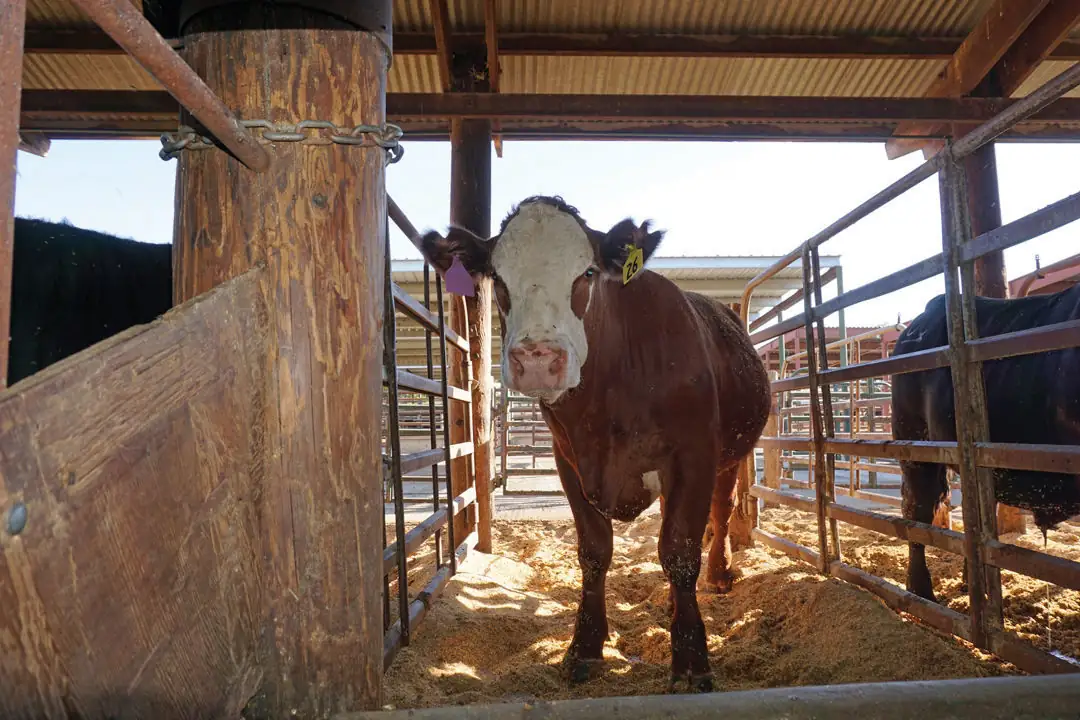
Moreover, some agricultural operations have higher sensitivity to the changes than others. Rangeland forage is particularly sensitive to climate changes since, unlike irrigated agriculture, ranchers rely solely on precipitation. They have no control over how much and when it rains.
“It’s tricky business,” said rangeland expert Jeremy James, the director of the UC Sierra Foothill Research and Extension Center in Browns Valley. “It’s not easy to forecast. We have to address the uncertainty in a realistic manner.”
Discovering climate change impact on rangeland
In order to study different climate projections on rangeland, James and Maggi Kelly, director of the UCANR Informatics and Global Information Systems special program, have begun development of a research site that will allow scientists to manipulate the temperature and rainfall on sections of rangeland to understand what would happen under predicted weather scenarios.
With a $220,000 National Science Foundation grant, construction is now underway on a four-acre site at the research center that will help scientists learn how temperature and precipitation will impact growth and diversity of forage that ranchers use to raise their livestock.
“We need to know how rangelands will respond when conditions change,” James said. “Will we grow more, but dry out earlier? Will we have more medusahead (an undesirable rangeland weed) or more soft chess (a high-quality forage)?”
When complete, 16 shelters on steel tracks will be connected to computer systems and hydraulic motors to move them up or down a research plot. The shelters and other equipment will allow scientists to precisely control the amount of precipitation (or irrigation water) that rains onto the plot. Other systems will give researchers control of air temperature.
“This facility isn’t designed for one type of research,” James said. “It is designed to conduct a wide variety of research by scientists over the next several decades. With this setup, we can look at the effect of climate change on soil biological communities, soil carbon, insect communities, plant-insect interactions and oak seedling recruitment.”
The research results from the project should provide ranchers and land managers a better understanding of how climate change may impact agriculture and ecosystem function on rangeland while also providing important information on how to minimize impacts of these changes.
Some aspects of the research facility’s development are not covered with funding from the National Science Foundation. The scientists are looking for additional support to complete the project.
For more information, contact James at jjjames@ucanr.edu. — Jeannette Warnert, communications specialist at UCANR