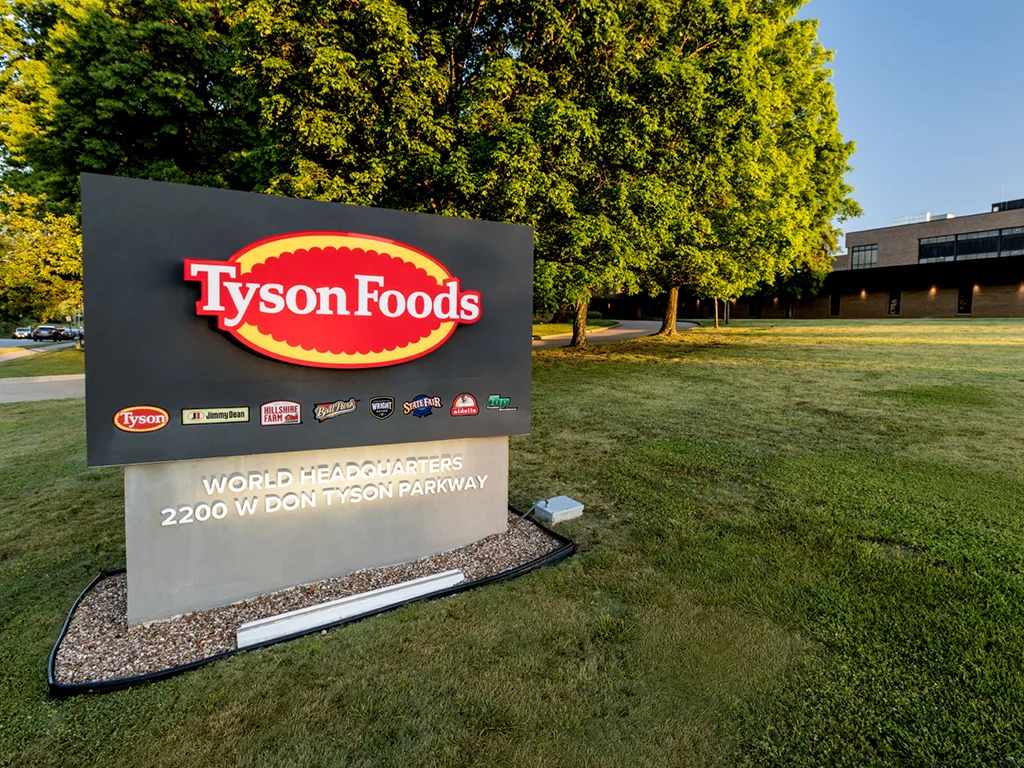
Tyson Foods is closing beef processing facilities in Illinois and Utah and putting its Washington plant up for sale as tight cattle supplies continue to squeeze the company’s beef business, raising concerns about lost processing capacity and fewer marketing options for cattle producers.
Tyson announced Aug. 13 that it will end operations at its Joslin, IL, beef plant and Eagle Mountain, UT, case-ready facility while pursuing a sale of its Pasco, WA, beef plant. The company said it will concentrate its beef operations around three centrally located plants in Dakota City, NE; Holcomb, KS, and Amarillo, TX.
Tyson pointed to historically low cattle inventories and continued limited heifer retention as reasons for the restructuring. The company said those conditions indicate cattle supplies will remain constrained and require changes to its processing network. The company said the changes should allow it to maintain a similar level of cattle harvesting across a smaller and more efficient network.
“With these changes, Tyson Foods is ensuring that it will continue to deliver high-quality, affordable, and nutritious protein for generations to come,” Tyson said in a statement.
Tyson’s beef business remains under pressure, with third quarter sales falling to $5.39 billion from $5.60 billion a year earlier. Through the first nine months of fiscal year 2026, beef sales rose slightly to $16.37 billion despite a 12% drop in volume, while higher prices helped offset the decline and the segment posted a $701 million operating loss.
Reaction to Joslin closure
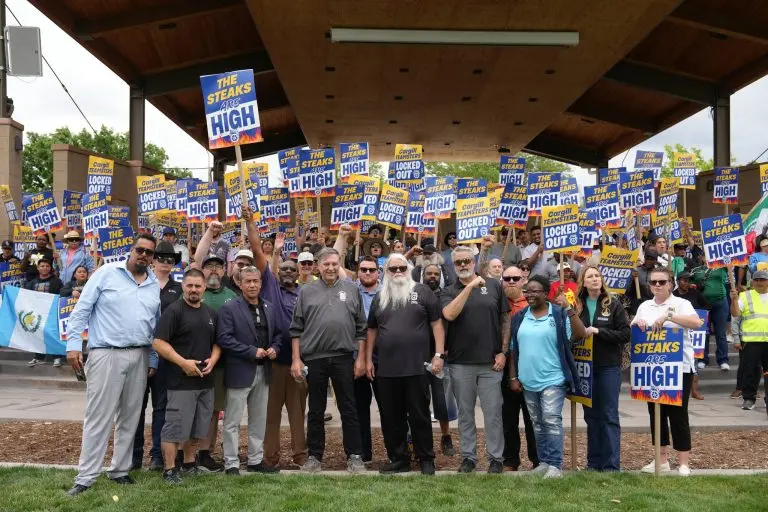
Tyson’s abrupt closure of its Joslin plant in mid-August drew strong reactions, with workers and cattle producers concerned about the lack of notice and the loss of a major beef processing outlet in the region. The plant employed about 2,500 union workers and could process roughly 3,000 cattle per day, with much of its cattle coming from Illinois and Iowa, according to KWQC.
For cattle producers, the impact extends beyond job losses. Illinois Beef Association Executive Vice President Josh St. Peters said in a statement that the sudden closure removes a critical market that has served family farmers for decades. He said hundreds of producers who relied on the Joslin plant now face fewer marketing options, higher transportation costs and greater uncertainty at a time when many are looking to invest in their operations and help rebuild the U.S. cow herd.
Iowa Cattlemen’s Association President Craig Moss echoed those concerns. In a Facebook statement, Moss said the closure will have consequences statewide, particularly for eastern Iowa feeders. Moss continued that eastern Iowa has developed a strong and increasingly competitive fed cattle sector, backed by significant producer investment in feeding facilities.
“This is a great loss to our state’s cattle industry and the desired overall U.S. cattle herd expansion,” Moss said.
National Cattlemen’s Beef Association (NCBA) CEO Colin Woodall said in a statement that Joslin has long played an important role in the Midwest beef supply chain. He urged Tyson to work with producers who previously supplied the plant to find other marketing opportunities.
The United Food and Commercial Workers International Union (UFCW) said the closure demonstrates how reductions in beef processing can quickly affect workers, families and rural economies. UFCW called for government and industry leaders to pursue longer-term solutions to the low cattle inventory.
Utah closure, Washington sale
The Eagle Mountain closure will eliminate at least 723 jobs, according to a Worker Adjustment and Retraining Notification filed with the Utah Department of Workforce Services.
The case-ready plant opened in 2021 to cut, weigh and package beef and pork for retail customers. Before construction, Tyson projected the facility would generate an annual local payroll of $44 million and eventually employ up to 1,200 people. Tyson agreed to create 500 high-paying jobs and invest about $286 million in exchange for the opportunity to earn up to $5.3 million in state tax credits over 10 years, according to the Utah Governor’s Office of Economic Opportunity.
In Washington, cattle feeders are watching the sale process closely. Washington Cattle Feeders Association Executive Director Jack Fields told the Tri-City Herald that putting Pasco on the market was preferable to an immediate closure, but the announcement still creates uncertainty.
“I think the good news is that the plant has been put up for sale and that it’s not closed,” Fields said. “I do think that even the announcement of the sale certainly is going to create a shadow of uncertainty when you look at the markets.”
NCBA also welcomed Tyson’s decision to seek a buyer for the Pasco plant rather than close it.
Ranchers-Cattlemen Action Legal Fund, USA (R-CALF) offered a sharper criticism of the restructuring. The group said that losing those outlets could increase transportation costs and reduce competition for cattle.
R-CALF CEO Bill Bullard disputed the idea that cattle supplies alone explain the contraction, arguing that consolidation among major beef packers has contributed to conditions facing producers.
The latest announcement follows other reductions in U.S. beef processing capacity. Tyson closed its Lexington, NE, beef plant in January, while JBS USA ended cattle slaughter at its Souderton, PA, facility Aug. 14 but plans to invest more than $30 million to convert it into a value-added, case-ready operation, preserving about 400 jobs. American Foods Group is also scheduled to close its 218-worker Skylark Meats further-processing facility in Omaha, NE, on Aug. 25. — Charles Wallace, WLJ contributing editor