
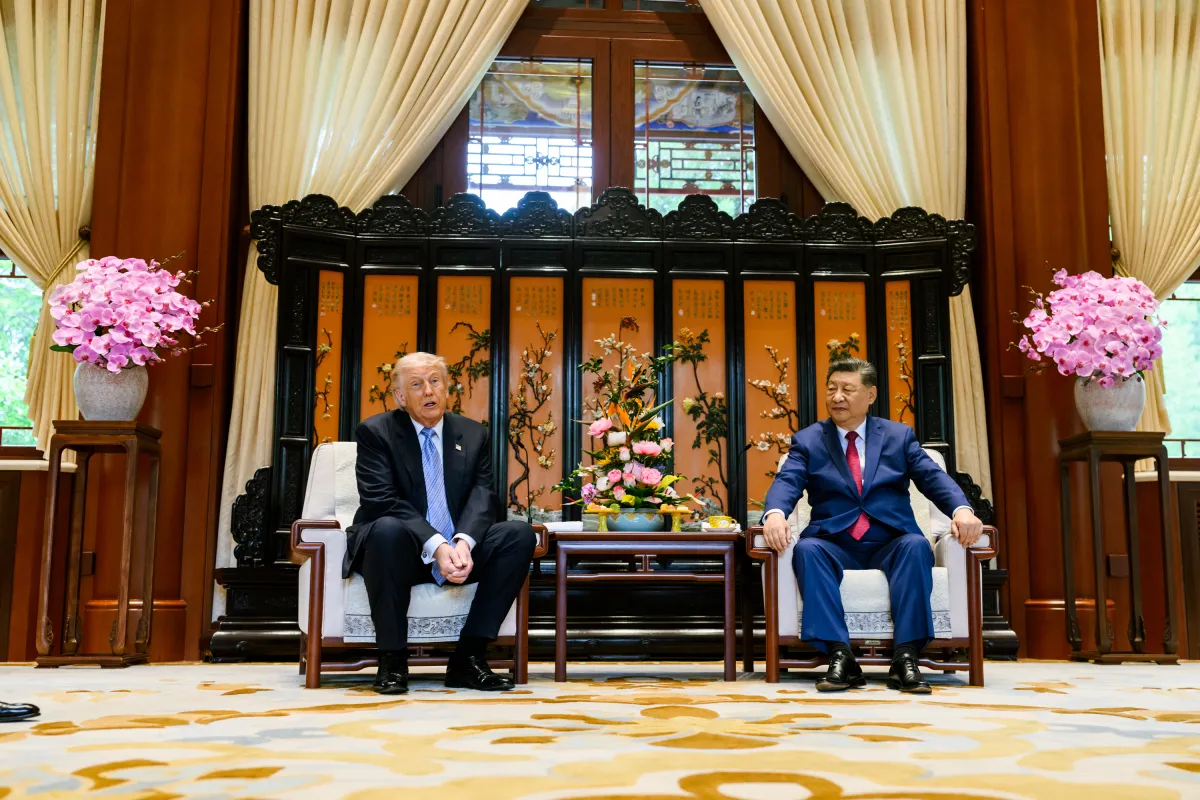
President Donald Trump’s recent trip to China and meetings with Chinese President Xi Jinping produced what administration officials are describing as a major reset in U.S.-China trade relations, with agriculture emerging as a central focus of the discussions.
While the summit also addressed geopolitical concerns involving Iran, stability in the Strait of Hormuz and broader strategic relations between the two nations, the clearest near-term impact for U.S. agriculture came through renewed market access commitments and large-scale purchase agreements tied to American farm and ranch products.
The White House said Trump and Xi agreed to “build a constructive relationship of strategic stability on the basis of fairness and reciprocity,” and to establish new trade mechanisms to create more formal channels for managing economic relations between the two countries.
The summit also included Chinese commitments to address U.S. concerns about shortages of rare-earth minerals and restrictions on rare-earth production and processing technologies.
China additionally approved an initial purchase of 200 American-made Boeing aircraft, the first major Chinese Boeing purchase commitment since 2017.
Agriculture commitments
The White House announced that China agreed to purchase at least $17 billion annually in U.S. agricultural products from 2026 through 2028, adding to earlier soybean purchase commitments made during previous trade negotiations.
U.S. Trade Representative Jamieson Greer said the administration expects “double-digit billion-dollar” agricultural purchase commitments extending beyond soybeans. Greer emphasized the commitments could create opportunities across U.S. agriculture, including livestock products and feed grains such as sorghum.
Chinese Foreign Minister Wang Yi confirmed the two countries agreed to continue trade negotiations aimed at expanding bilateral commerce under a reciprocal tariff-reduction framework while also working through agricultural market access issues.
USDA Secretary Brooke Rollins emphasized the significance of the summit outcomes for producers in a post on X following the meetings.
Rollins highlighted the administration secured “$17B in NEW purchase commitments, in addition to the 25MMT (million metric tons) soybean commitment,” while also noting that U.S. poultry products would again be eligible for export to China.
She additionally emphasized the importance of renewed beef facility registrations, writing that “U.S. beef is also on the menu, as China is renewing licenses for more than 400 beef facilities, and is adding new listings.” Rollins said restoring beef access was the “No. 1 ask” from ranchers seeking additional value from products often marketed internationally, including hides, skins, tongues, tendons and tripe.
Beef access restored
Among the most significant developments for cattle producers was China’s decision to restore market access for U.S. beef by renewing expired registrations for more than 400 U.S. beef facilities and adding additional facilities eligible for export.
The U.S. Meat Export Federation (USMEF) announced that China renewed five-year registrations for 425 U.S. beef facilities and approved 77 additional establishments for export eligibility. Thirty-eight facilities remain suspended, though 25 of those had their registrations renewed despite still being restricted from exporting beef to China.
USMEF President and CEO Dan Halstrom called the development a critical step forward for the U.S. beef industry.
“China’s renewal of U.S. beef establishments is excellent news for the U.S. beef industry and for the customers in China who are anxious to resume purchases,” Halstrom said.
The timing is particularly important given the sharp decline in beef exports to China over the past year.
According to DTN, U.S. beef exports to China reached $1.95 billion in 2022 and remained near $1.5 billion in 2024 before falling sharply to $468 million in 2025. Through March of this year, USDA export data showed just $11 million in U.S. beef exports had moved to China.
Poultry exports followed a similar trend. U.S. poultry exports to China exceeded $1.1 billion in 2022, then fell to $542 million by 2024 and to $106 million last year.
China also agreed during the summit to resume poultry imports from U.S. states designated by the USDA as free of highly pathogenic avian influenza.
Industry groups react
Reaction from agricultural organizations was largely positive, though several groups stressed the importance of seeing long-term implementation and enforceable access.
The U.S. Cattlemen’s Association (USCA) said restoration of beef facility registrations represented an essential step toward rebuilding stable trade with China.
USCA President Justin Tupper said the organization appreciates the administration prioritizing beef access during the summit but cautioned that producers still need more certainty and transparency in the marketplace.
Tupper noted that China’s quota-managed import system and ongoing uncertainty about the agreement’s details continue to raise concerns for cattle producers. He added that U.S. trade officials should continue to pursue “truly free and fair trade” that delivers enforceable, stable market access for American beef.
The National Cattlemen’s Beef Association said in its Weekly Bulletin that it has worked closely with the administration over the past year to restore access to one of the industry’s top export markets and continues monitoring the situation as more details become available.
Meanwhile, the American Soybean Association (ASA) welcomed continued dialogue between the two countries and expressed optimism regarding future soybean purchases.
ASA President Scott Metzger said reliable trade relationships remain critical for soybean growers as producers continue planting the 2026 crop. — Charles Wallace, WLJ contributing editor


