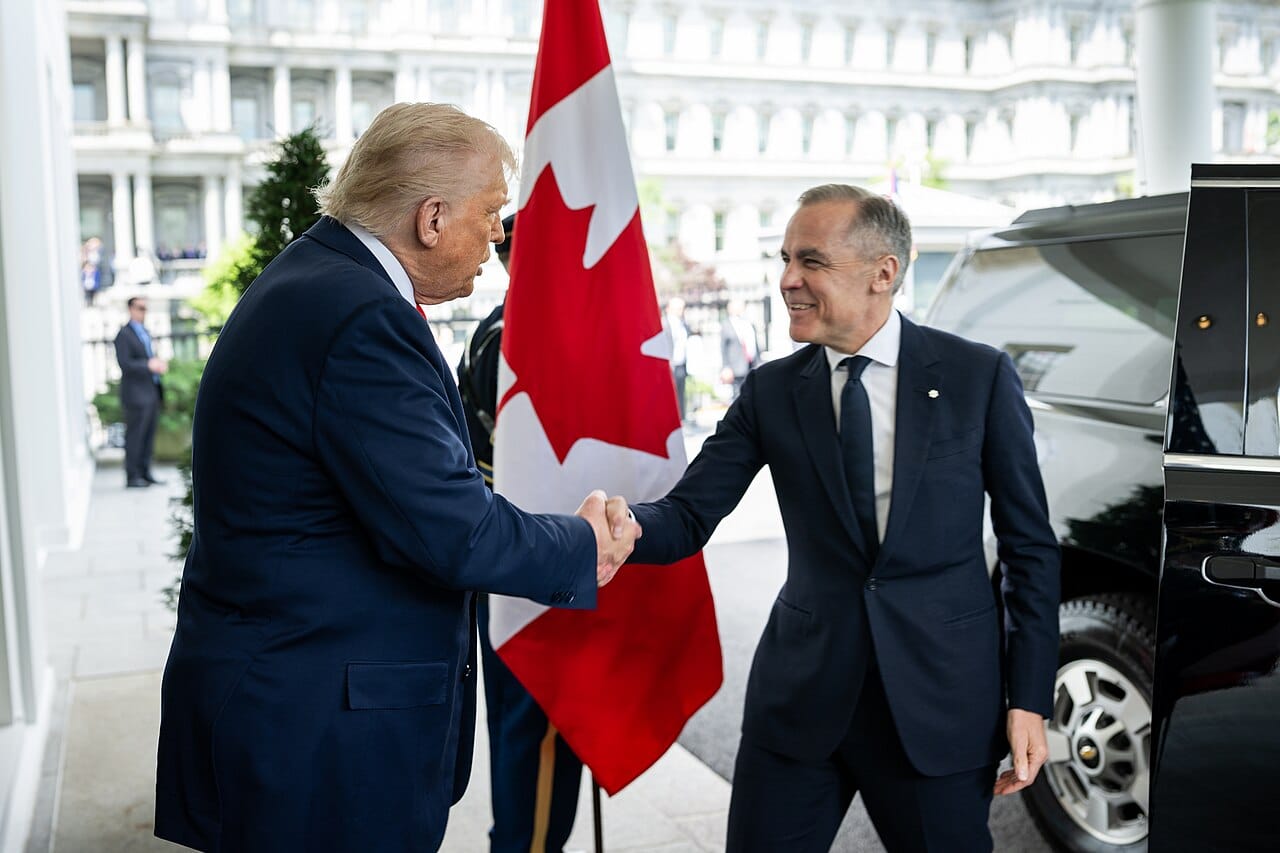
The White House announced July 20 new 50% tariffs on Canadian goods entering the U.S., including alcohol, dairy products, cars, seeds, floriculture products, flower bulbs, lumber and animal products, as the administration seeks to pressure Canada over what it calls discriminatory treatment of U.S. exports.
The administration cited several concerns, including Canada’s removal of U.S. alcohol products from Canadian shelves, preferential market access for dairy products from the European Union (EU) and limits on U.S. vehicle exports to Canada from companies reshoring production to the U.S.
“When U.S. producers are unfairly denied export opportunities by Canada’s tariff rate quota (TRQ) allocation measures, they lose sales or revenues that support production in the United States, among other things,” said U.S. Trade Representative (USTR) Ambassador Jamieson Greer.
Using Section 338 of the Tariff Act of 1930, the administration can impose ad valorem duties of up to 50% on goods from select countries. The announcement accounts for $20 billion worth of Canadian imports and would not take effect until Aug. 19, reflecting statutory rules but also a broader pattern of using tariff threats as leverage in trade negotiations.
The president retains authority to modify or suspend the tariff action.
Hidden in the motor vehicle tariff announcement are duties on bulbs, live plants and propagation material, cut flowers and ornamentals, seeds for planting, hops, herbs, specialty-use plants, lumber, as well as hundreds of other materials and home goods.
“Canada, unlike other partners and allies, continues to retaliate against the United States for its efforts to rebalance trade and protect U.S. industry in national-security sensitive sectors,” Greer said in a statement.
The motor vehicle tariffs target Canada’s existing 25% tariffs on U.S. vehicle exports. USTR said Canadian imports of U.S. alcoholic beverages fell 81%, from $718 million to $137 million, amid a boycott following Trump’s 51st-state rhetoric and other disagreements with his administration.
Canada is the second-largest market for U.S. dairy exports, behind Mexico. In 2025, U.S. dairy exports to Canada were valued at $1.31 billion, according to data from the USDA’s Foreign Agricultural Service.
The list of tariffed goods, if not exempted from previous Section 232 tariffs, includes specialty export goods such as powdered and concentrated milk and cream across various fat levels.
The administration said in its announcement that Canada gives EU dairy exporters more favorable access than U.S. exporters, particularly because Canadian retailers can access the EU’s cheese TRQ under Comprehensive Economic and Trade Agreement between the EU and Canada but cannot access the comparable U.S. quota under U.S.-Mexico-Canada Agreement (USMCA).
They argue the discrimination limits market access for U.S. cheese exports, costing American dairy producers sales and revenue. The move intends to both offset the alleged discrimination and to encourage Canada to change its dairy TRQ allocation policies.

The National Milk Producers Federation and the U.S. Dairy Export Council have long held Canada’s dairy TRQ as a trade irritant, arguing for years that Canada is not fully honoring its USMCA dairy market-access commitments.
“Today’s assertive action by the administration makes clear to Canada that their dairy trade practices will no longer be tolerated,” said Gregg Doud, president and CEO of NMPF. “Canada simply cannot continue to discriminate against U.S. dairy farmers by effectively blocking negotiated access to its market.”
Canada has not stepped up to the table for USMCA discussions as willingly as Mexico, which was advancing bilateral trade talks with the U.S.
One Washington lobbyist, granted anonymity to speak with DTN, said, “We’re cooked,” noting agriculture sectors could face increased costs that would ultimately be passed on to farmers if their businesses operate across the continent or if a trade war with Canada begins.
They also said the comparison of Canada to China—two countries that have disagreed with and retaliated against the Trump administration’s tariff plans—is what worries them the most. — Jake Zajkowski, DTN ag policy editor