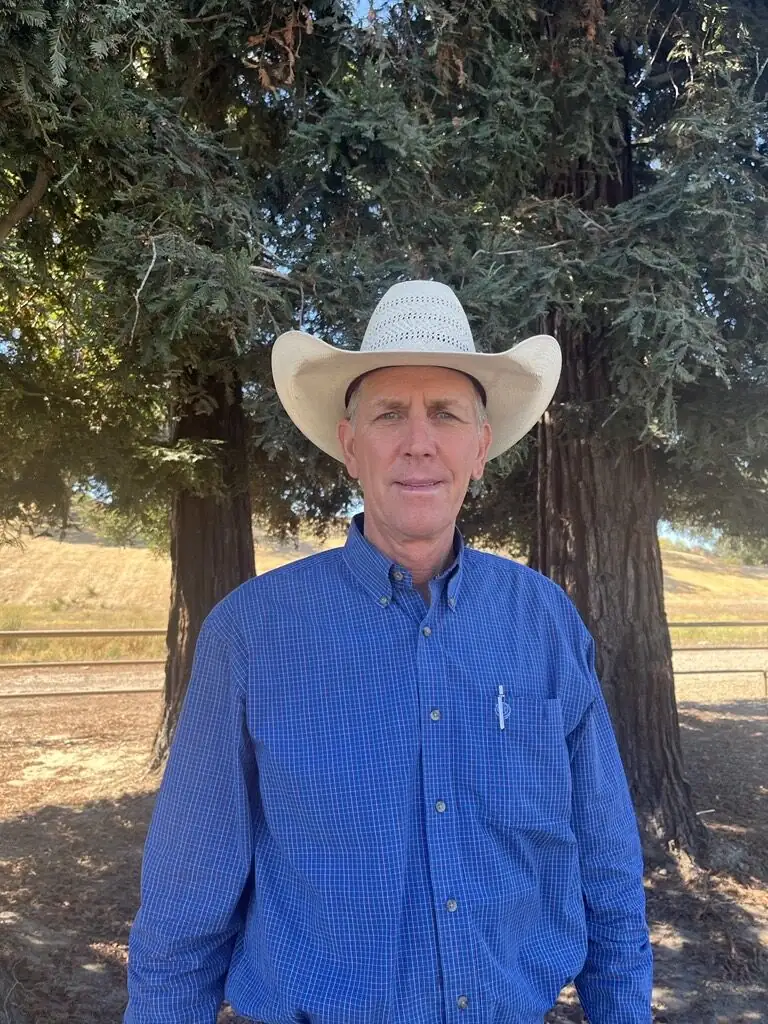
This new, exclusive column found only inWLJwill feature unique perspectives from some of the nation’s top producers, marketers, animal health experts, economists and more.
Rich Rice and longtime business partner Jeff Sparrowk have been partners in the cattle business for more than 30 years. Their friendship stretches all the way back to their college days at California Polytechnic State University in San Luis Obispo, CA, and it was only natural for the two to become business partners upon graduation and establish what is now known as Rice and Sparrowk.
Rich and Jeff primarily run a cow-calf and stocker operation, and they also have vineyards, almond orchards and hay ground. The cow herd is mostly Angus based and is maintained on annual rangelands and irrigated pastures in central California. A portion of the cows are bred to Wagyu bulls, and calves are contracted to Snake River Farms.
Stockers are turned out starting in November and December. Single-season cattle are usually purchased at 550-600 lbs. and are marketed in May or June. Double-season cattle are typically purchased as four-weights, and after grazing winter pasture in California, they will go on to graze summer grass in Oregon, Wyoming or Colorado—although Rich said they are always looking for grass in the mountain country.
Most of their calves are sourced from Oregon, Nevada, Idaho and occasionally western Wyoming, with about half of them purchased through video auctions. The remaining half are procured through private treaty and sale barns. Upon arrival, calves are processed, sorted and sent to designated ranches. In February or March, all calves are wormed and given boosters on their vaccinations. Spring cattle are marketed based on the market in early spring, and fall cattle are typically marketed in July, August and September.
In terms of type and kind, Rich says the main focus is on black-hided cattle, but he also buys Charolais or Red Angus calves. However, buyers’ first question always tends to be “What percent black are they?” he adds. When buying fall calves, he puts focus on vaccination protocol, weaned status and delivery dates after the first of November.
It is evident that running the cow-calf, stocker and farming enterprise is a family affair, with Rich’s and Jeff’s respective families being raised and working alongside each other. Upon his college graduation, Rich began purchasing cattle for Jeff’s dad, Jack, and continues to do so. “We partner with Jack, too,” Rich told WLJ. “We all work together.”
He emphasized the importance of family in the business, saying, “There’s no better way to raise your kids. They learn how to work. They learn responsibility, learn the business. They all like it—although they might have to do some different facets of the business to stay in it.”
Family is especially important when you consider the difficulties of finding labor today. Rich said he is fortunate that the partnership revolves around strong family ties and has dedicated, long-term employees that are a very important part of the business.
Finding labor, in addition to rising input costs in everything from fuel to fertilizer to animal health, makes it a tough time for everyone in the ranching business. Rich said the partnership is always looking at new ways to make their business more efficient by talking to other ranchers and trying new things.
One thing the company has found particular success in is land stewardship and conservation. “We take care of the land, and the land takes care of us,” Rich said. They have rented ground from The Nature Conservancy for an extended time and work with them on rotational grazing and coexisting with birds on a leased parcel of irrigated pasture.
Pasture rotations will sometimes depend on the height of the grass for the birds, as ducks, geese and other birds prefer shorter grass to keep an eye on predators. He added that Jack has also done some conservation easements, which have worked out well.
One of the major variables of ranching in California ties back to rainfall, Rich said. “When you have a really good rainfall year, it can increase your carrying capacity and increase your cattle weights,” he said. “However, when you encounter drought years, it changes everything—how many calves to buy, how active you can be at videos.” Rich said this is further exacerbated by urbanization, permanent planting and tree and vineyard development.
“As the cattle industry markets continue to evolve and change, it will be important for a business plan to be flexible and adapt to the changing times,” Rich concluded. — Anna Miller, WLJ managing editor