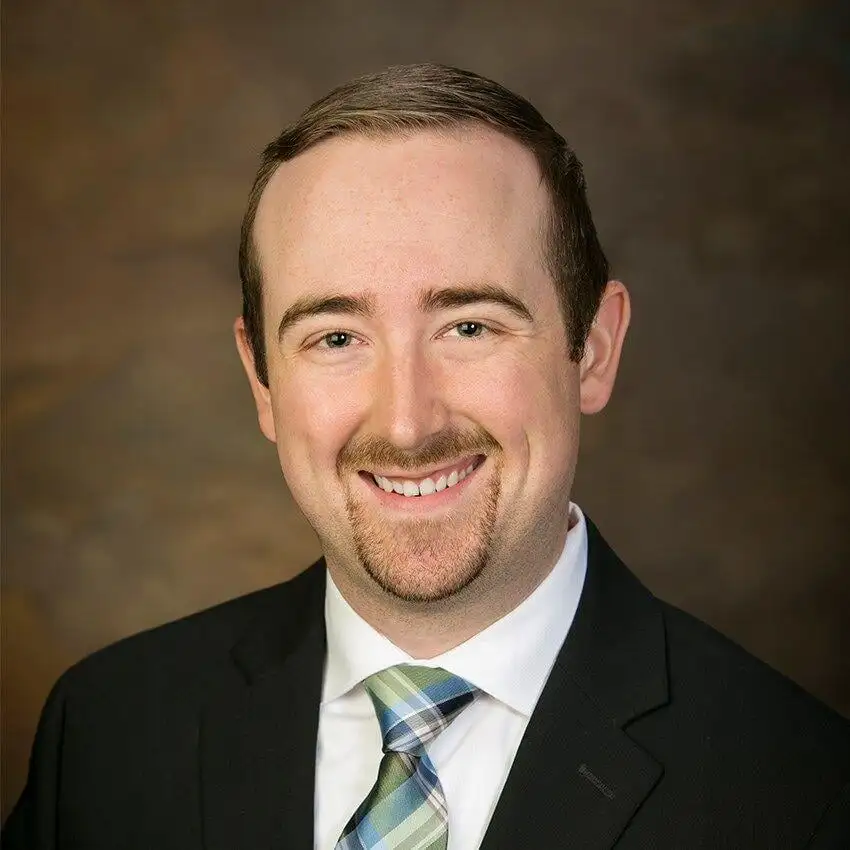
CattleFax helps beef producers navigate market uncertainty by providing industry insight and analysis through various channels, ranging from speaking at meetings and conventions to newsletters and reports and individual consultation.
Patrick Linnell, director of Cattle Market Research for CattleFax, told WLJ they are a membership organization turning data and information into decision-friendly insights for cattle producers. Their goal is to help members from the cow-calf producer to the feedlot operator navigate the market and improve their operations.
First exposure to CattleFax
Patrick was raised in Hermiston in northeastern Oregon on his family’s commercial and registered cow-calf operation, where he showed Red Angus cattle in 4-H and FFA. Patrick remains involved in the family operation.
He went on to Colorado State University (CSU), where he participated in the meat and livestock judging teams while pursuing degrees in animal science and agriculture business. Patrick was also involved with Collegiate Cattlemen and was exposed to policies affecting the beef industry through the organization and the Colorado Cattlemen’s Association.
“Those connections, skills and experiences I had there were pivotal in guiding me to the direction that I have taken and the passion I have for the beef industry,” Patrick said.
In his senior year, when asking his ag commodities professor, Dr. Stephen Koontz, what it takes to work somewhere like CattleFax, Koontz told him it was “chasing unicorns” and something that typically doesn’t happen.
“Lo and behold a couple of months later I had the opportunity to meet Randy Blach, the CEO of CattleFax and it pieced together from there,” Patrick said.
It wasn’t his first exposure to CattleFax and Randy. Patrick recalled Randy speaking at a bull sale dinner while he was in middle school, “I thought it was the most fascinating presentation but didn’t give it much thought at the time.
“It’s amazing how it came full circle,” Patrick continued.
Before long, Patrick was pursuing a master’s degree in ag economics under Koontz with research focused on forecasting fed cattle prices, and a career at CattleFax upon graduation.
Cattle market forecast
Patrick said with the market correction last fall, the industry was questioning whether the current cattle cycle was following the trend of 2014-15 and whether high prices were subsiding. Patrick said while prices have rebounded somewhat from the previous lows, expansion is expected to be delayed further. Factors such as drought, labor availability, interest rates and market volatility collectively present obstacles to expanding the cow herd.
“You can go down the list of headwinds and those things have lent structural issues to expansion,” Patrick said. “But when we look at those factors, it lends itself to a slower expansion. Unlike the last cycle, when we kept back every heifer and gave every cow with three legs another chance, we just don’t see that with this current cycle.”
Patrick continued there has been apprehension among producers about how long this current cattle cycle will continue, and that might explain why there has not been much heifer retention in some areas.
Producers within this current cycle are asking whether females are too expensive as prices fell quickly in the last cycle of 2014-15. It is essential to be mindful of female prices versus the expected value of their progeny when purchasing or retaining females, Patrick said, but CattleFax does not think they generally are too expensive yet.
However, Patrick likes to point out in his presentations to producers that in the last cycle of 2014-15, there was a sizable V-shaped top and bottom for prices and numbers, and this current cycle looks different in that regard.
CattleFax anticipates herd rebuilding will be slower and more extended than the previous cycle. As heifer retention intensifies, the decline in supply is expected to become even more significant, leading to projected lows in fed slaughter by 2026.
When rebuilding occurs, Patrick said packing capacity will also be an important aspect. Unlike the last cycle, when packing capacity did not meet expansion numbers, the industry is seeing an expansion of capacity with new plants coming online and expansions at existing ones. It appears capacitywill be there to meet herd numbers when expansion ultimately occurs.
Consumer demand remains strong but will need to be monitored as CattleFax anticipates an increase in the USDA All-Fresh Beef retail prices to an average of $7.90/lb. in 2024. While inflation has softened, other factors such as debt, interest rates and economic uncertainty could influence purchases of other proteins.
Patrick said exports will be lower with the reduced beef production, but global demand for U.S. beef remains robust. Imports from Australia, Brazil and New Zealand will likely increase to fill the void from smaller cattle slaughter. He said it will be interesting to see if an increase in live cattle from Mexico will occur.
Patrick said that despite many economists predicting a recession in 2023, the economy keeps “chugging along,” and the biggest threat to the market may be outside factors. CattleFax thinks the worst of inflation has passed, but they don’t see it reverting below 2% in the near future.
Feed costs have dropped and hay prices will depend on the weather and the anticipation of a La Niña to develop in the summer. Patrick said CattleFax is projecting hay prices to soften due to the increase in production in 2023 and again in 2024.
Patrick stressed the importance of risk management considering market volatility and uncertainty as well as high cattle values. Cow-calf producers need to evaluate how different marketing strategies and tools like Livestock Risk Protection, rainfall insurance and futures and options may fit their operation.
However, he said CattleFax anticipates all classes of cattle will average higher in 2024 and likely remain strong for the next few years.
“At the end of the day, it should be a good environment for the cow-calf producer, which we are all ready to see compared to what we have seen in the last few years,” Patrick said — Charles Wallace, WLJ contributing editor