Juan Reyes was just 11 years old when his life was forever altered. Born in Cuba, he and his two older sisters were sent to the U.S. in 1962 amid political upheaval as part of the wave of Cuban children brought to the country under the Operation Pedro Pan program.
“We didn’t know any English. The only thing we could bring out of Cuba was our clothing,” Juan told WLJ. “It was probably the hardest time of my life.”
The siblings were initially placed in a refugee camp in Florida, where Juan remembers being surrounded by thousands of Cuban kids in limbo. His chance at a new life came when a Washington state businessman, Roy McDonald, visited the camp. He offered to take Juan back to Washington with him, and Juan agreed on one condition: that McDonald also take his sisters.
“I figured anything was better than a refugee camp,” Juan said.
That request was honored, and Juan, his sisters and roughly 70 other children were moved to St. John’s Academy in Colfax, WA, under the care of the Catholic Church.
“I was kind of a towhead blond Cuban kid—I stuck out like a sore thumb,” he joked.
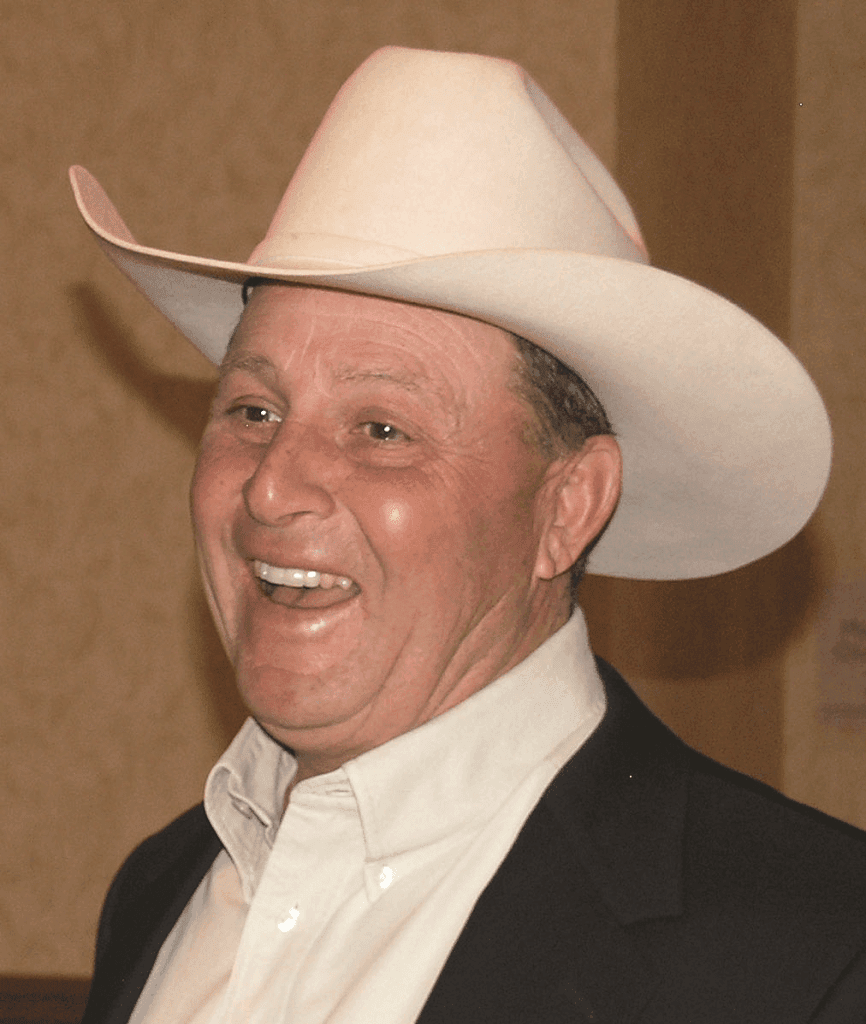
Several years later, Juan’s parents reunited with their children and went to work on a nearby farm owned by the McDonald family. Juan graduated from Colfax High School in 1969 and enrolled at Eastern Washington State College.
A turning point came when he helped a friend move to the University of Wyoming. “I fell in love with Wyoming,” Juan said. “The landscape, the people—it just felt right.” Juan soon transferred to the University of Wyoming, picking up side jobs to support himself and growing drawn to the ranching life. At the university, he met his wife, Joni, from Greeley, CO, who had grown up raising Angus cattle.
He also dabbled in construction—starting a company with little more than a hammer, some nails and determination—but eventually returned to his roots in livestock.
His first ranch job came after a chance encounter with a rancher named John Nunn. Nunn asked Reyes if he could rope and doctor cattle alone. “I didn’t have a clue,” Juan said with a laugh. “But he asked, ‘Can you?’ and I said, ‘If you can, I can too.’ That’s how it all started.”
Juan honed his skills quickly, often learning through trial and error. “I’d have ropes hanging off every saddle string,” he remembers. “I’d lose a rope, burn my hand—but by the end of that summer, I could hold my own.”
MR Angus Ranch
Over the next several years, Reyes built a reputation as a reliable cowboy and stockman. By a chance encounter, he met John and Cara Milnor, a couple from Indiana who dreamed of owning a ranch in Wyoming. That dream became a reality, and the Milnors invited Reyes to manage the new operation. They named it MR Angus Ranch—“M” for Milnor, “R” for Reyes.
“Some people say it stood for money and Reyes,” Juan laughed. But regardless of what the initials truly stood for, it was the start of something lasting.
Founded in 1977 in Tie Siding, WY, building MR Angus hasn’t been without setbacks. They faced a heartbreaking challenge in the early days when their Montana-bred cattle began dying from brisket disease, triggered by the ranch’s 8,000-foot elevation in Tie Siding.
“It almost broke us,” Juan said. “We were just getting started, and we lost a lot of cattle—cattle we bought with borrowed money.”
Instead of folding, Juan and Joni dug in deeper. In 1979, they began pulmonary arterial pressure (PAP) testing in partnership with Colorado State University to select cattle that could survive and thrive at high altitude.
Today, MR Angus cattle are known for their structural soundness, longevity and ability to perform in harsh rangelands and feedyards.
“We want them deep-ribbed, easy-fleshing and good-footed,” Juan said. “They have to be practical cattle. They have to work.”
That dream is now being passed down to Juan and Joni’s children, Jason Reyes and Jennifer Reyes Burr, who are not only continuing the legacy but are helping shape its future.
A family ranch
The ranch has grown to include a feedyard, irrigated farmland and more than 1,000 registered Angus cows. It has also become a full-scale family enterprise. Jennifer oversees all cattle records and registrations while managing large portions of the farming and feedlot operations. Her husband, Mick Burr, originally from an agricultural background in Australia, takes the lead on irrigation, mechanics and farm logistics. Jason and his wife, Sarah, handle herd health, calving and day-to-day cow management.
“Our kids did it from day one, because they had to,” Juan said with a chuckle. “We didn’t have extra money to hire people. I thought we’d run them off—actually tried to—but they stuck around. They both love it.”
Jason and Jennifer aren’t just helping—they are stepping into the driver’s seat. Juan and Joni are slowly stepping back, trusting the next generation to uphold the values and vision that built MR Angus.
“To me, it’s the easiest thing I’ve done,” Juan said. “I think Jennifer, Jason, Mick and Sarah have it tougher than I did, because it’s hard to give up what they built. If I lost it, I wouldn’t lose anything. I started with nothing, and now they’re doing quite well.”
Though Juan still finds himself holding a shovel now and then or finding water in dry years, he’s the first to admit his role on the ranch is shifting as his children make the day-to-day decisions.
“My wife still keeps the books, though we’re trying to relieve her of that too,” Juan said. “But the kids are pretty much making the decisions now. I’m more of an adviser.”
Passion for stock dogs
While MR Angus Ranch has grown into a premier registered Angus operation, Juan still finds satisfaction with working dogs.
“I’ve always liked working with dogs,” Juan said. “They don’t talk back, they’re consistent and a good one can make you look better than you are.”
Juan’s journey with stock dogs began out of necessity. In the early years, when labor was scarce and money even scarcer, he needed dependable help to move cattle. “We couldn’t afford to hire extra people,” he explains. “So, a smart dog became the next best thing and sometimes better.”
Juan became a founding member of the National Cattledog Association. Through clinics, trials and competition, he helped elevate the perception of stock dogs beyond tools—they were essential partners.
Juan has trained dozens of border collies, known for their intelligence and stamina over the years. “Each dog’s different, but if they’ve got grit and brains, I can work with that,” he said.
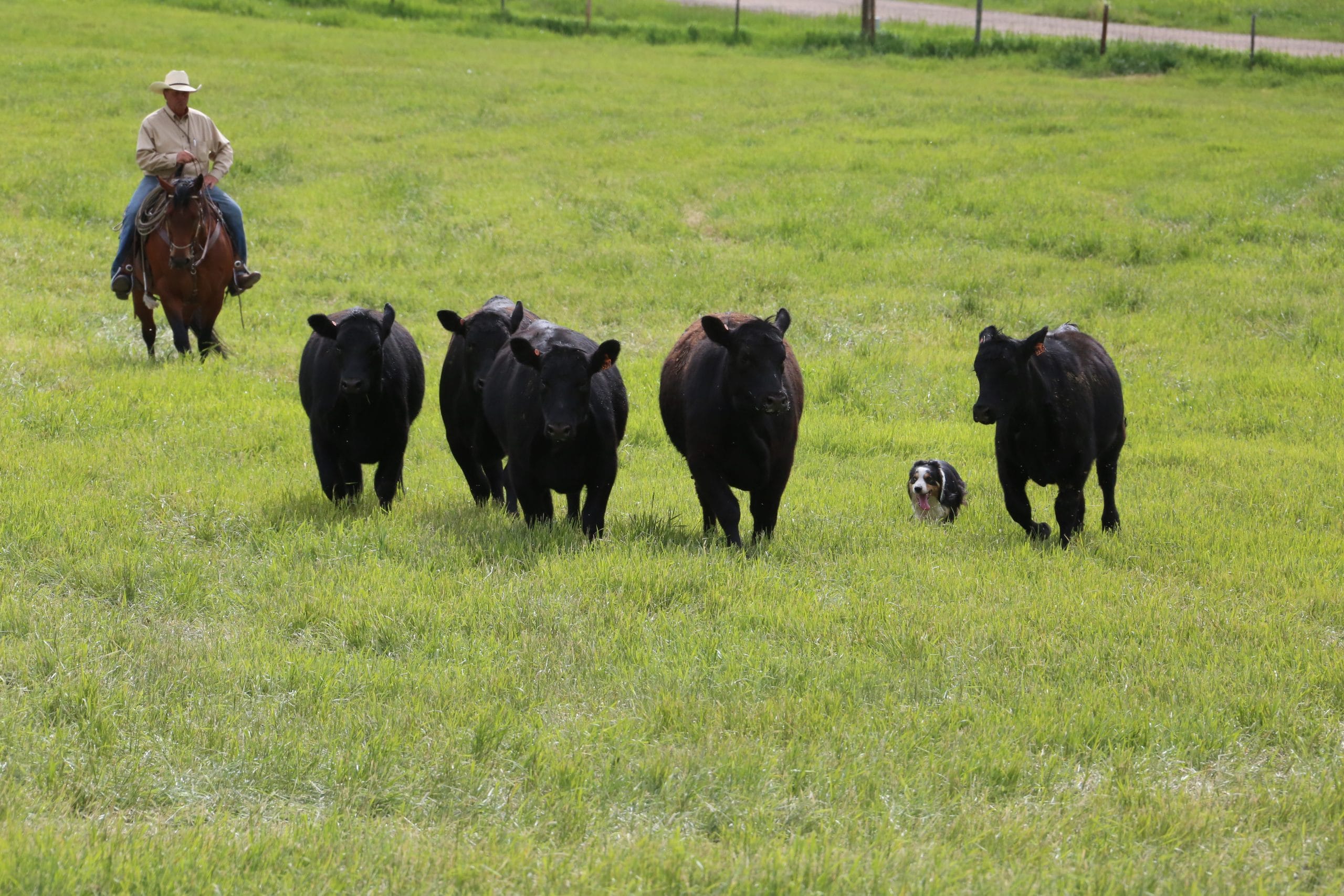
These days, Reyes still works cattle with his dogs—sorting, gathering or trailing yearlings—but he’s also quick to mentor others interested in the craft. Whether at the ranch or during a stockdog clinic, you’ll often hear his calm voice guiding both handler and dog through pressure and instinct.
“I’m not as fast as I used to be,” he joked, “but my dogs still are. That’s what counts.”
Despite the challenges, Juan is filled with gratitude for his children’s dedication, the life he’s built and the chance his parents gave him when they sent him to the U.S. as a young boy.
“I’ve been blessed,” Juan said. “Blessed that my parents made the decision they did, blessed to live in a country that gave me the chance to dream. I always say it’s not the individual who deserves the credit—it’s this country and the government structure that let people like me live the American dream.” — Charles Wallace, WLJ contributing editor