Brian Earnest did not grow up in agriculture, and his early career ambitions had nothing to do with livestock markets. Raised in a manufacturing town outside Rockford, IL, he described himself as “very mechanical”; someone who enjoyed working on cars and solving hands-on problems. His path into agricultural economics came later, taking shape during his college years.
Brian’s journey began at Rock Valley College in Rockford, where he was initially interested in automotive work, but a conversation with his father nudged him in a different direction.
“My dad said, ‘You need a business degree too, or something like that, just in case the working-on-cars thing doesn’t pan out,’” Brian told WLJ.
He dual-majored at the community college level before transferring to Eastern Illinois University. It was there, studying economics in rural Illinois, that Brian found his footing.
“I wasn’t a great student in high school,” he said. “But when I got to that junior level in college, I found that this was my niche.”
He stayed on to earn a master’s degree in economics, working summers as a laborer building docks and seawalls and holding a part-time job as a teller at a local credit union. By the time he graduated in 2006, the job market was weak. Brian leaned into his economics degree, a decision that would anchor the rest of his career, leading to his current position as lead economist of animal protein at CoBank.
Learning the protein business
Brian’s professional entry point came through Topco Associates LLC, a cooperative purchasing organization serving grocery retailers across the U.S. Starting as a buyer, Brian was responsible for sourcing turkey and tray-pack chicken, gaining an early education in protein procurement and retailer economics.
It was also where Brian first encountered value-added protein, poultry in particular. “We started a private-label program for value-added chicken—par-fried or ready-to-cook products,” he said. “That was really the infancy of those programs at the grocery store level.”
Over time, Brian expanded into frozen foods procurement, overseeing everything from French fries to pasta to breakfast items. That role coincided with major disruptions, including McDonald’s all-day breakfast rollout and the 2015 avian influenza outbreak. The experience gave him a front-row seat to volatility across the food system and sharpened his understanding of how shocks ripple from farm to shelf.
After a little over seven years at Topco, a recruiter’s call led Brian to Memphis, TN, where he joined IHS Markit as a commodity market analyst focused on poultry.
“That was a big shift,” he said. “I went from procurement into forecasting production and prices.”
In that role, Brian forecasted the chicken, turkey and eggs markets while advising companies across the farm-to-table spectrum. The poultry sector itself was changing rapidly. Larger birds, shifting consumer habits and expanding further-processing capacity were reshaping the industry. Those changes would later inform Brian’s broader perspective as his role widened beyond poultry.
A broader lens at CoBank
In July 2021, Brian joined CoBank, expanding his coverage from poultry into all animal protein. The move required a different way of thinking.
“When I was just looking at poultry, I was in the minutia every day,” he said. “When you move to all animal protein, you have to pull back to the 40,000-foot view.”
That shift meant focusing less on daily price movements and more on structural forces shaping production and demand. “It’s about understanding what’s changing for consumers and producers over time,” Brian said.
The cooperative structure of CoBank also appealed to him. “I was familiar with the Farm Credit System and the mission-driven nature of it,” he said. “That aligned really well with my experience at Topco. You know who your ownership is, and you know what you’re working toward.”
Beef demand and consumer adaptation
Brian remains bullish on beef demand, even as supply tightens. “The access consumers have today to high-quality beef is stronger than it’s ever been,” he said. “You can find Prime-grade beef at Walmart. That wasn’t the case 20 years ago.”
At the same time, he sees GLP-1 weight-loss drugs as a meaningful shift in consumption patterns. “GLP-1 usage has expanded rapidly,” Brian said. “And those users are still looking for protein, but portion size becomes the challenge.”
Beef, he noted, produces a limited number of cuts, many of which are getting larger as carcass weights increase. “The chicken industry has figured out how to deconstruct the animal to fit portion-size needs,” he said. “That’s an area where beef still has work to do.”
When Brian talks about innovation, he often points to poultry as the clearest example of an industry adapting to consumer behavior. “If you go back decades ago, most chicken production was whole birds,” he said. “Today, roughly 50% of the mix is further processed.”
Convenience has driven that transformation. “There are more air fryers in U.S. households today than coffee makers,” Brian noted. “And if you look at frozen chicken now, almost everything has air fryer instructions.”
The poultry industry has invested heavily in automation, artificial intelligence (AI) and further-processing capacity. “They’re not building new plants,” Brian said. “They’re investing in how they process product and meet consumers where they’re at.”
On the supply side, Brian expects constraints to persist. “We just don’t have enough cattle,” he said. “The expectation is the consumer would eat more beef if there was more available.”
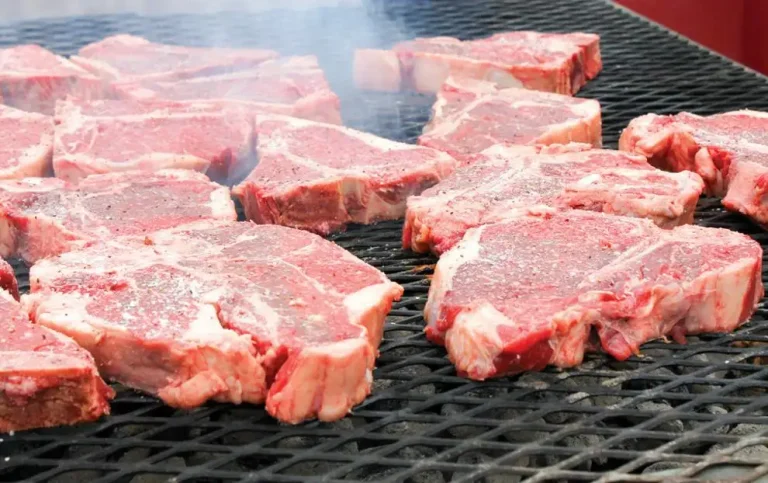
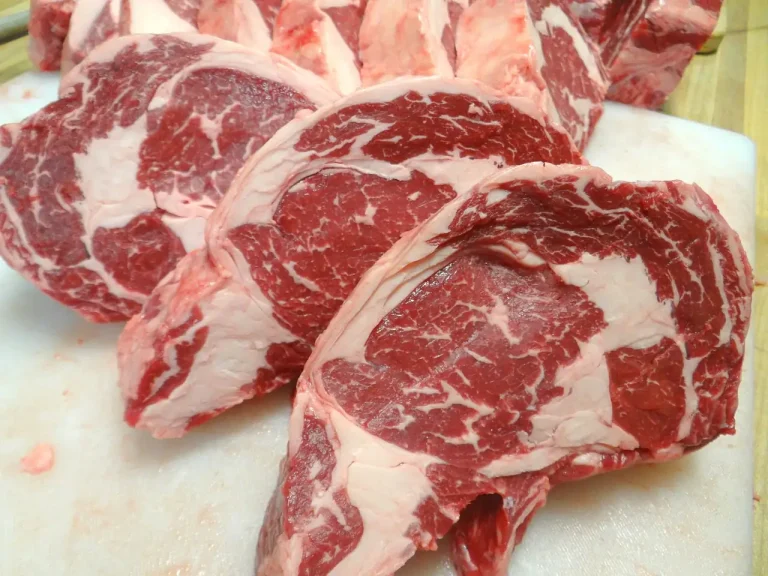
Rather than exiting the category, consumers have adapted. “We saw people shift from ribeyes to strips or other cuts,” Brian said. “They were still buying beef, just different items.”
Ground beef remains central. “About 50% of beef consumed in the U.S. is ground,” he said. “It’s an $18 billion category, and it continues to grow in both dollar sales and volume.”
Dairy, technology and road ahead
Brian also points to the dairy industry as an increasingly important piece of the beef puzzle. “Beef-on-dairy genetics have improved the quality of calves entering the beef supply chain,” he said. “That’s a bigger part of the mix than it was five years ago.”
At the same time, fluctuations in milk prices affect culling rates, thereby influencing the availability of lean trimmings used in ground beef. Brian continued that with fewer beef cows and tighter imports, the dairy industry may play an increasingly important role in balancing the U.S. beef equation—though it remains a supplement, not a substitute, for traditional cow-calf production.
Looking ahead, Brian expects continued adjustments to processing capacity. “We built capacity for a herd size we’re not going back to,” he said. “Some of that is being rationalized now.”
Plant closures and reduced shifts, while painful, reflect a rationalization process as the industry adjusts to smaller herd numbers. At the same time, he sees opportunity in technology—particularly automation and AI—to improve efficiency and product consistency across proteins.
“You see a lot of automation and AI in poultry,” Brian said. “The question is, how does the beef industry embrace those tools?”
From a community-college classroom in Illinois to a national vantage point on animal protein, Earnest’s career mirrors the industries he analyzes: shaped by disruption, defined by adaptation and increasingly focused on how food systems meet consumers where they are. As protein markets navigate supply constraints, demographic shifts and technological change, that perspective may be more valuable than ever. — Charles Wallace, WLJ contributing editor