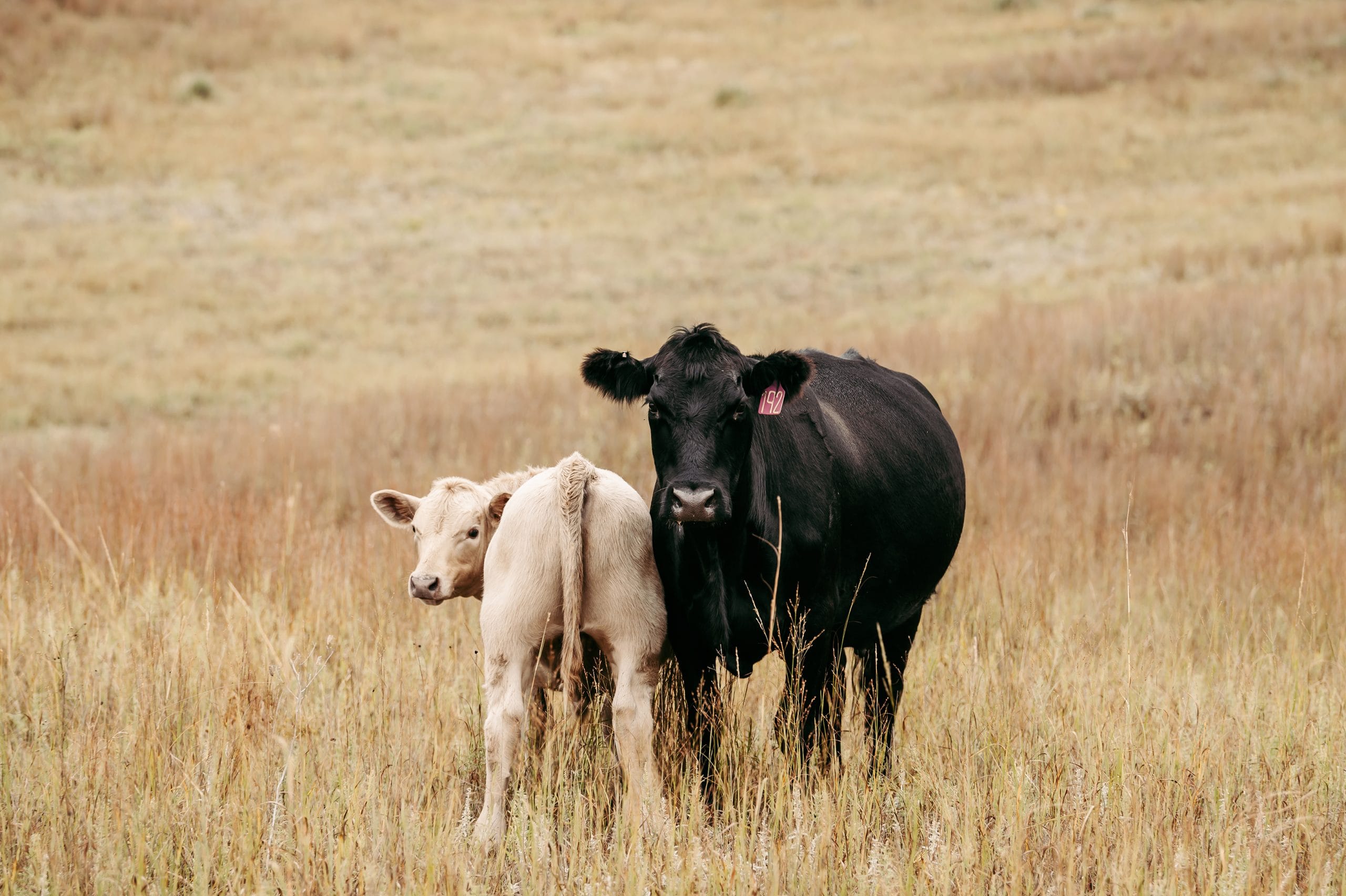
Lindskov Ranch sits in the wide-open plains of northwest South Dakota near the town of Isabel, where cattle have been part of the family’s story since 1934. What began with Todd and Bryce Lindskov’s grandfather, William “Bill” Lindskov, has grown into a multigenerational operation built on a herd that delivers carcass performance and maternal strength with continuous improvement always top of mind.
Today, the ranch runs roughly 5,000 commercial Angus cows, all bred to Charolais bulls, along with 1,250 registered Charolais females and additional registered Angus, Hereford and Simmental herds. From the beginning, the Lindskov philosophy has centered on identifying cattle that can both mother and grow, because in their part of the world, functionality and longevity aren’t optional.
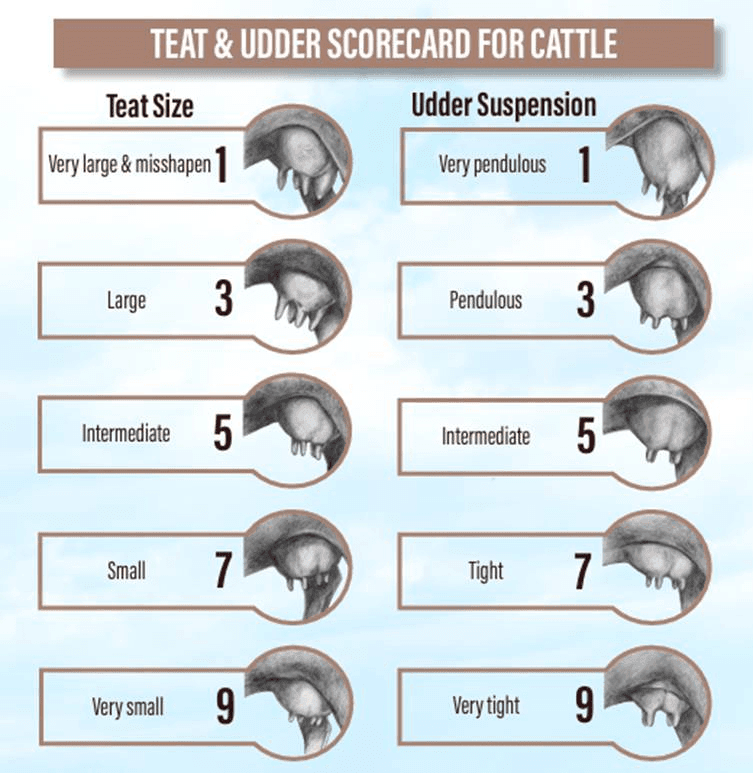
“Our primary goal is to provide performance bulls to commercial breeders across the country,” Lindskov says. “We put a lot of emphasis on feet, udder quality, and functional mother cows, because we know those traits are what it really takes to have a bull that will last for many years and many breeding seasons on big country, in tough conditions.”
That balance between maternal strength and growth is what originally drew the Lindskov family to Charolais genetics decades ago. Todd and Bryce’s father saw firsthand the advantage of crossbreeding black cows with Charolais bulls, and that early experience still shapes how the operation defines success today.
Finding the balance between maternal and growth is also the driver for the data collection Todd says has become a normal part of day-to-day operations on the ranch.
“We started collecting full DNA data around 2018. The initial goal was to make sure every calf was parent verified,” Lindskov explains. “Now that we have collected data for nearly eight years, the majority of our cow herd is 100K tested, and DNA collection is just part of the rhythm of our operation.”
Data collection formally begins at weaning, when calves are tagged, weighed, sampled, and processed. Weaning weights, yearling weights, and carcass data are the backbone of Lindskov’s performance records, and although the market is flooded with software for record management, Lindskov keeps it simple.
“We use Microsoft Excel to track and submit data to the associations. Marisa, my wife, collects the majority of the data at weaning time and is also the one who submits all of our data to the associations,” Todd says.
The most important shift, Todd shares, is that data collection has become part of the “normal” workload on the ranch.
“It has just become routine for our operation. We have never really stopped to think about how much time it takes because this is just how we operate now,” he says.
Data for real-world decisions
Todd shares that the time and labor investment the ranch makes in data collection shows up as a return on investment when it’s time to make mating decisions.
“When mating our cows for the AI breeding season, it has been a great tool to select certain matings to add more value to specific cows. If a cow is lacking milking ability, calving ease, or carcass traits—it’s easy to look at those cows on paper and make breeding selections that will add more value to the next calf crop,” he adds.
Data has also sharpened the culling process. Females that fall short on performance or maternal strength are culled more confidently and earlier than they have been in the past because the decision is truly black and white. Todd says that their operation has been able to confidently increase culling pressure on females that don’t have enough performance or milking ability.
“If cows aren’t performing and raising consistent calves, then they aren’t benefiting the feeder cattle industry, and they don’t belong here,” he explains.
While phenotype still comes first at Lindskov Ranch, data provides the added layer of validation. Structure, udder quality, temperament, pigment and mobility are evaluated before numbers ever come into play. But once an animal passes that visual screen, performance data helps fine-tune selection.
“When we select females or bulls, our goal is to make sure they are functional cattle first. We look at phenotype, udder pigment, foot structure, and head,” Lindskov explains.
“Once an animal passes those credentials, then we move to the paper and make sure performance, milking ability, and carcass traits are what we are looking for. Data has helped us, but we still have to keep good, functional, maternal cattle in the herd.”
One key area of focus has been the spread between birth and weaning weights, selecting cattle that calve easily yet still wean off heavy calves. That balance is especially critical in a market environment marked by shrinking cow numbers and increasing production pressures.
“We have really focused on the spread between birth and weaning. We want bulls with calving ease and appropriate birth weights, but we also want those calves to wean off big.
“With the shortage of cattle in the U.S., we need to be raising feeder cattle that don’t just get big but grade well while keeping birth weights modest. And that is what I believe the Charolais breed can offer better than any other.”
Connecting the data dots
From a genetic evaluation standpoint, Mark Allan of Allan Genetic Solutions sees Lindskov Ranch as part of the solution to one of the breed’s biggest challenges. While birth and weaning weights are widely reported across the Charolais breed, yearling weight submission lags, creating a critical gap.
“When you analyze breeders who are turning in birth, weaning, and yearling weight compared to those who stop at weaning, the difference in accuracy is massive,” Allan explains. “Breeders who do not turn in yearling weights see their EPD accuracies fall back to parent-average levels in later generations. That dramatically reduces the predictive power of their genetic evaluations.”
He says yearling weight is not simply another number. It is a key indicator of growth potential and a foundational input for multiple economic traits. From Allan’s perspective, yearling weights represent a pivotal moment where genetics transition from early growth expression into true performance potential. Without them, long-term genetic comparisons weaken.
“There are breeders turning in ultrasound data but not turning in yearling weights, even though a weight is required for ultrasound adjustments. If that yearling weight never moves into the evaluation as a yearling record, we are losing one of the most valuable data points we can collect. If we want to improve the accuracy of EPDs and selection tools across the entire breed, yearling weight has to become top of mind,” he says.
Allan frames data collection as both a technical responsibility and a customer service obligation. When breeders fail to submit complete performance records, it impacts not only on their own herds but also the reliability of the tools their customers rely on to make purchasing decisions.
“If you are not collecting data, you are not allowing the tools to maximize the prediction of outcomes for your customers,” Allan explains. “You are limiting the ability of those buyers to make confident decisions based on accurate genetic merit.”
Much like Lindskov LT Ranch operates, Allan emphasizes that genomics and EPDs are never meant to replace phenotype or management. Instead, they work best when paired with complete performance records.
At NextGen Cattle Company in Paxico, KS, Joe Epperly sees the downstream impact of data collection every day. Managing roughly 800 cows and marketing 700 to 800 bulls annually across registered Charolais, Beefmaster and Angus genetics, Epperly operates in a closed, vertically aligned system that includes a feedlot. That structure allows him to see genetic outcomes from birth all the way to the rail.
“At our company, we embrace genomics because we get all individual carcass data through our feedlot,” Epperly explains. “We feed that information back into the breed associations because it allows us to make better long-term decisions when it comes to selection, feeding, and marketing.”
Epperly believes data collection is no longer optional for seedstock breeders who want to remain competitive.
“If registered breeders do not continue to collect data and make EPDs more relevant and accurate, large commercial operations will outrun us,” he says. “There will be no reason for those outfits to buy their bulls from registered breeders if we cannot offer superior predictive value.”
For Epperly, genetics never leave the operation. The cattle NextGen Cattle Company sells eventually come back through the company’s feeding system. The full-circle perspective mirrors Lindskov LT Ranch and Allan’s viewpoints. Todd shares that the operation collects data because of their understanding of how those genetics will represent years of downstream impact for the industry. All three cattlemen understand that the decision to use the genetic assessment tools available today will shape commercial, and ultimately seedstock, profitability long after the trailer gate closes.
“If you are a cow-calf producer and you’re not worried about what happens to those calves after they leave your ranch, you are going to get discounted,” Epperly says. “If you’re a seedstock producers and your bulls don’t work for your customers long term, that will come back and affect your reputation and your market. Everything in the cattle industry is full circle.”
With first-calf heifer prices and replacement costs at historic levels, Epperly believes genomically enhanced EPDs now serve as a form of financial insurance.
“If you are talking about a $30-to-$50-dollar genomic test on a $5,000 bred heifer—that is cheap insurance to know that she has a higher likelihood of staying in the herd for seven, or even eight years,” Epperly explains. “As we continue to collect longevity and udder data, it will not surprise me if lenders eventually start requiring that type of information on high-dollar female purchases.”
For Lindskov Ranch, Allan Genetic Solutions and NextGen Cattle, data collection is not about chasing trends. It is about building predictable, profitable systems that benefit producers at every level.
From Lindskov’s perspective, the biggest return on investment is confidence.
“Being able to market bulls and semen to other countries already knowing our cattle are parent verified and PA-free has taken a lot of uncertainty off our shoulders,” Lindskov explains. Epperly agrees. For NextGen Cattle Company, data and profitability are inseparable.
“If we want to make animal and herd improvements in fertility, feet, longevity, growth, and carcass traits all at once, data has to drive that process.” Epperly says.
And for those who see the big picture the motivation is simple: data collected on one operation doesn’t just improve that operation, it improves the breed and the industry.
“If we as a Charolais breed can continue to show that our cattle wean off big, feed well, and grade in the end, it makes marketing our breed to commercial cattlemen easier,” Lindskov says. “And that should be a goal we all have.” — AICA