A newly released technical report by the California Department of Water Resources (DWR) determined that the over-pumping of groundwater in the Central Valley has reduced the amount of water the State Water Project can deliver in a year by 3%. If no action is taken by 2043, the agency warns the current trajectory could reduce deliveries by 87%.
The report, titled the “State Water Project Delivery Capability Report 2023 Addendum: Impact of Subsidence,” builds on a 2024 Delivery Capability Report. The 2024 report analyzed the ability of the State Water Project to deliver water under current and potential future conditions in 2043.
“The new findings underscore the importance of eliminating groundwater overdraft in the Central Valley and repairing existing damage to the state’s main water-delivery arteries,” the agency said.
In the Delivery Capability Report, DWR determined that State Water Project delivery could be reduced by as much as 23% in 20 years due to changing flow patterns and extreme weather shifts. This could lead to the loss of nearly 500,000 acre-feet (1 acre-foot is about 326,000 gallons).
The addendum analyzed more potential changes to future deliveries because of damage to State Water Project canals tied to groundwater pumping and oil and gas production. The new report also analyzes impacts under different hydrology and subsidence (sinking land due to over-pumping of groundwater) scenarios.
The addendum projected the following by 2043:
• The State Water Project’s average delivery capability could be reduced by 18-87%.
• Average annual State Water Project deliveries could decline 400,000 acre-feet to 1.8 million acre-feet under moderate climate change and moderate subsidence conditions.
• Average annual State Water Project deliveries could decline by 1.5 million acre-feet to 295,000 acre-feet under extreme climate change and subsidence conditions.
• Failure to halt subsidence and fix canals will limit California’s ability to store water in high-precipitation years and cut into water supplies for drought years.
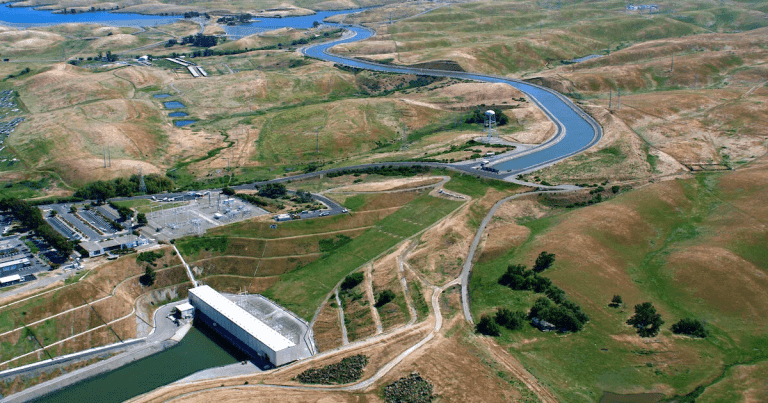
The agency said excessive pumping of groundwater, along with oil and gas production along some stretches of canals, has caused the overlying surface of the land to fall. Sinking land can create bowls where water pools, restricting water movement. Although water project operators have adjusted operations for years to overcome the effects of subsiding land, they have reached adjustment limits, DWR said.
“The effect of 2023 levels of subsidence can be observed in the need to run water closer to the top of the concrete liner in subsided canals than standard operating procedures would dictate,” the agency added.
In 2017, DWR released its first in-depth study of the magnitude, location and effects of subsidence on the California Aqueduct, a key part of the State Water Project. The agency then established the California Aqueduct Subsidence Program to work on solutions to prevent the effects of subsidence from impending operations.
DWR said it is implementing projects to restore State Water Project capacity, engaging with groundwater sustainability agencies and working with partners to secure additional funding for the work.
“DWR is committed to ensuring that the dire outcomes of a future with unchecked subsidence do not occur,” the agency said. — Anna Miller, WLJ managing editor