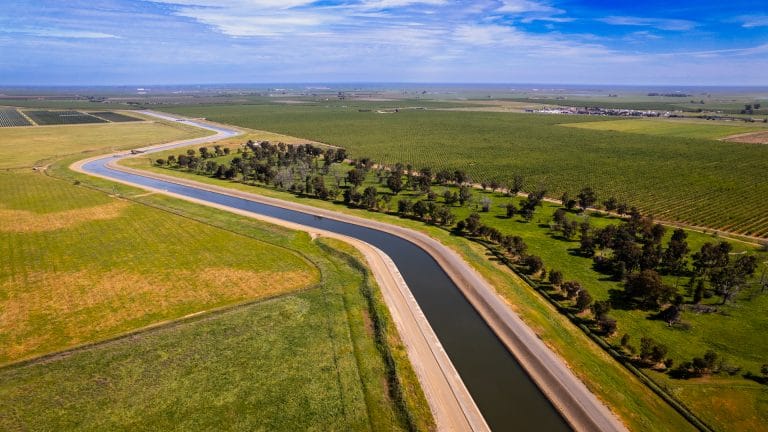
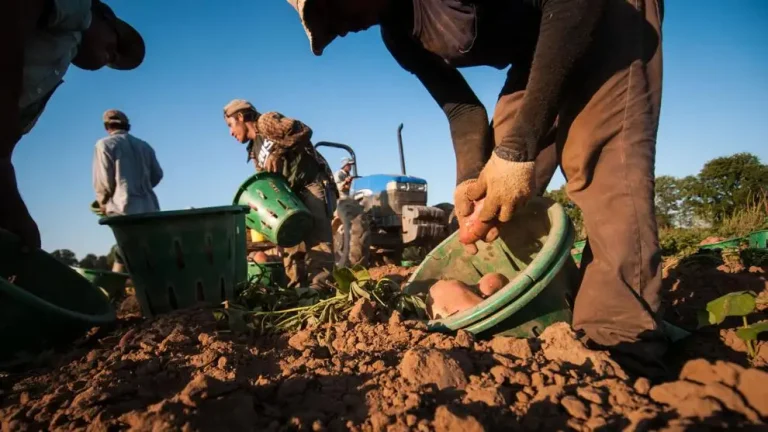
In California’s Central Valley, the value of farmland is closely tied to agricultural production, which relies on water. Cropland prices can range from less than $10,000 per acre to over $60,000 per acre. These values vary based on many factors, such as soil suitability, the types of crops grown and water availability. Location is important and can account for development pressures.
Microclimates and proximity to markets or production facilities can influence profitability. Land sales also fluctuate with changing economic trends in real estate or the agricultural sector. If commodity prices fall, there can be reduced demand for production from current fields.
Land prices can also be influenced by longer-term changes in water scarcity and environmental factors. For instance, implementation of the Sustainable Groundwater Management Act (SGMA), passed in 2014, will likely require reductions of intense agricultural production in areas of long-term groundwater overdraft.
If less irrigation water is available, how will cropland production and acreage be affected? Are long-term regulatory changes already getting incorporated into farmland values in the state? Parsing out these influences from the many factors affecting farmland values requires lots of data, especially to detect both spatial and temporal trends.
Two types of analysis can help investigate these questions. First, we can understand the trajectory of farmland values over several decades to give context to recent trends since 2014. Analyzing historical data on cropland and agricultural land cover from the USDA shows that across California, from 2001 to 2021, both the acreage and average value of sold farmland increased significantly. For instance, in the Central Valley, farmland sales averaged $8,150/acre in 2001, but by 2021, average prices had risen to over $52,200/acre, which equates to more than a 530% increase.
During the same period, farmland productivity, based on sales per acre, increased by over 330%, with net farm income rising from $300/acre to over $1,800/acre throughout the state. Cropping trends also changed in the Central Valley, with high-value perennial crops replacing low-value annual crops. Since 2008, the share of land in cultivation with perennial crops has increased by 40% or more, with corresponding decreases in annual crop acreage. Widescale adoption of efficient irrigation technologies likely allowed for this expansion.
Second, more detailed data and visualizations can find correlations in farmland values, irrigation water sources, and crop types. Based on data compiled by Acres, Inc., between 2018 to 2023, the monthly amount of cropland sold for annual crops varied widely, with only 8,000 acres sold in April 2023, but more than 30,000 acres April 2021, when farmland sales totaled over $600 million.
The distribution of values for land sales of annual crops also varied across the valley, with areas of the western San Joaquin Valley seeing less than $20,000/acre, and areas near Stockton and Merced selling for more than $40,000/acre. Acreage of farmland sold under permanent crop cultivation was larger, ranging from 20,000 acres to more than 60,000 acres in the spring months of 2019, 2020 and 2021.
Access to water sources also significantly influenced farmland values. Several studies have pointed to the intersection of surface water availability, groundwater dependence and socioeconomic vulnerability that are driven by SGMA implementation. Newly published data from Acres classifies irrigation districts in two tiers: Tier 1 irrigation districts that have access to surface water sources, and Tier 2 irrigation districts that rely primarily on groundwater.
The cost of irrigation for crop production on Tier 2 farmland is likely to be higher than on farmland in Tier 1. From 2018 to 2023, median farmland values in the Tier 1 districts rose by 30%, from $31,000/acre to $40,000/acre. In contrast, farmland values in Tier 2 irrigation districts were largely flat, starting and ending at $24,000/acre. Ties between farmland values and agricultural productivity emerge.
For instance, in the case of almonds, Tier 1 irrigation districts averaged around $40,000/acre of transactions from 2022 to 2024, but transactions in Tier 2 irrigation districts declined steadily to just over $20,000/acre. While it can be difficult to eliminate the effects of land tenure, commodity prices, and speculative hedge fund investments, the trends remain clear.
These revealed trends indicate potential emerging effects of water scarcity on farmland values in the Central Valley. We also know that other environmental factors can influence land values. For instance, while dust cover is correlated with land values (indicating productive agricultural lands in California’s dusty Central Valley), higher levels of dust tend to decrease farmland values. For example, an increase in dust levels from the fifth percentile to the 75th percentile in the Central Valley can potentially lead to a loss in farmland value in the range of $1,365 to $1,524 per acre.
Climate change will affect agricultural production and farmland prices in California, but how rapidly will prices change in the face of water availability, crop market trends and real estate prices?
From 1997-2022, the USDA’s Agricultural Census indicated that California farmland decreased by 14%, likely from many factors including agriculture to urban land transitions. Yet, even with this decrease and three major periods of drought since 2000, agricultural farmland values steadily increased across the state and the market values of land grew, likely supported by wider adoption of efficient irrigation, groundwater pumping and changes in global commodities.
Analysis of recently acquired data makes it possible to parse trends across crop types and water availability. The trends are revealing that surface water access will likely influence long-term real estate prices across vast stretches of the Central Valley. Groundwater availability is no longer a guaranteed asset. These changes in farmland values are likely to have wide economic spillover effects, including those to farm lending, insurance and labor sectors.
As California continues to support Multibenefit Land Repurposing and other efforts intended to minimize impacts, investing in high resolution spatial and temporal data will be critical to understanding the directions and drivers of socioeconomic change. Additional investments in climate smart agricultural practices are also needed given the continued severity and uncertainty of climate impacts to agricultural water use. — University of California Agriculture and Natural Resources