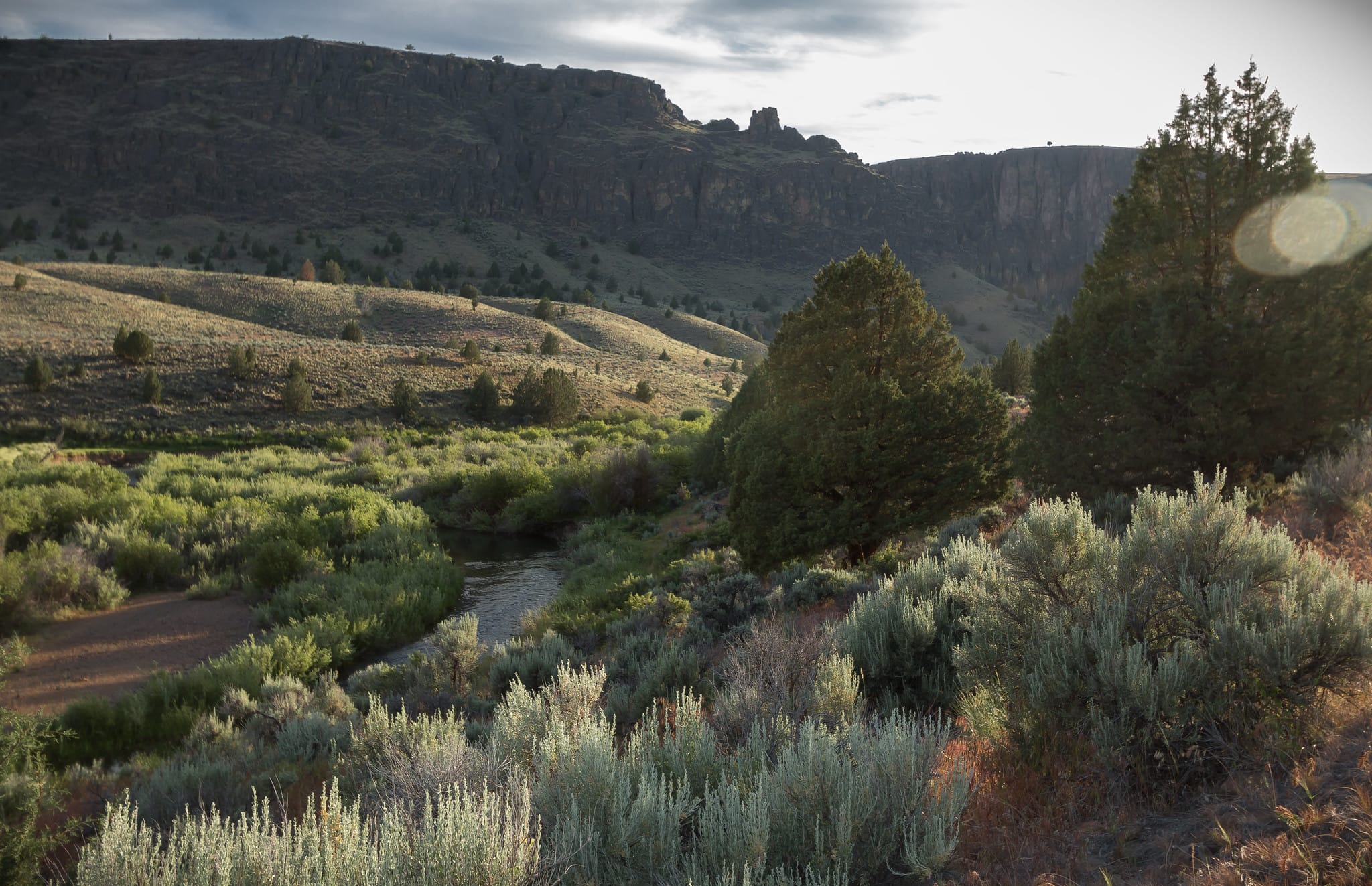
A proposal to protect the Owyhee Canyonlands in southeast Oregon did not make it through the U.S. Congress at the end of the year, but members of Oregon’s delegation said they’ll try anew in 2025.
The proposed Malheur Community Empowerment for the Owyhee Act would have put more than 1.1 million acres of federal public land in the canyonlands and a 15-mile stretch of the Owyhee River under the protection of the National Wilderness Preservation System and the Wild and Scenic Rivers System. The bill also would have transferred 30,000 acres of federal and private land into a trust overseen by the Burns Paiute Tribe.
The latest iteration of the bill was proposed in 2023 by Oregon’s U.S. Sen. Ron Wyden. It marked the third such proposal by Wyden and Oregon’s other Democratic Sen. Jeff Merkley to pass a bill protecting the area known as Oregon’s Grand Canyon from overdevelopment and overgrazing, while maintaining access for area ranchers and livestock.
It passed the U.S. Senate almost unanimously Dec. 20 but died in the U.S. House before politicians recessed for the year. Oregon’s Republican Rep. Cliff Bentz (02), who represents the area in Congress and who proposed a similar bill of his own for the first time in November, will collaborate on a proposal in the new year, according to a statement from Bentz and Wyden.
Oregon Gov. Tina Kotek (D) has called on President Joe Biden to exercise his executive authority and protect the Owyhee under the Antiquities Act, designating the area a national monument, but Biden has not yet done so. He’ll leave office on Jan. 20.
While Congress can protect areas under the National Wilderness Preservation System and the Wild and Scenic Rivers Act, the Antiquities Act allows the president to designate areas national monuments if they hold cultural, natural or historical significance.
Wyden and some Owyhee supporters wanted congressional protection rather than a national monument designation, which could be challenged by lawsuits, especially if the President-elect Donald Trump moves to upend monument designations as he did in his first term.
“You cannot get an acre of wilderness, an ounce of tribal protection, or any meaningful grazing reforms for ranchers in the Owyhee without black-letter law passed by Congress,” Wyden said in a statement.
Ryan Houston, executive director of the Oregon Natural Desert Association, said he and supporters of protecting the canyonlands were “deeply disappointed” in the U.S. House’s failure to vote on Wyden’s bill.
“It is frustrating that our elected leaders in Washington, D.C., have chosen not to act on the opportunity in front of them, but we will continue working as long as it takes to secure the protections that the Owyhee Canyonlands deserves,” he said.
In an email, Wyden said the bill’s passage in the Senate could make it easier to get the bill passed again in the Senate, and he’ll have help from Bentz in the House.
Wyden and Bentz said in a joint statement it would be a priority for them both in 2025 to get something passed.
“We want Oregonians to hear us loud and clear: We will continue in 2025 to push for legislation that accomplishes those objectives until they are the law of the land,” the statement said. — Alex Baumhardt, Oregon Capital Chronicle
Republished under Creative Commons license CC BY-NC-ND 4.0.