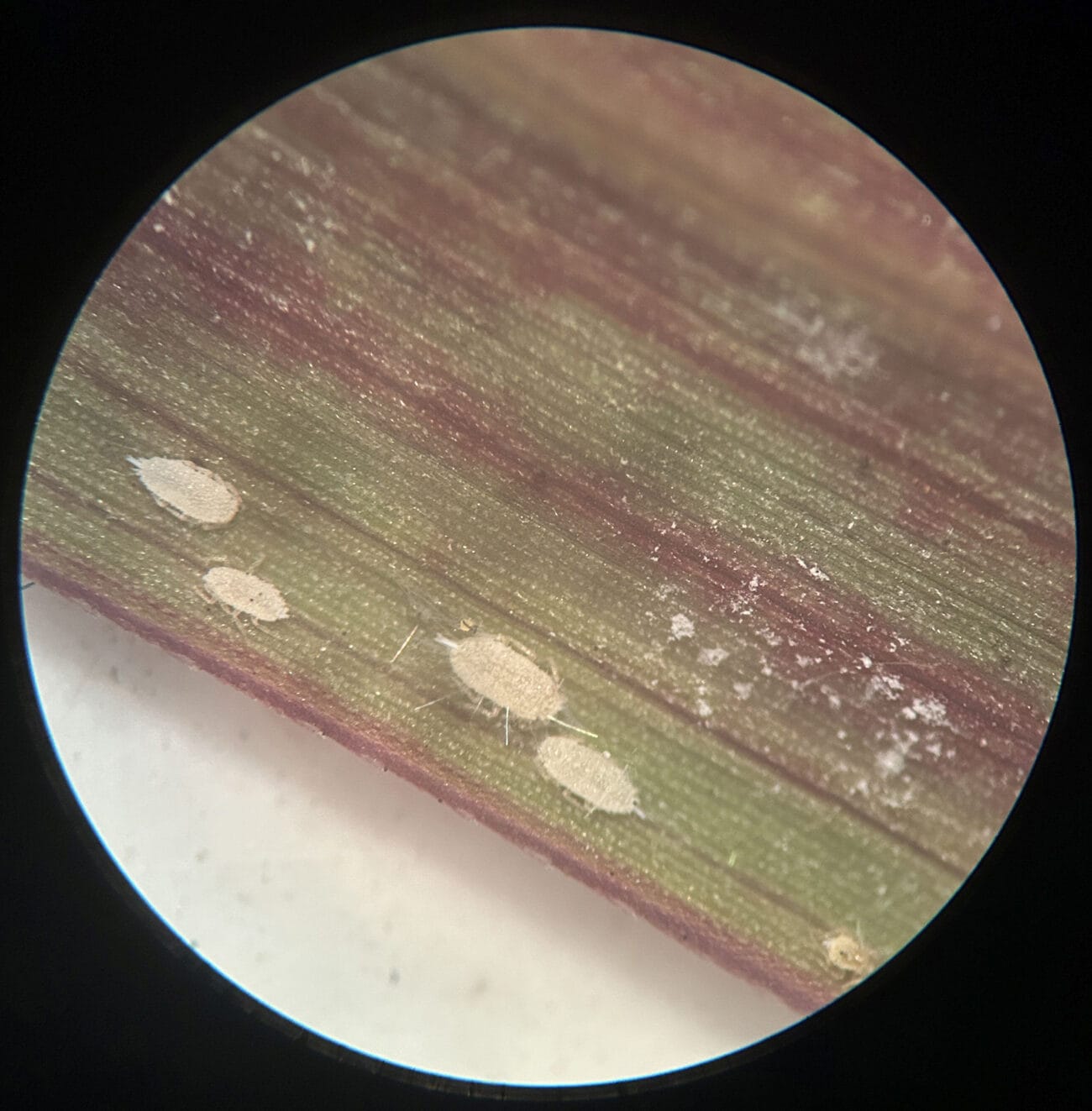
Pasture mealybug and prevailing dry conditions have put a dent in hay production for parts of the state, while other areas have fared well this season, according to Texas A&M AgriLife Extension Service experts.
Overall, forage production statewide has been a mixed bag.
“Depending on location, for those who have had rainfall, we’ve seen some good hay produced,” said Vanessa Corriher, Ph.D., AgriLife Extension forage specialist and professor, Department of Soil and Crop Sciences, Overton. “However, those with pasture mealybug will be relying on last year’s hay. Between dry weather and pasture mealybug, production has definitely been a moving target.”
Producers in good shape where rain fell
“Despite the hits from the pasture mealybug, our producers had a pretty decent hay season that ramped up storage earlier in the spring and summer,” said Chadd Caperton, AgriLife Extension agent for Brazos County. “Some did feed a little hay during the dry period but supplemented with syrup tubs and tanks to help reduce the amounts needed.”
Caperton said producers across the region appear to be in pretty good shape going into the colder months. Fall armyworms were hitting pastures after the recent rains and cooler temperatures, but he said producers were actively combating those infestations.
Caperton said a couple of producers indicated they will likely begin feeding hay at the end of the month or early part of November as the growth of the warm-season grasses slowly declines and they go dormant.
“Overall, even with the pasture mealybug, we are in decent shape,” he said.
Hay supplies tighten in other areas
Dry weather took a significant toll on producers in South Central Texas, which hampered hay yields and supplies. The start of the hay season was good, but rainfall became nonexistent later in the growing season. Many operations will not make a third cutting.
“Central Texas hay produced was average,” said Shane McLellan, Ph.D., AgriLife Extension agriculture and natural resources agent for McLennan County. “The rains from March through mid-July provided great moisture. But the rains ended in July until about a week ago. Seventy-plus days of no rain and above average temperatures did negatively affect hay production.”
Producers do have the benefit of carryover hay from the 2025 production season, he said.
“Prices for hay remain lower than expected due to supplies and carryover bales,” McLellan said. “There has been a lot of hay moving out in the country the last month due to livestock producers feeding hay as they were out of grazing. Pastures that aren’t stocked were greening up, but hay feeding continues in our area.”
Options for producers
The best approach to winter feeding and forage will depend on the location of the operation, said Jason Banta, Ph.D., AgriLife Extension beef cattle specialist and professor, Department of Animal Science, Overton.
“In most cases, there is no reason at this time to purchase extra hay,” Banta said. “If hay is the primary source of forage during the winter for your operation, then this year is just like years prior to the introduction of the pasture mealybug.”
Banta said if an operation is in a lower rainfall area and relies on stockpiled native range during the winter, then the pasture mealybug was not expected to have an impact this winter.
If operations use stockpiled introduced forages like Bermuda grass, Bahia grass or Old World bluestem to reduce hay feeding, then the amount of forage that is produced for eight to 10 weeks prior to frost is important to consider.
“In many areas of Texas yield of stockpiled introduced forages will be down this year due to drought, so some extra hay would need to be purchased anyway,” Banta said. “In some situations, however, the pasture mealybug may reduce yield of stockpiled introduced forages. If this is expected to be the case, then it would be wise to purchase extra hay to make up for the loss of the stockpiled forage.” — Texas A&M AgriLife Extension