As an avid aviator in the 1920s and 1930s, Ardmore, OK, native Lloyd Noble often had a bird’s eye view of the southern Great Plains landscape he called home; but unfortunately, the oil tycoon could clearly see it was no longer the picturesque prairie it had once been. Instead, much of the land had been broken out into marginal farm ground during Noble’s youth. Intensive farming had depleted important nutrients, and a decade-long drought had only compounded the problem. Eventually, many homesteads were abandoned when landowners could no longer make a go of it.
While it has been noted that Noble admired farmers and ranchers for their strong morals and work ethic, he was concerned about the use of poor agricultural practices that resulted in a barren land susceptible to erosion. In 1945, he used part of his oil fortune to establish the Samuel Roberts Noble Foundation, named for his charitable father, to help improve soil conditions and give back to the land he cared for so much. With some initial success, that foundation eventually turned into a regional consulting program, and over the years, expanded its focus to include forage-based beef cattle production research and a plant-breeding program that created Elbon Rye, the most widely used rye variety.
Today, the foundation is an endowed organization and serves as a major funding source for the work of the Noble Research Institute, which recently renewed Noble’s foundational focus on soil health through its regenerative ranching program.
Hugh Aljoe, Noble’s director of ranches, outreach and partnerships, said the shift back to regenerating America’s grazing lands stemmed from the founder’s original vision and deep appreciation for the soil.
“Mr. Noble’s sentiments about the land are evident in many of his memoirs,” he said. “He was adamant that long after the oil and gas production is gone, the land still has to continue to provide for the food, fiber and timber necessary to sustain the families and livelihoods of people.”
On its 13,500 acres of native range, introduced-forage pastures and grazed cropland across six ranches in southern Oklahoma, the Noble Research Institute has implemented a regenerative ranching program that promotes land stewardship through management, building soil health and keeping farmers and ranchers on the land. The diversified operation includes a commercial cow-calf herd, stocker cattle, sheep and goats and emphasizes matching available forages with the animals best suited to maximize land use efficiency.
“Our ultimate goal is to use grazing animals to positively affect soil health and increase the carrying capacity of each ranch,” Aljoe explained. “We’re focused on research that is meaningful to a landowner, providing them with science-based practices that rebuild the soil health of their grazing lands and help them attain greater profitability per acre.”
Aljoe said that while the organization has always been a good steward of the land, it’s now taking a new approach to not only sustain it, but to build it back even better. For example, his staff had historically followed fertility recommendations based on the nutrient needs of the forage crops they were trying to grow and used a more traditional rotational system to avoid overgrazing, but over time, they noted that even with the same amount of fertility added to the soil, they were getting less production.
“Even using some pretty standard best practices, all we were doing was growing a crop,” he said. “We were not returning any soil health, and we noticed that our organic matter, which is an indication of soil biology, had continued to decrease over the decades of our management.”
With training and advisement from several renowned organizations in the regenerative agriculture space, including Understanding Ag, Ranching for Profit and the Savory Institute, Aljoe’s team began to change their entire management mindset. That shift included implementing high-stock density grazing to utilize many of the forbs they had previously sprayed with herbicides.
“In our efforts to rebuild the organic matter, we now just let everything grow,” Aljoe said. “We’ve been surprised at what the animals will actually graze, and anything that’s not used is returned back to the biology.
“We’ve learned to appreciate what the weeds contribute.”
As a result, he said the landscape looks a little different than it has historically.
“We’re no longer trying to attain the traditionally pristine Bermuda grass pasture or wheat pasture,” Aljoe said. “Instead, we want a lot of diversity within our pastures, and that typically means we allow more of the forbs to grow naturally.”
On grazed crop fields, Aljoe added that double cropping has allowed them to use a mixture of forages in their cover crops, building more beneficial residue to maintain soil moisture and improve water holding capacity over longer periods of time.
“Regardless of our grazing program, we’ve got to feed the biology, and the only way you feed the biology is to lay more of the plant material on the ground,” he said. “Then through grazing management, a significant portion gets trampled in to feed the organisms that build up the nutrients within the soil.
“When you’re managing land resources well, you can plan for profitability, even in times of drought like we’ve been able to do for the last three years.”
That ability to manage the land proactively—rather than reactively—creates resiliency when it is needed most. Joe Pokay, Noble’s general ranch manager, joined the team in 2021, just as the ranches began implementing their regenerative ranching strategies—and subsequently around the time the area began to experience a severe, multi-year drought.
“We were in the throes of trying to learn grazing management, which is pretty hard to do when the grass stops growing,” he said. “Our ranch managers and the people who run the day-to-day livestock grazing are very efficient in their jobs because they learned in probably the hardest conditions that a lot of us have seen in the last 10 or 15 years.”
Like many producers, Pokay said his team focused on the health of their forage resources during the extended dry spell. They decreased stocking rates up to 60%, at one point only keeping females that were bred in the first 45 days of the season.
“We’re reaping the benefits of that management now because we’ve recently had a pretty wet spring,” Pokay said. “For the most part, our forages have responded very well and a lot of that’s because we didn’t abuse them during the drought.
“We could have stocked heavy, grazed everything really low and fed a bunch of hay, but we decided that for us, it would be better to focus on the resource and get back into cows when we can.”
That success is also a result of the rest and recovery period allowed for after grazing. Pokay said Noble’s grazing strategy is more than just rotational grazing, but rather a system of controlling livestock density and intensively measuring forage growth.
“We don’t rotate on a fixed schedule by the calendar,” he said. “Day to day we’ll have an idea of how much forage is in the area we want to graze and then how much our herd demands for the day, and we try to match those two pretty regularly.
“Our main management goal is to allow the plants to recover after we graze them so they have a chance to grow back up and be productive and desirable again.”
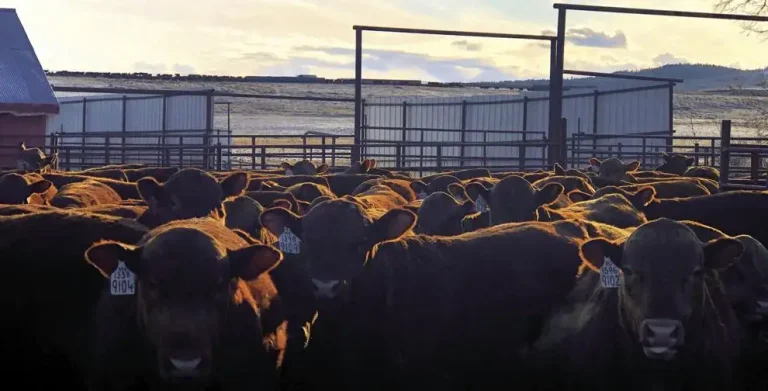
Another factor in Noble’s regenerative ranching efforts is the variety of livestock they run, including Red Angus-influenced cattle. While breeding and marketing strategies have varied over the years, Pokay said today, 38% of the organization’s bulls are 100% Red Angus and half are Red Angus composites.
He added that their Red Angus bulls typically stay productive longer than other breeds, while the cows have excellent mothering instincts, good feet, good udders and good eyes.
“We’ve been very pleased with our Red Angus cattle, especially their hardiness in some pretty tough conditions,” Pokay said. “We expect our animals to perform on grazing management, and if they can’t maintain body condition and get bred back, we don’t really have room for them.”
Noble’s Coffey Ranch, located in Love County, OK, is a prime example of the regenerative ranching principles combined with the easy-keeping ability of the Red Angus breed. The ranch’s 2,500 acres have been managed with a holistic resource management focus dating back to the late 1980s, and today the ranch utilizes 100% Red Angus bulls. Pokay said with just limited rainfall in the fall of 2023, they started to see substantial grass growth and were able to begin adding cows back to that ranch before any other of the Noble ranches.
“We were basically still in a drought when that ranch started recovering,” he said. “It’s promising to see that through these management practices, we were able to add cows back during a drought when a lot of people were still selling off.”
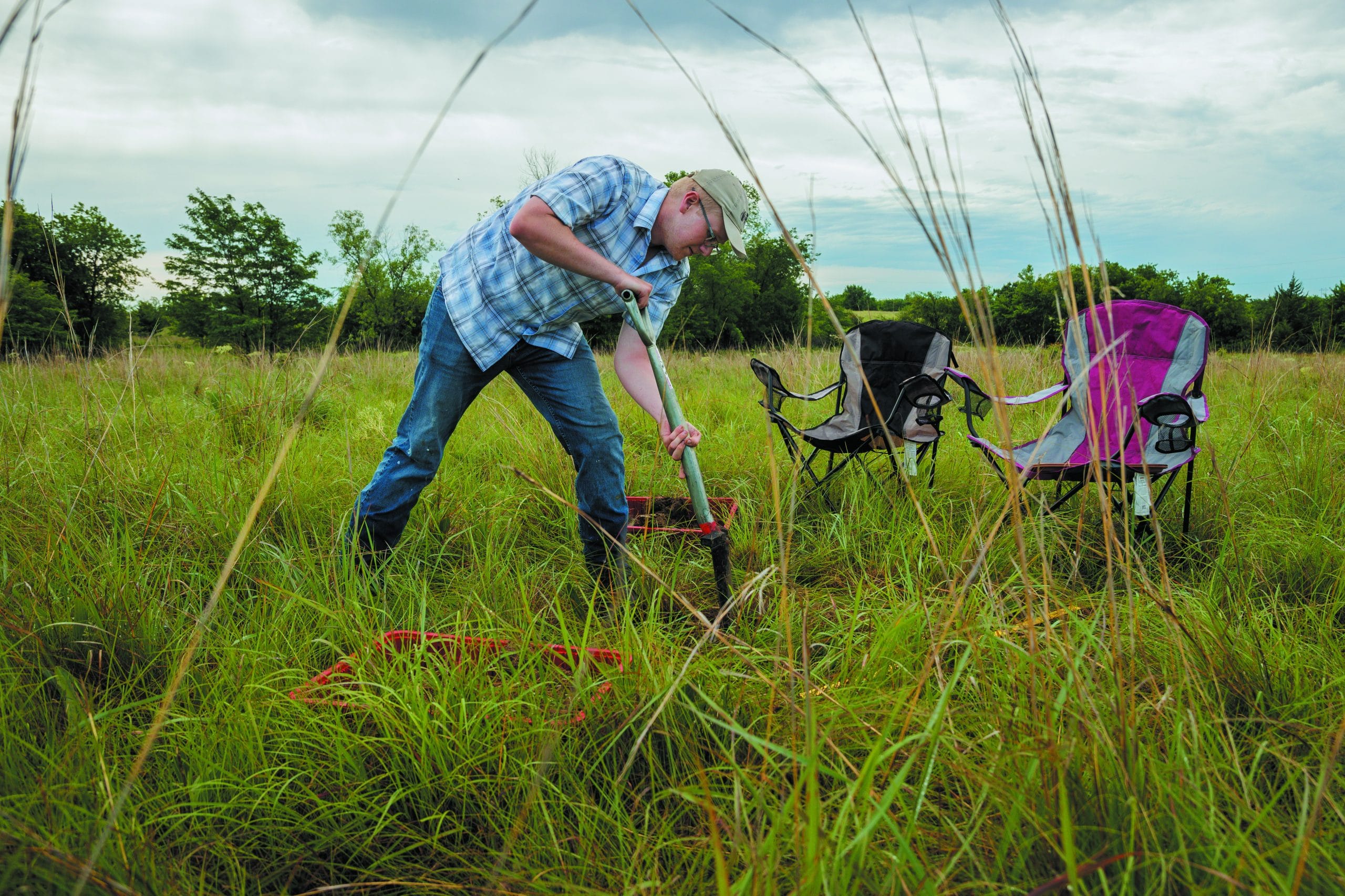
While these types of anecdotal success stories are certainly celebrated, Noble is, after all, a research facility and relies on scientific measures and analysis to educate and invoke change. Research associate Wyatt DeSpain is part of a team responsible for the collection and analysis of several data points taken from nearly 135 sites throughout the Noble ranches, including soil and water samples and vegetation and wildlife surveys.
Specifically, the team—composed of a diverse set of experts in their fields—monitors the changes seen during the transition from conventional management to regenerative management systems. While regenerative agriculture is by no means a new concept, DeSpain noted there’s not a huge library of previous research to work with.
“Our goal is to analyze the changes happening out on the ranch and to have hard numbers we can use as evidence that suggest when rangeland is managed in a regenerative way it’s going to help restore the environment,” he said. “When you have data like that, it becomes easier to advocate for policy decisions that help ranchers and farmers make transitions to this sort of system.”
While DeSpain and his team are only on year two of data collection in their large-scale project, he said they are already seeing changes occur faster than expected.
“While it’s too early to say anything definitive, we are noticing some trends that are pretty promising,” he said. “For example, the soil organic carbon has gone up at a rate that is much higher than we expected it to be.”
DeSpain said historically, conventional management systems have degraded the landscape and have not been ecologically beneficial. In more recent times, he added, they’ve become less economically feasible as well.
“We’re trying to collect all the data we can to prove that regenerative systems are not just good for wildlife and for the environment but also good for the pocketbook,” he said.
The Noble Research Institute acknowledges profitability is a key component to helping landowners incorporate regenerative practices into their operation. As a result, the organization has not only developed curriculum to teach producers the fundamentals of soil health and grazing management, but also how to make money doing it.
Noble Land Essentials, Noble Grazing Essentials and Business of Grazing are a series of in-person courses offered throughout the central United States that equip ranchers with the skills needed to monitor and enhance soil health, implement strategic livestock grazing practices and make well-informed financial decisions that contribute to the success of an operation.
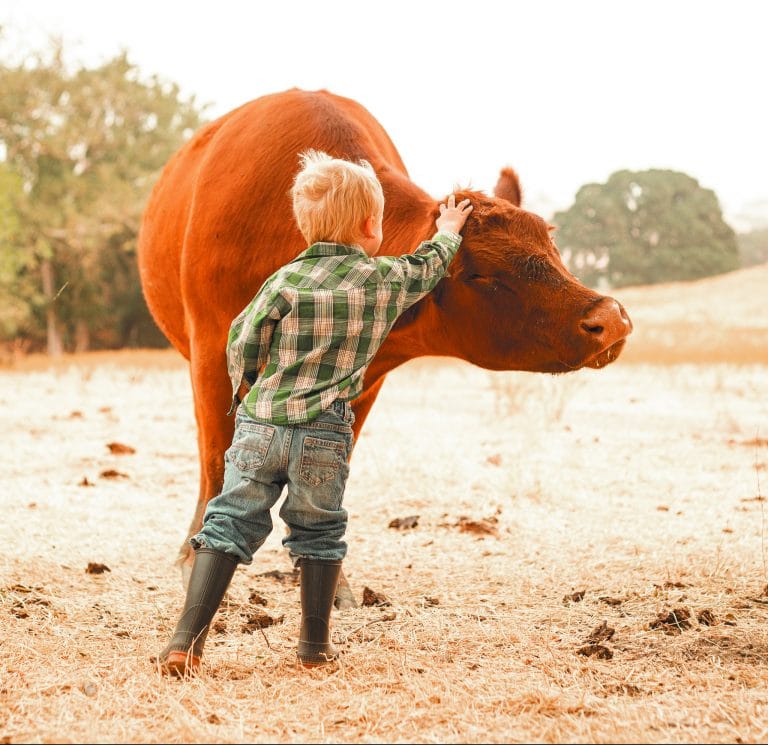
“As farmers and ranchers, we all want to make the land better than we found it and leave it in good shape for the next generation,” Pokay said. “With the right training, regenerative ranching can be a profitable way to be involved in agriculture, to run a ranch and to give something back to the next generation.”
For more information about the regenerative ranching courses available through the Noble Research Institute, visit noble.org. — Macey Mueller for the Red Angus Magazine