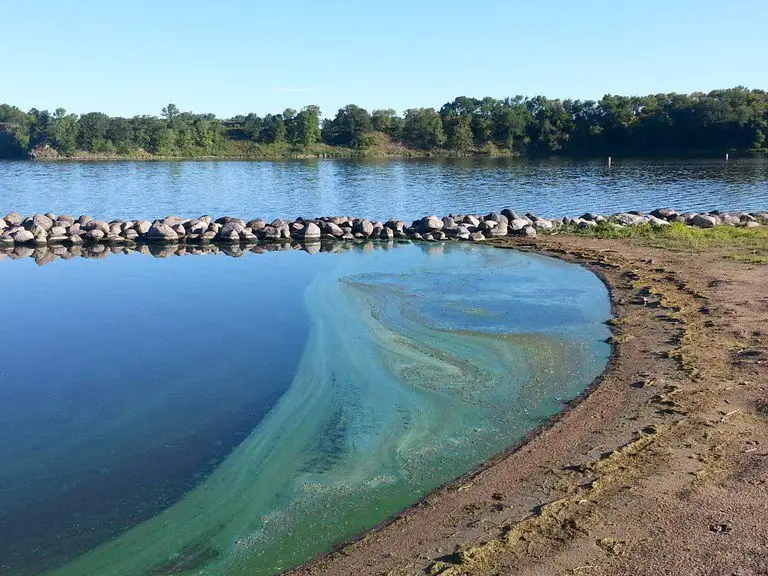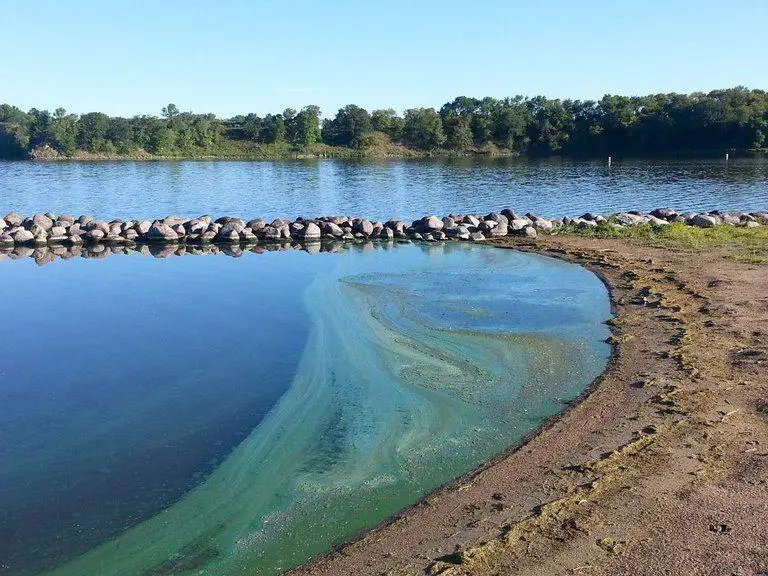
Drought conditions this summer have led to an increase in cyanobacterial blooms.
“In 2026 alone, the North Dakota Department of Environmental Quality (NDDEQ) sampled 40 lakes to assess the occurrence of toxic cyanobacteria,” said Tate Libunao, environmental scientist at the NDDEQ.
While the NDDEQ’s monitoring is limited to lakes and reservoirs, there have been numerous blooms on ponds used for livestock water.
As a result, the NDDEQ and North Dakota State University (NDSU) Extension have received several inquiries about options for treating cyanobacteria to ensure water sources are safe for both livestock and recreational purposes.
“Unfortunately, options for treating cyanobacteria blooms are limited for North Dakota,” said Miranda Meehan, NDSU Extension livestock environmental stewardship specialist.
Most products used to treat cyanobacteria contain copper sulfate, and their effectiveness is limited in the state, according to Meehan.
“Research evaluating the use of copper sulfate in North Dakota found that the natural water chemistry quickly made the active ingredient, copper, unavailable to the biological community,” said Laxmi Prasad, NDSU Extension water engineer.
This reduces the effectiveness of copper sulfate in controlling algae blooms.
Additionally, copper sulfate poses a risk to both aquatic animals and livestock. Specifically, both copper and sulfate are deadly to aquatic animals, so their use is regulated by the NDDEQ.
High concentrations of copper can be toxic to livestock, and sheep and goats are especially sensitive to copper toxicity, according to Dr. Jake Galbreath, NDSU Extension veterinarian.
“If permitted, copper sulfate should be used with extreme caution on livestock water sources,” Galbreath said.
Treating a water source with copper sulfate can also cause cyanobacteria to die rapidly and release toxins into the water, temporarily increasing the risk to livestock.
If a water source is treated with copper sulfate, animals should be kept away from the water for seven to 10 days after treatment, according to Galbreath.
The use of products such as copper sulfate provides only a short-term solution and does not address the underlying conditions that cause the bloom. Cyanobacteria blooms are caused by excess nutrients, specifically nitrogen and phosphorus.
Blooms can also be exacerbated by prolonged high temperatures and stagnant water, creating favorable conditions for recurring and potentially toxic harmful algal blooms. For long-term prevention of blooms, management practices that reduce nutrient loads to the water source should be implemented.
NDSU Extension specialists recommend the following practices to reduce nutrient levels, lowering the risk of future cyanobacteria blooms and enhancing water quality:
• Properly apply and manage fertilizer in yards and fields.
• Establish or maintain buffer strips of perennial species to reduce nutrients entering the water.
• Mow or graze buffer strips in the fall to reduce the vegetation that might release nutrients into surface water in the spring when it decomposes.
• Prevent livestock from loitering in surface water by installing alternate water sources and/or fencing to reduce access. — NDSU Extension