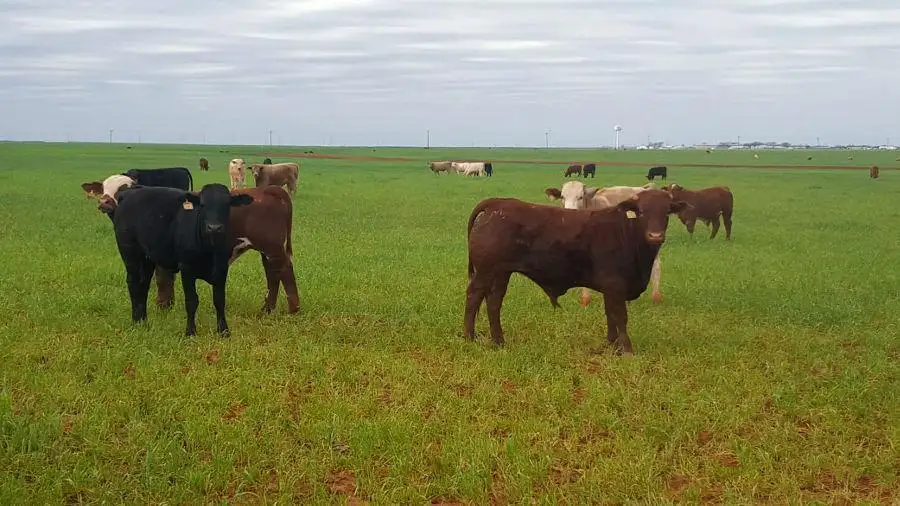
Prospects for wheat pasture in Oklahoma started off in good shape this fall with many areas getting rain through the summer leading up to planting. Most of the wheat grazing areas did not get adequate rains to push the emergence and growth of wheat pasture for most of the month of September and October, so if pastures were not planted into the moisture in September, emergence were severely delayed.
Most of the region got nice rains that will likely drive enough forage production on early planted wheat for grazing in November but very little more until recently. Later planted wheat or wheat that had not emerged from earlier plantings will probably be severely delayed even with the latest round of precipitation in October.
What can we do to sustain stocking rates that will support at least approaching our normal levels of production?
Research from the Oklahoma State University (OSU) Wheat Pasture Research Unit at Marshall showed that providing a concentrate supplement (based on either corn or a soyhull/wheat middling blend) containing monensin at 0.65 to 0.75% of body weight (for example, 4 pounds per day for a 533-lb. steer) increased potential stocking rate by 33% and weight gains by 0.3 lbs. per day. This supplementation program can also be used to “stretch” wheat forage when pastures were 60 to 80% of normal, allowing for “normal” stocking rates.
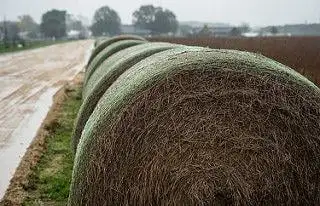
Although, intake of low-quality roughages is not high enough to offset wheat forage intake and can reduce performance of growing calves. Research has shown that offering moderate or high-quality roughages such as corn silage or sorghum silage or high-quality round bale silages can be used to replace short wheat pasture or double stocking rates on wheat pastures.
In the 1980s, research showed that feeding silage daily to calves on wheat pasture allowed stocking rates to be increased by up to two times without reducing steer performance. When faced with short wheat pastures on some research fields a few years ago, we used this research to keep calves on short wheat pastures using round bale bermudagrass silage. Several fields had normal forage yields of 2,500 lbs. of forage per acre, where we grazed during the fall and winter with one calf per acre with forage allowance of 4 lbs. of wheat per pound of steer and had gains of 3.3 lbs./day.
Other fields were planted later and only had 70% of normal (1,800 lbs. of forage per acre) that we stocked at 1.5 steers per acre (forage allowance of 2.1 lbs. of forage per pound of steer) and fed free-choice round bale bermudagrass silage (14% crude protein and 56% total digestible nutrients) weekly.
Even with higher stocking rates and less forage per acre, these steers gained 2.6 lbs. per day and total gain per acre increased from 250 for “normal” production to 300 lbs. per acre. This only took about 4.5 lbs. of silage dry matter per pound of added gain per acre.
Using high quality, palatable hays or silages can be used to stretch wheat pastures when concentrate feeds are expensive. So, with the large amount of hay produced last summer, this can be an economical way to maintain production of calves when wheat pasture is limited. — Paul Beck, Oklahoma State Extension beef cattle specialist