Keeping cattle healthy can sometimes be a challenge. With the advent of vaccines and antibiotics, it became easier, and for many decades, cattle producers routinely addressed disease by using vaccinations for prevention and antimicrobial drugs for treatment. The use of pathogen-killing drugs is questioned today, however, due to increasing numbers of drug-resistant pathogens. Microbial resistance diminishes the effectiveness and benefits of some of the drugs we rely on.
The U.S. Food and Drug Administration (FDA) has antibiotic guidance pertaining to the remaining food-animal drugs currently approved for over-the-counter (OTC) purchase. Under new guidelines, several antibiotics for livestock will no longer be available OTC after June 2023 and must be prescribed by a veterinarian.
There is also the issue of drug residues if drugs are used inappropriately or withdrawal times are not observed. Consumers are concerned about the safety of meat products. Beef producers and veterinarians are looking at alternatives to antimicrobial use in dealing with disease. Key factors include reducing exposure to disease while at the same time keeping immunity strong. Strategic vaccination is part of this strategy.
Nutrition
Andy Allen, DVM, associate professor at Washington State University (WSU), said the main thing a producer can do to minimize the use of antibiotics is make sure cattle have good nutrition. “This helps enable the immune system to fight off infections. The diet must include adequate protein, energy, vitamins and the proper macro- and micro-minerals. Copper, selenium and zinc are the main trace minerals we’re concerned about in the Northwest. This may require testing feeds, and producers may need a custom trace mineral mix that fits specific needs,” he said.
You need to know what you are feeding. “Just because hay is green doesn’t mean it has enough protein and energy. You also don’t know the trace mineral levels,” Allen said. Some soils are deficient in copper, and many areas are deficient in selenium—while others have too much selenium.
Monitoring body condition score is also crucial to make sure cattle are near the ideal score of 5 and are not going into winter thin. “We want the most cost effective way to feed cattle, but balance this with body condition scores.” It might cost more in the long run if cattle become thin, causing higher incidence of disease and the need for more antibiotic use.
Stocking density
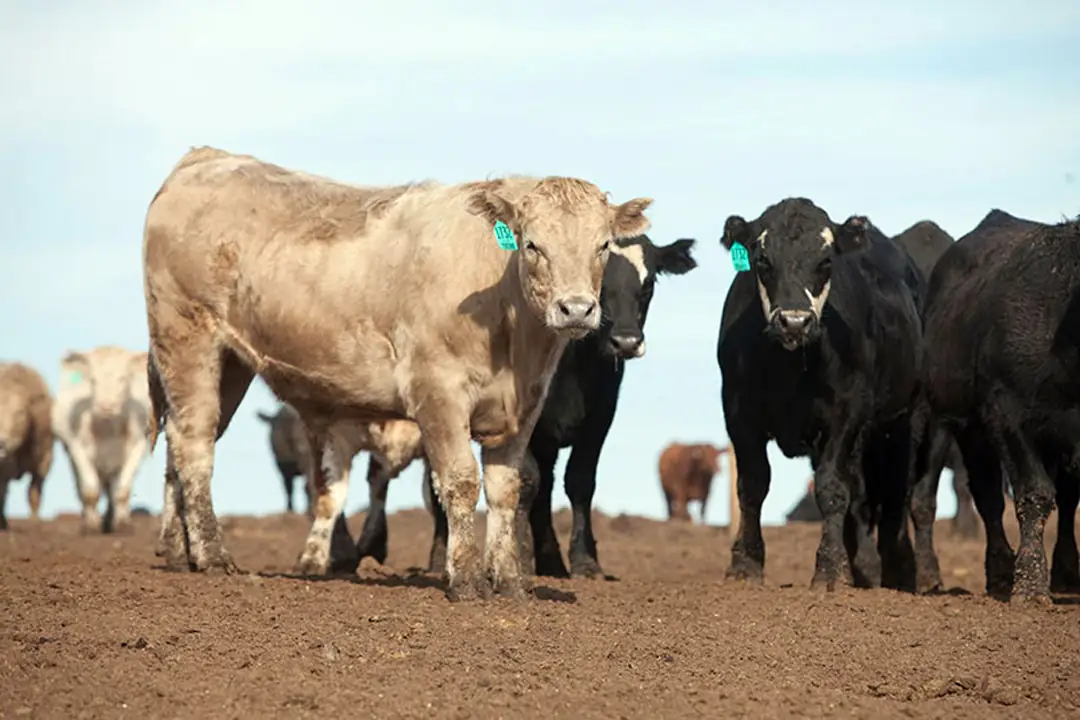
Allen works with the Field Disease Investigation Unit at WSU, looking at disease outbreaks and disease incidence within herds. “The second most common thing associated with increased disease incidence (and more use of antibiotics) is high stocking density—too many animals in too small an area,” he said.
This is particularly important just before and during calving. To prevent sickness in baby calves, you must keep the environment clean. Don’t calve in the same area you fed cows through winter.
“If you leave animals in the same area, pathogens build up, with higher numbers of bacteria, viruses and protozoa that cause calf diseases,” Allen pointed out. Calves are more vulnerable than cows; they don’t have a strong immune system yet.
“There are ways to keep calving areas cleaner, such as the Sandhills Calving method. We recommend this to ranchers when we see disease outbreaks. This involves moving pregnant cows to new calving grounds every seven to 10 days,” he explained. This leaves calved-out pairs behind in small groups according to age. The vulnerable young calves don’t have to be with older calves that might be sick and shedding pathogens. The cows have clean ground to calve on that hasn’t been contaminated by sick calves.
“After calves are 7 to 10 days old, they are stronger and more likely to resist some diseases, and the calving cows are not in an area where there’s a buildup of pathogens. Sick calves concentrate the pathogens at a much higher level,” he said.
Minimize stress
Stress hinders immune function, so it pays to reduce stress as much as possible. “Weaning is a big stress, so preconditioning may be helpful. Set up a program appropriate for your ranch, and work with your veterinarian. Plan ahead for what you will do with those calves. If you vaccinate ahead of weaning, it should be done several weeks ahead,” Allen said.
There are ways to reduce stress at weaning, such as fence line weaning, nose flaps, etc. Figure out what will work best for your situation to keep calves’ immunities strong rather than weakened by stress.
“It helps to train calves to eat from bunks and drink from water troughs before or during weaning, before they are shipped to a feedlot. They’ll do much better. You don’t want multiple stresses at the same time,” he said.
Make sure your working facilities flow well. The less time cattle are confined and the quieter they are moved and handled, the less stressed they will be. “If they move through easily and there’s not a lot of yelling and hot shot use, cattle do better. During stress, their cortisol levels go way up, and when that happens, their immune system drops. If we can keep stresses to a minimum, even practicing with a group of calves, putting them quietly through the facility without being worked, they are not as upset and stressed when you put them through again,” said Allen. Having cows that don’t get upset when you move them is a lot better for them. They can be trained to tolerate being worked and handled if you keep stress levels low.
Dystocia is a stress for the cow and calf. “This can result in a higher rate of diseases (both diarrhoeal and respiratory) in calves,” said Allen. Calves experiencing a difficult birth may be fatigued and short on oxygen, and they may not get right up and nurse. A calf stressed during birth or severely chilled soon after birth can’t absorb antibodies from colostrum as readily as a strong, healthy calf.
“A cow that has just gone through difficult labor is less likely to have enough antibodies and less likely to mother the calf. The calf is slower to get up and may need to be force fed. Using calving-ease bulls and selecting cows for easy calving can help prevent these problems,” Allen said. Less stress at calving helps ensure higher rates of colostrum absorption in the calves and better immunity.
When to use antibiotics
“Many producers give antibiotics to cattle that don’t need them. The animal may have a condition that antibiotics won’t help, and we just increase chances for development of resistant bacteria. We want our antibiotics to work well and for a long time,” said Allen. Work with your vet and come up with protocols for using antibiotics with a veterinarian-client-patient relationship—which is already necessary to get a prescription for most antibiotics.
“Some ranchers don’t have a good understanding about when to use antibiotics. They may treat animals the way their father did or give antibiotics for situations like retained placenta—when antibiotics are generally not needed. Ask the vet about things like calf diarrhea and what the protocol should be. Ranchers can take temperature, monitor how the calf is suckling, how dehydrated it is, use fluid therapy and determine at what point the calf might need antibiotics. Often, the calf may just need good supportive care,” he said.
Keep records on treated animals—conditions treated, when they were treated and what you treated them with and how they did. If you only use antibiotics on animals that need them, you are not wasting money or causing the possibility of more antibiotic resistance, he said. — Heather Smith Thomas,WLJ correspondent