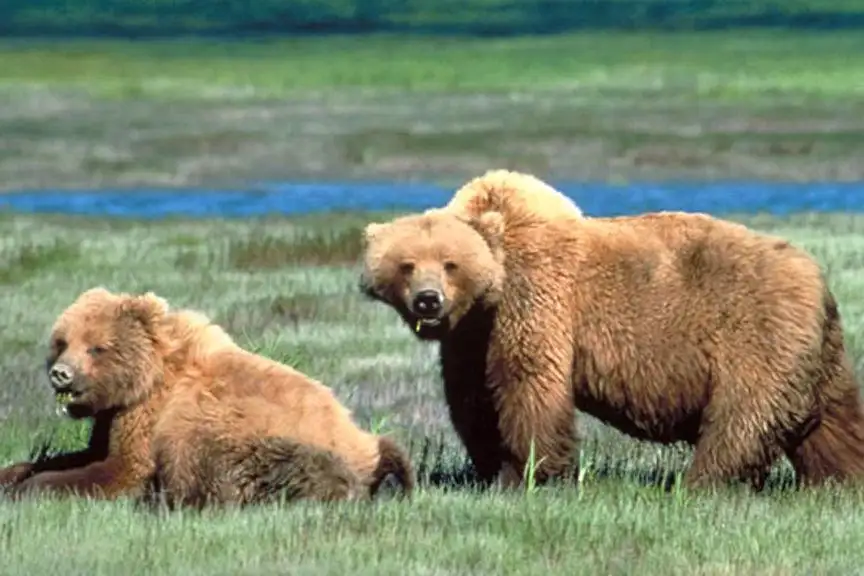
In late March, a federal judge wrote in favor of environmental groups who claimed livestock grazing north of Yellowstone National Park in Montana’s Paradise Valley threatens grizzly bears.
U.S. Magistrate Judge Kathleen DeSoto determined on March 27 that the U.S. Forest Service (USFS) should review how cattle grazing in the Custer Gallatin National Forest could impact the species. Although not a binding order, DeSoto’s 41-page findings and recommendations suggest that four out of five of the environmental groups’ claims be granted.
Background
In 2022, a coalition of environmentalist groups—Western Watersheds Project, Alliance for the Wild Rockies, Native Ecosystems Council, Center for Biological Diversity, Wyoming Wildlife Advocates, Sierra Club, Friends of the Bitterroot, WildEarth Guardians and Gallatin Wildlife Association—filed suit against USFS and U.S. Fish and Wildlife Service (USFWS).
The complaint challenged USFS’ East Paradise Range Allotment Management Plan decision and USFWS’ biological opinion on how that decision may affect threatened grizzly bears. The management plan authorized continued and expanded livestock grazing on six allotments on national forest land in grizzly bear habitat, which the groups said results in increased conflicts with grizzly bears and more grizzly bear mortalities that threaten the recovery of the species.
Recommendations
DeSoto agreed with the environmentalists on four claims, including:
• Failure to analyze the effects of cattle turnout in early spring.
• Failure to analyze habitat connectivity.
• Failure to analyze the cumulative effects related to activities on private lands in the area.
• Failure to prepare an environmental impact statement.
DeSoto recommended denying the groups’ claim that USFS relied on inadequate baseline information.
“The Court acknowledges Plaintiffs’ concerns regarding increased grizzly bear mortality but disagrees that this information must be explicitly considered as part of the project baseline, albeit for reasons not explicitly raised by Defendants,” DeSoto wrote.
DeSoto concluded her findings by recommending that the environmental assessment be remanded with vacatur, the plaintiffs’ motion to supplement the record be denied and the groups’ claim for relief under the Endangered Species Act be waived.
The environmental groups applauded the judge’s findings.
“Since Montana alone has more than two million cows—compared to less than 1,000 grizzlies in the entire Greater Yellowstone Ecosystem, our lawsuit and the Court’s Order ensure that grizzlies are protected and recovered as required under federal law,” wrote Mike Garrity, Alliance for the Wild Rockies executive director, for the online magazine CounterPunch.
Garrity continued that the bears’ main food sources, whitebark pine nuts and cutthroat trout, have declined, which has led to an increase in meat consumption by grizzly bears, including livestock.
“The Forest Service’s decision puts private cattle on the public’s national forest one month earlier, when calves are still very small and tempting targets for hungry grizzlies after waking up from a long winter nap,” Garrity said.
The agencies’ request for an extension to file objections to the findings and recommendations was granted for April 24. The case will continue with Judge Dana Christensen of the U.S. District Court for the District of Montana, who has previously presided over similar grizzly bear cases. — Anna Miller, WLJ managing editor