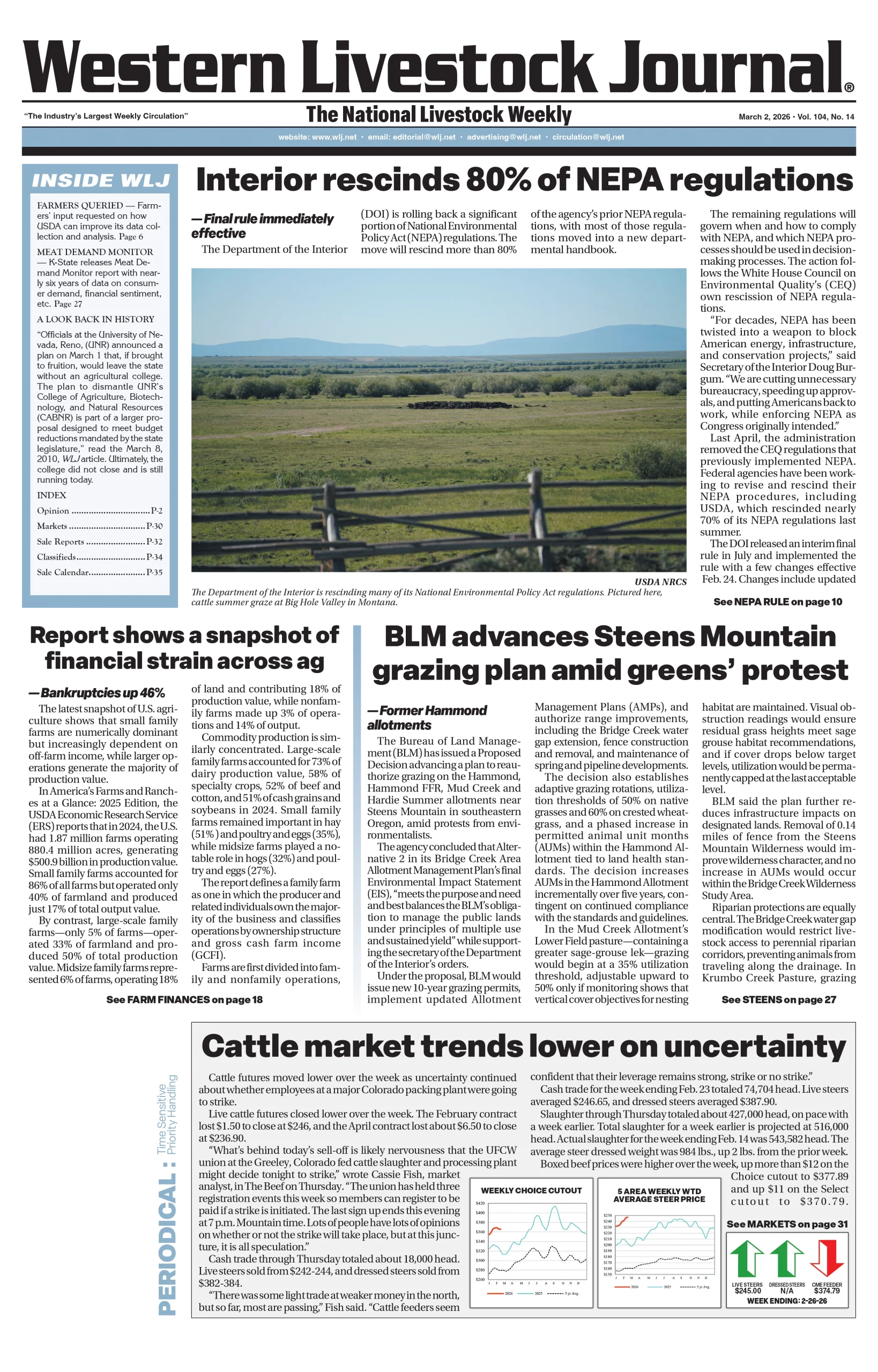
The Department of the Interior (DOI) is rolling back a significant portion of National Environmental Policy Act (NEPA) regulations. The move will rescind more than 80% of the agency’s prior NEPA regulations, with most of those regulations moved into a new departmental handbook.
The remaining regulations will govern when and how to comply with NEPA, and which NEPA processes should be used in decision-making processes. The action follows the White House Council on Environmental Quality’s (CEQ) own rescission of NEPA regulations.
“For decades, NEPA has been twisted into a weapon to block American energy, infrastructure, and conservation projects,” said Secretary of the Interior Doug Burgum. “We are cutting unnecessary bureaucracy, speeding up approvals, and putting Americans back to work, while enforcing NEPA as Congress originally intended.”
Last April, the administration removed the CEQ regulations that previously implemented NEPA. Federal agencies have been working to revise and rescind their NEPA procedures, including USDA, which rescinded nearly 70% of its NEPA regulations last summer.
The DOI released an interim final rule in July and implemented the rule with a few changes effective Feb. 24. Changes include updated sections on how lead agencies are chosen when multiple agencies are involved, and how cooperating agencies participate in environmental reviews.
NEPA rescissions
The interim rule removed most of the agency’s formal NEPA regulations in favor of departmental guidance. The rule kept and updated several tools in the regulations that Interior agencies use to speed up environmental reviews while still complying with NEPA.
“By shifting most procedural requirements into a Departmental handbook, the Department provides clear, practical guidance to staff while preserving flexibility to meet operational and project needs,” DOI said.
The agency expects the reforms to reduce delays and costs for projects on public lands, including energy development, critical minerals, livestock grazing approvals, infrastructure, wildfire mitigation, water projects and conservation efforts.
As part of a Regulatory Impact Analysis, the agency estimates the final rule will save hundreds of millions of dollars, although the DOI notes “little quantifiable information exists on the costs and benefits of completing NEPA analyses.”
“These reforms do not eliminate environmental review,” the DOI emphasized. “NEPA remains in full effect, and Interior will continue to consider environmental impacts and other impacts to the human environment, coordinate with tribes, state and local governments, and other partners, and comply with all applicable environmental laws.”
Congressional Western Caucus Chair Celeste Maloy applauded the DOI’s action. “For far too long, burdensome regulations have slowed progress on critical projects across America,” Maloy said. “Thanks to the Trump Administration, these initiatives now have clearer requirements and a more streamlined path forward, removing unnecessary procedural obstacles that once threatened to bring them to a standstill.”
Environmental groups sued the DOI in December, alleging the agency failed to follow the law when issuing its interim final rule.
“Interior’s revised procedures, adopted in a rushed rulemaking process that sidestepped basic (Administrative Procedures Act) procedural requirements, now make public involvement in nearly all aspects of the NEPA process non-existent or, at best, entirely discretionary,” court documents read in a case brought by the Center for Biological Diversity and Sierra Club that is still ongoing.
The agency will begin implementing the updated procedures immediately. — Anna Miller Fortozo, WLJ managing editor