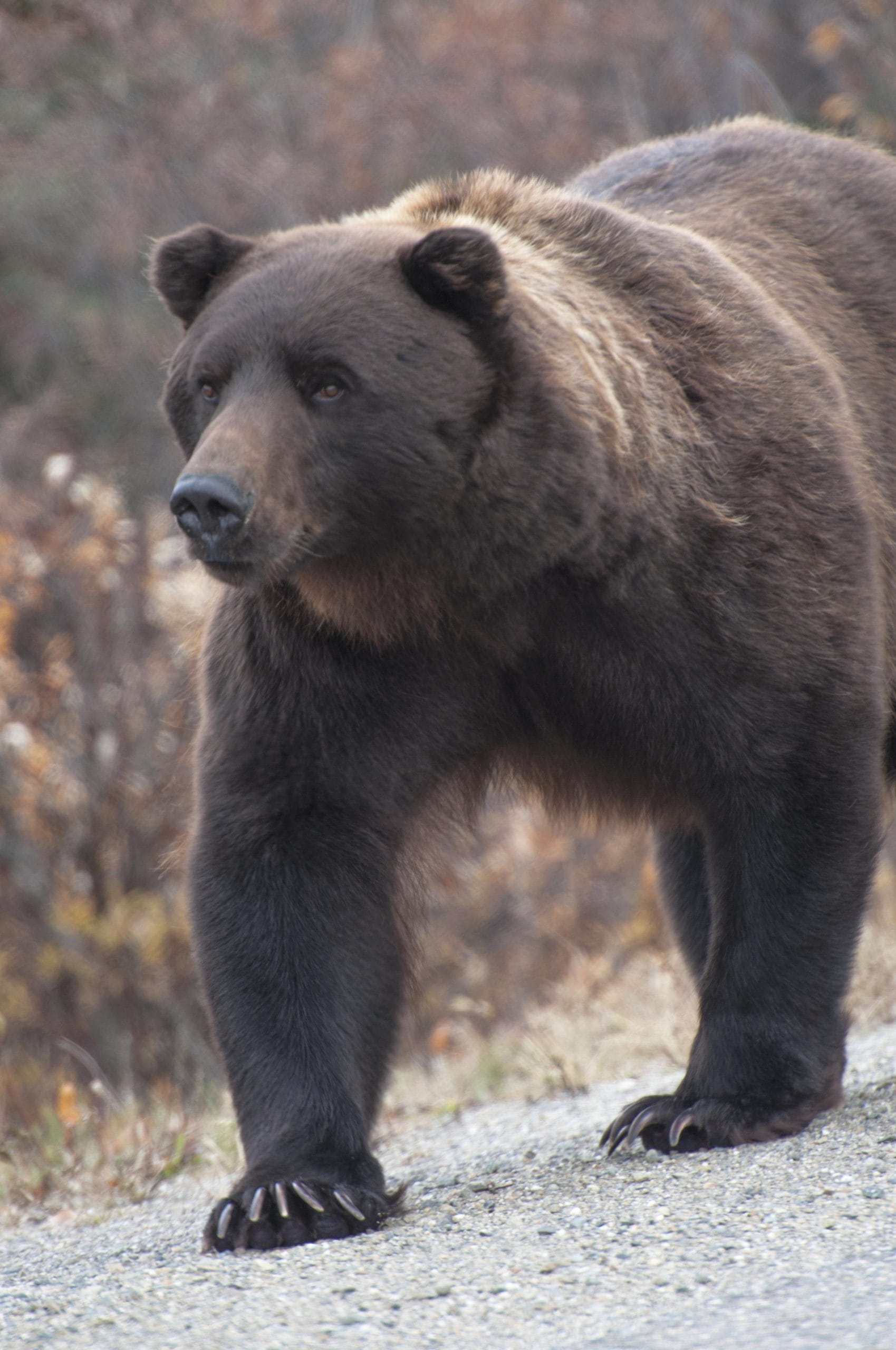
States could gain more authority to manage grizzly bear conflicts and mortalities in recovered populations under a revised federal proposal that maintains Endangered Species Act (ESA) protections while creating new management flexibility.
Department of the Interior Secretary Doug Burgum announced the revised proposal on July 14 alongside governors from Idaho, Montana and Wyoming, and U.S. Fish and Wildlife Service (USFWS) Director Brian Nesvik.
The proposal would revise the protective regulations for grizzly bears in the Lower 48 states under Section 4(d) of the ESA. It does not change the bear’s threatened status or existing experimental population designations in the Bitterroot and North Cascades. Instead, the proposal establishes a tiered system that could provide federal, state and Tribal wildlife agencies with additional exceptions for management activities and incidental take.
“The science is more than clear: grizzly bears have recovered and far exceeded every federal recovery benchmarks,” Burgum said. “Today, Interior is returning conservation leadership to the Western states instead of Washington bureaucrats.”
Tiered approach to management
Grizzly bears in the Lower 48 states have been listed as threatened since 1975. The Interior said decades of work by states, Tribes, federal agencies, private landowners and local communities have resulted in significant recovery in several areas.
Under the proposal, Tier 1 would apply in areas where conservation strategies and federal, state or Tribal management plans have been completed and approved through a memorandum of understanding (MOU) with USFWS, but grizzly populations have not yet reached established demographic objectives. Once those objectives are achieved, agencies could qualify for Tier 2 by entering into an MOU with USFWS.
Tier 2 would provide additional management flexibility, giving authorized agencies greater authority over management activities and incidental take under federal, state and Tribal laws. It would also expand incidental take exceptions and allow more flexibility in managing conflict bears, including the use of deterrence measures and the handling of orphaned cubs.
USFWS would retain oversight through monitoring and annual reporting. State and Tribal agencies would be required to report captures, relocations and grizzly bear mortalities, and USFWS could review or revoke a management tier if conditions are no longer met or changes in state, federal or Tribal policies threaten demographic objectives or mortality thresholds.
The proposed rule also continues to allow self-defense and expands or clarifies exceptions involving nonlethal deterrence, scientific work, aiding injured bears and regulated trapping of other species. The Federal Register notice states deterrence could include auditory or visual devices, vehicle pressure, bear spray and certain soft projectiles, provided actions do not intentionally cause lasting injury or death.
Reactions
“Grizzly bear conservation has steadily advanced over the decades in many portions of the species’ range,” Nesvik said. “This proposal recognizes these successes and right-sizes management where the greatest conservation success has taken place.”
Gov. Greg Gianforte (R) called grizzly recovery “one of America’s great conservation successes,” but said growing populations have created additional conflicts with farmers, ranchers, recreationists and residents. “Returning management to the states is a welcome change, and Montana is ready to lead to balance conservation and the safety of our communities,” he said.
The National Cattlemen’s Beef Association and Public Lands Council (PLC) also praised the proposal, saying it reflects years of scientific research and cooperative recovery efforts.
“The science has been clear for years: grizzly bears are recovered, and it’s time to empower states to manage the wildlife and community dynamics for a stable future,” said PLC President Tim Canterbury.
Canterbury continued that growing predator populations have increased livestock losses, financial impacts and public safety concerns, adding that the revised rule would help transition grizzly bears from recovery to state-led management while allowing agencies and ranchers to address conflicts.
Earthjustice sharply criticized the proposal, arguing Northern Rockies states have not demonstrated they will provide adequate protections for grizzly bears if federal restrictions are loosened.
“It is extremely concerning that the Trump administration is seeking to hand over more management of the species to hostile Northern Rockies states,” said Jenny Harbine, managing attorney for Earthjustice’s Northern Rockies Office.
Harbine said the organization remains concerned about recent grizzly bear mortality and warned it could challenge the rule in court. “If this proposal will further harm the species, we are prepared to take the administration to court,” she said.
Earthjustice pointed to human-caused mortality from poaching, vehicle collisions, management removals and human-bear conflicts as continuing threats. The organization also argues states have not done enough to connect isolated grizzly populations, which it says is necessary to maintain genetic diversity.
The proposal was scheduled for publication in the Federal Register on July 17. The 30-day comment period will remain open through Aug. 17. Comments may be submitted through regulations.gov by searching for docket FWS-R6-ES-2024-0186. Previously submitted comments will be considered and do not need to be resubmitted. — Charles Wallace, WLJ contributing editor