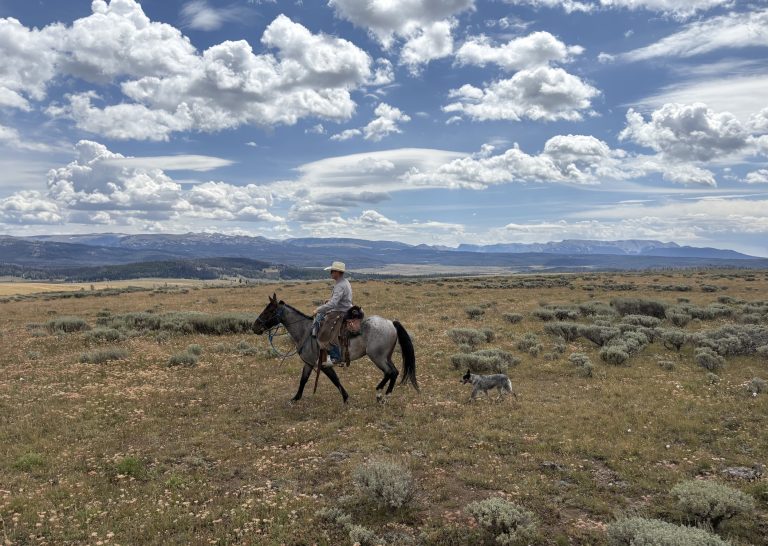
For ranchers across the U.S and Canada, farming isn’t just a career, it’s in their blood. It brings a deep sense of responsibility to care for the land and livestock. It’s long hours and hard work, but they would not want to do anything else. This makes stepping away as an older farmer, a very difficult and prolonged decision.
Jon Aumann, distributor for Rappa International, talks to us about why stepping away from the ranch is never straightforward, and explores how technologies and innovations are helping the older generation stay relevant and connected in the modern farming era.
Growing old is one of the only guarantees we have in life, but the aging process is felt more harshly in active, outdoors-based roles. As farmers get older, the physical demands of running a ranch become increasingly difficult. Long days, repetitive manual tasks and the sheer scale of the work can make it harder to maintain the same level of involvement. Traditionally, this has meant stepping back, or handing over responsibility to the next generation. But, technology is changing that.
Tech Stack
Typically, when people think of technology and innovation within the agri-sector, the first things that spring to mind are productivity, efficiency and profitability. Each is incredibly important, but I think it misses the human benefits, particularly those that allow older generations to keep on making a difference and remain connected to their sense of purpose.
Tasks that once required considerable physical effort, time and manpower can now be completed more quickly and with less strain. This allows people to extend their responsibilities and continue to do the work they love, without necessarily having to do more themselves.
There is also a wider business consideration. Labor shortages and the challenges of recruiting and retaining people mean that ranchers cannot always rely on having additional hands available when they need them. Equally, bringing in extra labor to undertake physically demanding or repetitive tasks adds to the operational costs of running a ranch. Technology can help alleviate some of this pressure, allowing existing teams to achieve more with their time, while reducing the need to recruit additional help for certain jobs.
In Practice
One of my areas of expertise is in fencing, so let’s use that as an accessible, real-world scenario. Ranchers have to manage livestock on their land, work around unpredictable weather and keep animals safe and where they should be. Fencing is central to this. While permanent fencing can be expensive and labor-intensive to install and maintain, temporary electric fencing offers greater flexibility.
However, even temporary fencing can be a time-intensive job, so understanding the options available is imperative. For example, by using a vehicle-mounted fencing winder, ranchers can turn what was once days of manual work into just a few hours. This is not simply about being faster and saving time, it is about making a physically demanding role more accessible.
When technology takes away some of the physical burden, it allows experienced farmers to remain involved in the practical running of their businesses for longer.
Gradual Transition
Expertise and experience can’t be overlooked, with the value older ranchers bring far exceeding the investment in the most cutting-edge thinking. Sometimes, the shift to the next generation is earlier or more abrupt that the succession planning had allowed, but when there is time, using technology to facilitate the gradual transition between generations is invaluable.
In fact, being able to ‘hand over’ the farm slowly, allows the younger generation of farmer to take on more responsibility, and potentially rework some of the more old-fashioned ways of operating, whilst ensuring the older generations don’t have to relinquish everything they have worked towards.
Technology creates a middle ground, ensuring purpose and responsibility is not removed from the senior figures, and allowing them to have a say in the day-to-day operations.
When Knowledge Meets Identity
For many, farming is deeply tied to identity and purpose. So, by retaining elements of responsibility, being needed and knowing that your experience still makes a difference can be hugely important. The last thing an experienced rancher should feel is that their contribution is no longer valuable simply because they cannot work at the same physical intensity as they once did.
By extending a career, you get something that technology and innovation can’t offer – first-hand knowledge. This is often lost when experienced farmers step away. Decades of understanding about livestock, land management, weather patterns and the realities of running a successful business cannot always be passed on.
By helping older generations stay involved, technology gives younger farmers more time to learn from that knowledge, while allowing established farmers to pass on responsibility at a pace that works for everyone.
In Summary
It’s important to remember that technology is not a replacement for experience, judgement or the human relationships that underpin farming. In fact, innovation only has real value when it solves a genuine problem and makes life better for the people using it.
But we should broaden the way we measure its success. It is not just always about how many hours a machine saves or how much more land a rancher can manage. It is also about allowing someone to maintain purpose, limit the need for new hires, and how many more years someone can remain part of the business they have dedicated their life to.
For the next generation, that means gaining the freedom to take the reins without losing the guidance of those who came before them. For older farmers, it means being able to keep making a difference.
To find out more about the technology making fencing more accessible for all, please visit Rappa International.