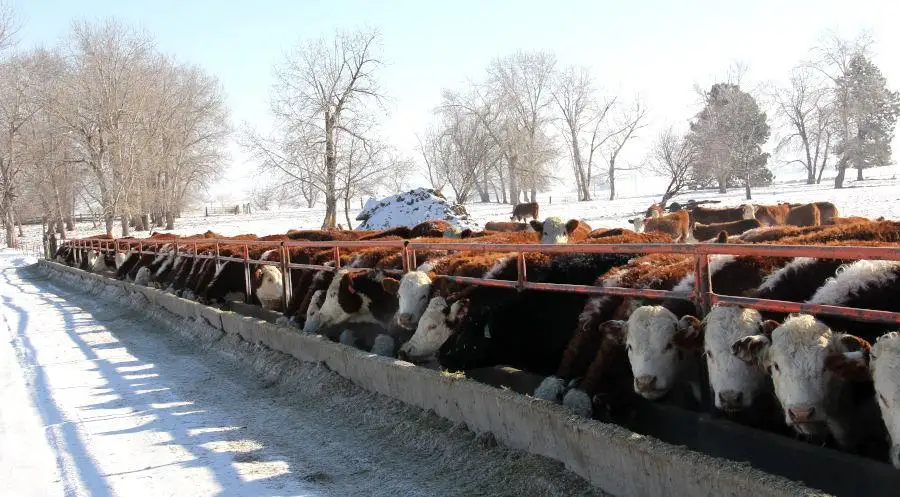
When forage quality declines in the fall, beef producers turn to protein supplements for the cow herd to help optimize performance, said the experts at Kansas State (K-State) University’s Beef Cattle Institute.
Speaking on a recent “Cattle Chat” podcast, K-State veterinarian Bob Larson and K-State beef cattle nutritionist Phillip Lancaster addressed a listener question about how to best manage native grass pastures for the next six weeks when the ability to deliver protein is limited to once per week.
“When forage quality declines, the recommendation is to offer a protein supplement to the herd a few times a week. That allows the cow to recycle the protein through the rumen for overall health,” Larson said.
Recycling, he said, refers to how cattle use nitrogen in protein sources, which means they get more than one day’s benefit from the supplementation.
The producer who submitted the question said he was offering the herd four pounds of distiller’s grains once a week and wanted to know if that was enough to get cattle by for six weeks.
“Research has shown that there is a little bit of a drop off in forage digestibility for cattle that are offered protein supplementation once a week compared to every other day or every few days, but it is still better than giving them no supplementation,” Lancaster said.
For this scenario, Lancaster recommended the producer increase the protein supplementation to eight lbs. per week for six weeks.
“From a protein perspective, you’ve got to give the animal excess protein that they can recycle,” Lancaster said. If cattle don’t have enough protein in their diet and are eating lower quality forages, it can cause them to lose body condition, he added.
Another way to monitor the health of the cattle is to look at the feces, Larson said.
“If the cow piles (feces) are tall and dry, then you probably need to increase either the amount or frequency of the protein supplementation,” he said. — K-State Research and Extension