In 2005, the Idaho Farm Bureau Federation received a troubling call from one of its members. A Fish and Game officer had crossed onto their private land—no warrant, no permission, no notice. Over the years, more ranchers, farmers and landowners came forward with additional, more troubling stories. To prevent ongoing abuse of property rights, Idaho passed the Property Rights Protection Act this March, making clear that private land is not open to government agents.
It’s time for other western states to do the same. This isn’t an abstract legal issue; it involves real people describing real property rights violations. And it reveals a deeper problem: In much of the West, reality has not kept up with the Constitution’s promise.
But how did we get here? The answer lies in a century-old legal doctrine that has, over generations, incrementally empowered government agents to intrude on private property—the “open fields doctrine.”
In 1924, the U.S. Supreme Court decided Hester v. United States, holding that the Fourth Amendment’s protections against unreasonable searches did not extend to the “open fields” area of private property. Sixty years later, in Oliver v. United States, the court reaffirmed that rule—even when land is fenced, posted and actively used for agriculture. Under this doctrine, anything outside the immediate area around a home is treated as if it were essentially public in the eyes of the law.
This flawed decision back in 1924 has tacitly created a deeply unfair, two-tiered legal reality. Although a government agent generally can’t step into your back yard without a warrant, they can walk a mile into your posted pasture, cross your hayfield or park in your back forty to conduct surveillance without a warrant, probable cause or ever telling you they were there. Government agents know it, and they are unafraid to do it.
Landowners in western states reasonably expect their property to be free from government intrusion. The open fields doctrine does not reflect most citizens’ expectations of the property rights protections guaranteed by the Constitution.
This year, with the passage of the Property Rights Protection Act, Idaho became the most recent state to directly confront the open fields doctrine and restore meaningful protections for private landowners. The new law is simple: Government agents—state, local or federal—may not enter private land that is not open to the public unless they have a warrant, face a true emergency or receive the landowner’s consent.
These protections have real force behind them. If an agent knowingly violates the law, they face a civil penalty. Landowners can also sue for damages and a court order requiring the government to stop the unlawful entry. And if federal agents plan to execute a warrant, they must notify the county sheriff. Idaho’s law doesn’t interfere with longstanding, legislatively granted authorities. Watermasters can still access ditches and canals. Weed control and abatement districts can still do their work. Emergency responders can still respond. But the days of unauthorized, warrantless entry onto private land are over.
Idaho isn’t alone in recognizing the need to modernize protections for private land. In 2021, South Dakota enacted a similar reform, becoming the first state to reject the open fields doctrine statutorily. State supreme courts in New York, Montana, Vermont, Mississippi, Washington and Oregon have also held that their state constitutions provide stronger protections for private land than the federal doctrine allows.
But court decisions alone are not enough. Without clear statutory or constitutional language, protections can shift with judicial interpretation or be undermined by agency practice. Idaho’s approach—codifying clear, enforceable rules—provides the certainty landowners need and the clarity agencies require.
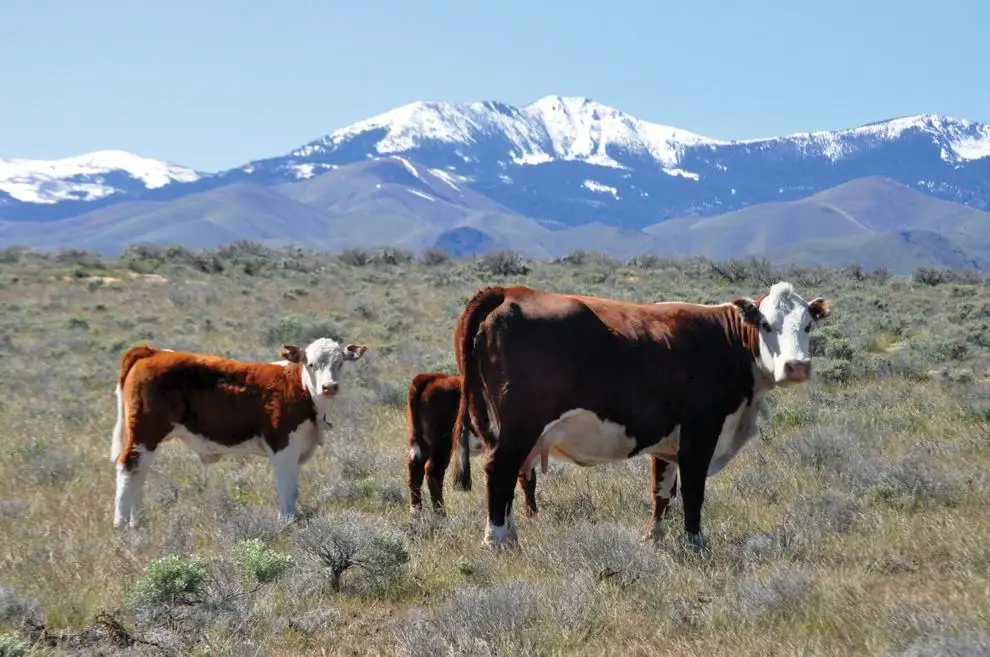
Western states share a common landscape and a common challenge. Vast stretches of private rangeland sit alongside large federal holdings. These communities depend on trust that the law will be followed, that property lines will be respected, and that government power will be exercised with restraint.
When government agents feel empowered to enter private land at will, that trust erodes. Idaho has shown that states do not have to accept the open fields doctrine as the final word. They can demand more of their own officials, set clear expectations for federal agents operating within their borders, and restore the basic principle that private land is, in fact, private.

The Fourth Amendment does not end at the residential property line. From the high desert to the mountain pastures, landowners expect laws that are consistent with the Constitution and protect against government overreach—not weak rules written a century ago. It’s time for other western states to follow Idaho’s lead and fully restore their historic property right protections. — Rees Empey and Russ Hendricks
Rees Empey is the state policy manager at Pacific Legal Foundation and Russ Hendricks is vice president of governmental affairs at Idaho Farm Bureau Federation.