
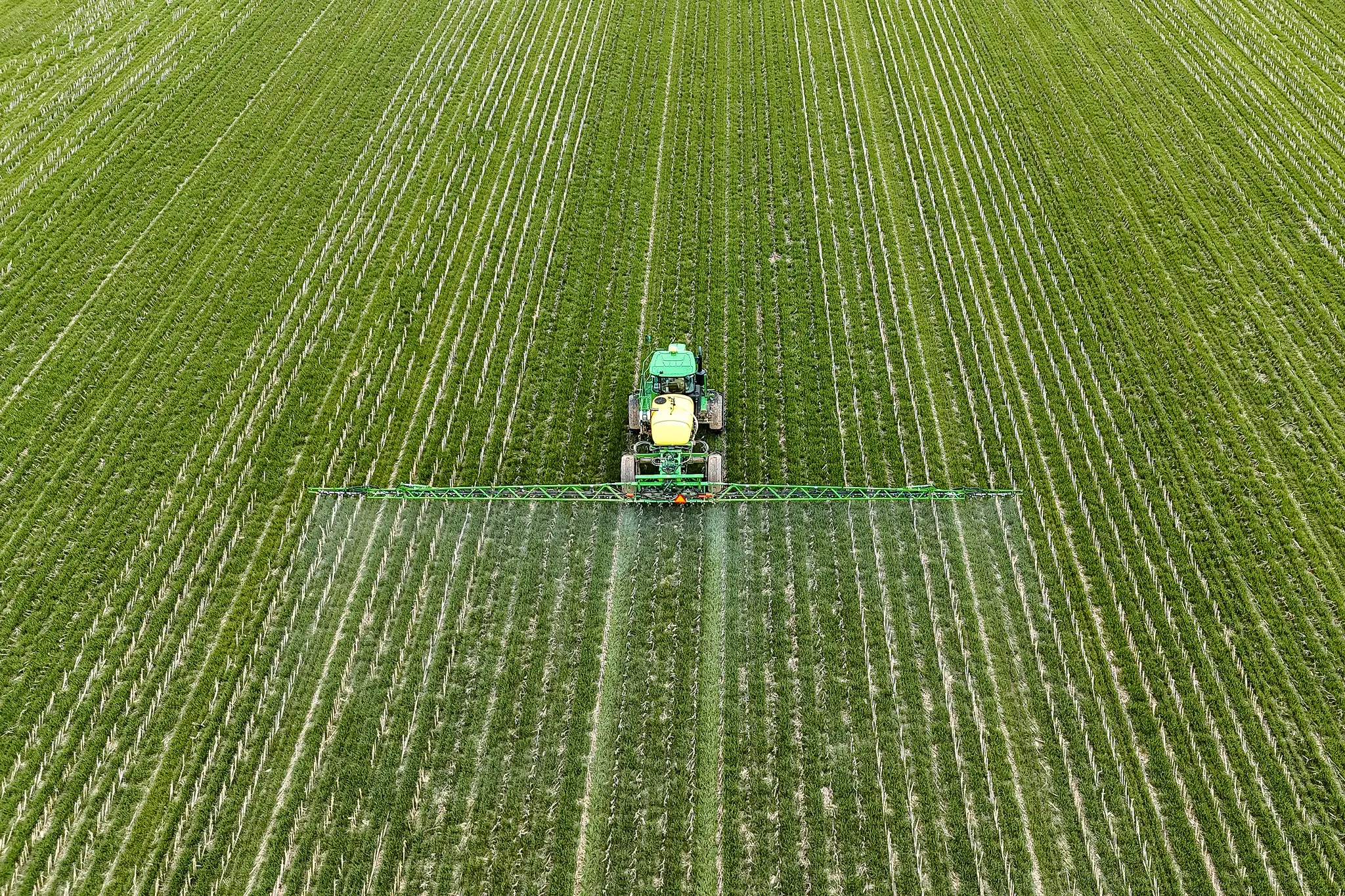
Shortly after Robert F. Kennedy Jr. was confirmed as health secretary, environmental groups petitioned him and related agencies to eliminate “extraordinary toxic pesticides from food.” The petition does not address restrictions on the use of pesticides on crops grown for animal feed or used as biofuels.
The Center for Biological Diversity submitted a 22-page petition addressed to Kennedy, President Donald Trump, the Make America Healthy Again Commission, the Department of Health and Human Services, USDA and the Environmental Protection Agency (EPA).
Entitled “A Petition to Make America Healthy Again by Eliminating Extraordinary Toxic Pesticides from Food,” the petition makes four requests of the new administration.
“With Mr. Kennedy now confirmed as secretary of the Department of Health and Human Services, and your campaign pledge that he will ‘go wild on the food,’ now is the time to eliminate extraordinarily toxic pesticides that are ubiquitous in our food system,” the group wrote.
The “extraordinarily toxic” pesticides the group is referring to are atrazine, glyphosate, organophosphate insecticides, neonicotinoid insecticides, 2,4-D and paraquat.
Kennedy has previously spoken on the use of pesticides, calling many of them “extraordinarily toxic,” including atrazine, neonicotinoids, glyphosate and organophosphates. He has also suggested that pesticides are significant contributors to chronic health problems.
On Feb. 3, while signing executive orders and appointments in the Oval Office, Trump remarked of the use of pesticides: “Bobby Kennedy actually is looking at that very, very seriously because maybe it’s not necessary to use all of that.”
The USDA maintains that pesticides undergo extensive testing before they are authorized for legal use. The Pesticide Data Program is a national pesticide residue monitoring program that includes the sampling, testing and reporting of pesticide residues on ag commodities. The program is implemented with state agriculture departments and other federal agencies.
Petition details
The Center for Biological Diversity asks for the named agencies and leaders to take the following actions:
1. Require the Food and Drug Administration (FDA) to establish a mandatory enforcement framework to protect Americans from imported food “contaminated with extraordinarily toxic pesticides.”
2. Require the EPA to ban “extraordinarily toxic” pesticides for use in human food.
3. Require the USDA to condition its support of farms by eliminating the use of “extraordinarily toxic” pesticides on food crops.
4. Mandate language in the Dietary Guidelines for Americans to avoid foods “laden with pesticides.”
The group said the regulation of pesticides is ineffectively divided among the FDA, EPA and USDA, which “weakens the nation’s ability to effectively respond to this health crisis.” The Center also alleged that pesticide laws are exploited by chemical companies to keep the pesticides on the market.
“One of the first steps in making America healthy again is to tackle the scourge of extraordinarily toxic pesticides that remain ever-present in our food, our water and our environment,” the Center said. “We hope that you accept this petition and take these commonsense steps to make America healthy again.”
New health commission
On Feb. 13, Trump signed an executive order establishing the Make America Healthy Again Commission to be led by Kennedy.
“To fully address the growing health crisis in America, we must re-direct our national focus, in the public and private sectors, toward understanding and drastically lowering chronic disease rates and ending childhood chronic disease,” the order read. “This includes fresh thinking on nutrition, physical activity, healthy lifestyles, over-reliance on medication and treatments, the effects of new technological habits, environmental impacts, and food and drug quality and safety.”
The commission, made up of agency officials and other designees, was given 100 days to submit an assessment identifying health issues in children and potential threats. This includes assessing the threat of “certain food ingredients, certain chemicals, and certain other exposures.”
The order also calls for the restoration of “the integrity of science, including by eliminating undue industry influence, releasing findings and underlying data to the maximum extent permitted under applicable law, and increasing methodological rigor.”
Atrazine suit
In addition to the pesticide petition, the Center for Biological Diversity and other groups recently asked a federal court to force EPA to take action on the use of atrazine, an herbicide that the groups allege pollutes the nation’s waters.
“For more than three years the Biden administration slow-walked its court-mandated review of the safeguards necessary to protect wildlife from this dangerous chemical,” the Center said. “Now the task of putting a plan in place to aggressively minimize or eliminate atrazine’s harm falls to the Trump administration.”
The motion filed in the U.S. Court of Appeals for the 9th Circuit asks the court to reopen the groups’ 2021 petition, order a deadline to complete a review on the herbicide and enforce an order requiring status reports.
Other groups in the lawsuit include the National Family Farm Coalition, Center for Food Safety and Pesticide Action Network North America. — Anna Miller, WLJ managing editor






1 Comment