
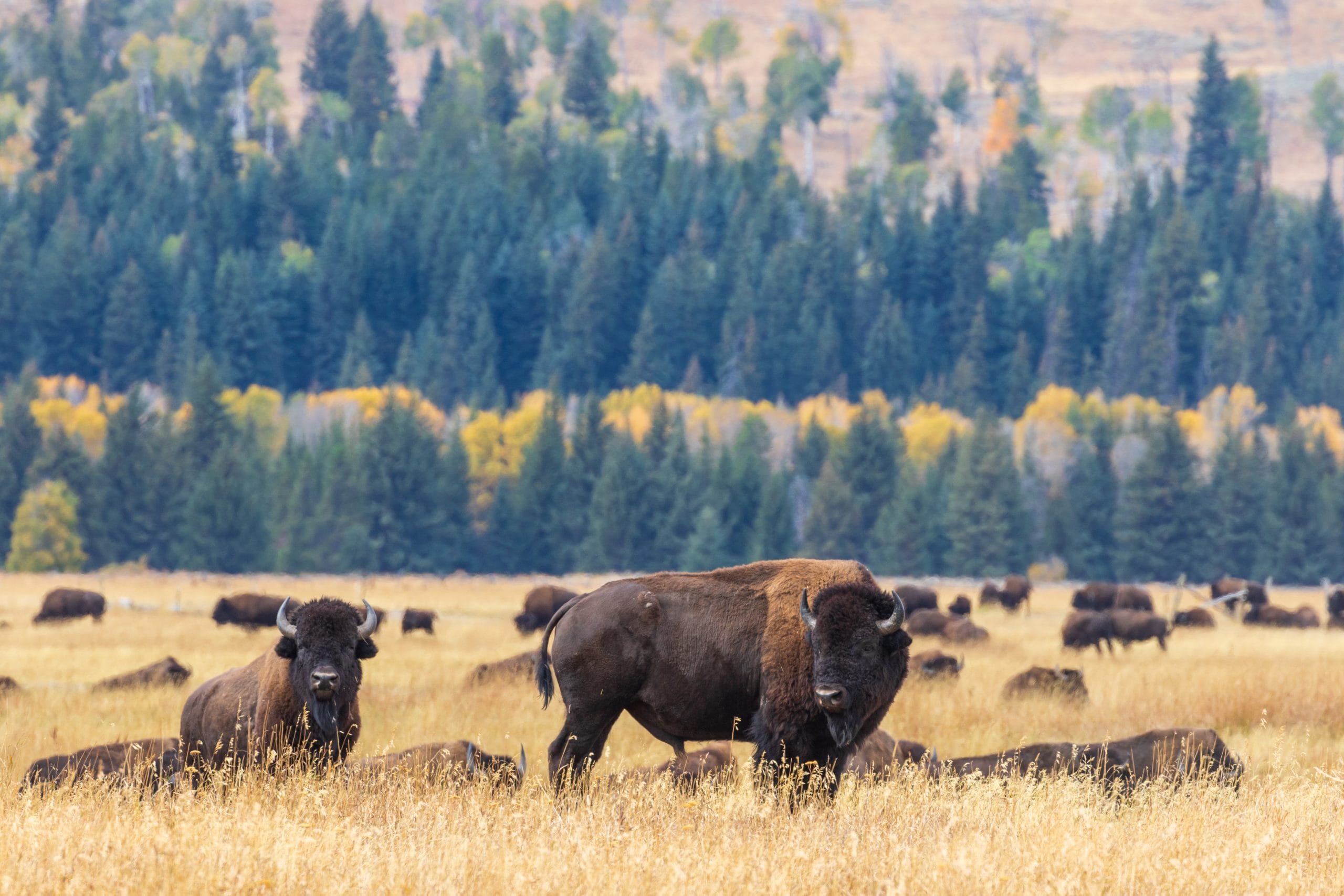
Environmental groups are pushing back against the Trump administration’s early May decision to revoke American Prairie’s bison grazing permits on allotments in Phillips County, MT.
American Prairie and Western Watersheds Project each filed an appeal in early June challenging the decision, which found that American Prairie’s bison did not meet the definition of livestock authorized to graze on public lands under the Taylor Grazing Act.
On May 8, the BLM reversed a 2022 decision that permitted American Prairie to graze bison on the Telegraph Creek, Box Elder, Flat Creek, Whiterock Coulee, French Coulee and Garey Coulee allotments in Phillips County. The agency determined that American Prairie manages its bison as wildlife used primarily for conservation and ecological restoration rather than production, and therefore was ineligible for the grazing permits.
American Prairie said the BLM’s decision terminated the group’s more than 20 years of bison grazing on federal lands and about 940 bison are required to be moved by the end of September.
In their June 4 appeal, American Prairie argued that the BLM unlawfully interpreted the Taylor Grazing Act to require applicants to have livestock that are production-oriented, when there is no such requirement found in statutes, regulations or other applicable legal authorities.
“BLM’s new interpretation created additional qualifications for grazing applicants—an action beyond its statutory authority,” the group claims.
American Prairie furthered that the agency engaged in illegal rulemaking, failed to provide a reasoned explanation for its sudden change and ignored evidence that the bison are both domestic and production-oriented. The organization contends the herd qualifies as production-oriented because animals are used for Tribal food sovereignty programs and a public hunting program.
The group asked the court for a stay on the decision, arguing that denying such a request would “concretely and substantially harm American Prairie, the local community in Phillips County, and several tribes.”
Western Watersheds Project, in their own June 6 appeal, said its members enjoy witnessing the restoration of bison and their native landscape, and are adversely affected by the decision. The group also said the BLM erred in its interpretation of the Taylor Grazing Act, and that American Prairie’s focus on conservation is in harmony with the Federal Land Policy and Management Act.
The group further contended that the BLM’s decision should have triggered a National Environmental Policy Act analysis.
Western Watersheds Project also asked the court for a stay of BLM’s decision, asserting “given that American Prairie has grazed bison on some of these allotments since 2005, and has done so on all affected by the decision for years, a stay to maintain the status quo will not harm the parties.”
In a statement provided to Public Domain, a BLM spokesperson said the agency was “confident in the legal and factual basis for its decision.”

“While we do not comment on pending litigation, the Bureau of Land Management’s decision was firmly grounded in federal law and a thorough review of the administrative record,” the spokesperson wrote. “The agency determined that American Prairie’s bison operation does not satisfy the statutory requirements for a federal grazing permit under the Taylor Grazing Act because the herd is managed primarily for conservation purposes rather than livestock production.”
Background
In late July of 2022, the BLM Malta Field Office issued a final decision authorizing cattle and bison permits to American Prairie on seven allotments in Phillips County. The BLM authorized cattle and/or bison grazing permits on four allotments, bison grazing permits where bison grazing was previously permitted on two allotments and cattle-only grazing on one allotment.
The decision was appealed by various parties, including the Montana Stockgrowers Association, the state of Montana and the governor of Montana. The appellants’ requests for a stay were denied.
In March 2023, the BLM issued the permits to American Prairie on all seven allotments.
In February 2025, the BLM filed a motion for voluntary remand without vacatur of the 2022 final decision. A few months later, in December, the secretary of the Interior assumed jurisdiction of the still-ongoing administrative appeals and granted the BLM its motion for remand. In doing so, the secretary directed BLM to consider arguments raised in the appeal in the course of the review of the final decision.
In January of this year, the BLM issued a proposed decision to terminate American Prairie’s permits for bison and issue them for cattle-grazing only. In February, American Prairie filed a protest.
The BLM’s May decision addressed the protest, along with 34 other protest letters, but ultimately found that American Prairie’s bison herd is managed as wildlife in a way that is not meant for production.
“Termination of American Prairie’s permits to the extent they authorize bison grazing is therefore required to bring the BLM’s permitting actions into compliance with governing law,” the BLM wrote. — Anna Miller Fortozo, WLJmanaging editor



1 Comment