
Distance from a supermarket or large grocery store offering a variety of affordable and nutritious foods can influence food choices and diet quality. Data from the USDA, Economic Research Service (ERS) Food Environment Atlas show that in 2015, 2.5 million households receiving benefits from USDA’s Supplemental Nutrition Assistance Program (SNAP) lived more than 1 mile from the nearest supermarket or large grocery store in urban areas or more than 10 miles from such stores in rural areas. In 98 counties—3 percent of the 3,143 U.S. counties—more than 10 percent of SNAP households lived more than 1 mile or 10 miles away from the nearest supermarket or large grocery store. The 10 counties with the highest shares of SNAP households living far from supermarkets and large grocery stores were in South Dakota, Alaska, Georgia and Texas. For example, in Presidio County, TX, 25 percent of SNAP households either lived more than 1 mile in urban neighborhoods—or 10 miles in rural areas—from the nearest supermarket or large grocery store. — UDSA, ERS
Advertisement
Easy access to supermarket varies by county
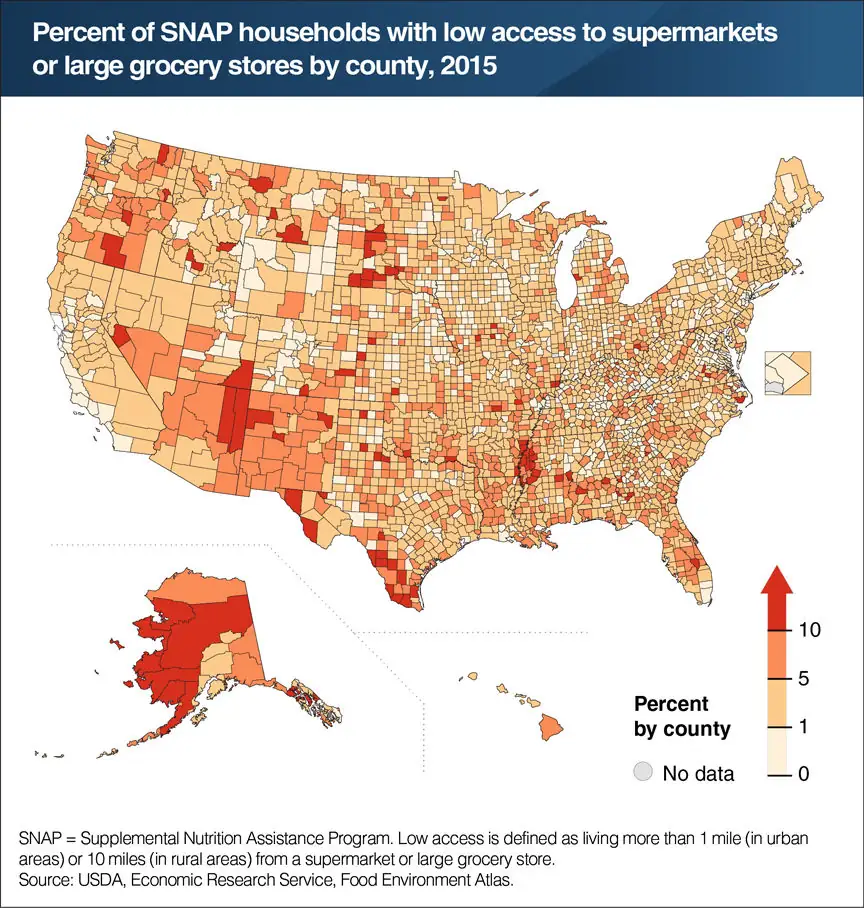
Easy access to supermarket varies by county
Share this article
Keep reading
Related stories

Environment
SCOTUS approves settlement to end Rio Grande water dispute
· By Danielle Prokop, Source New Mexico


Read the latest digital edition of WLJ.
August 10, 2026