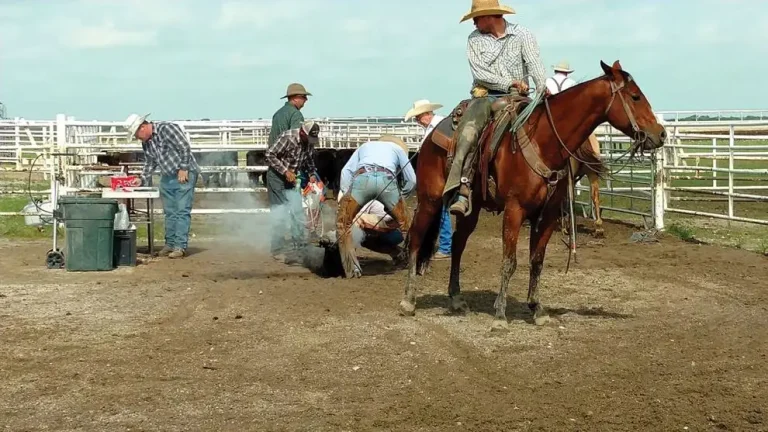
In many parts of the country, calving season is upon us! That means it is also time for another discussion about castrating those male calves—and doing it early.
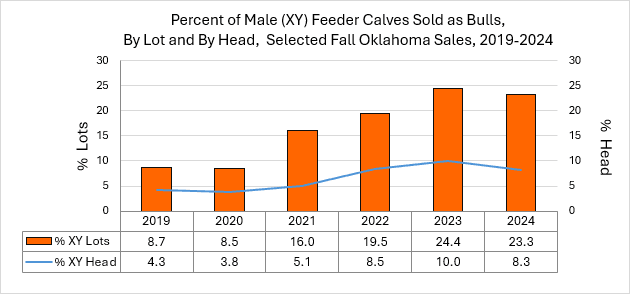
Auction data collected at selected fall sales in Oklahoma indicate that the percentage of male feeder cattle (300-950 pounds) sold as bulls relative to all male feeder cattle (steers plus bulls) increased from 2019 to 2024. Figure 1 illustrates those changes, with the line representing increase in the percent by head (scale on right axis) and the bars representing the increase in the percent by number of lots (scale on left axis). Both numbers trend upward.
From a handling standpoint on the ranch and in the feedlot, steers are generally easier to handle than bulls. Castration helps minimize aggressive behavior which eases handling stress and injury potential for people, as well as lessening the potential for damage to pens and facilities. From a performance standpoint, while bulls may produce marginally higher yield in pounds, they also produce lower-quality carcasses.
On the plate, most consumers prefer the flavor and tenderness of beef from steers over beef from bulls. Steers deposit intramuscular fat earlier and more evenly than bulls and that is particularly true in areas like the loin, where higher value cuts are sourced.
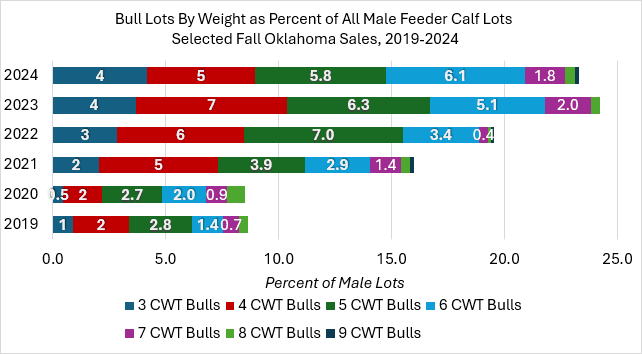
Since 2019, the same Oklahoma data indicates that the percentage of bull lots relative to steer lots has grown across all weight classes (see Figure 2), more than doubling in every weight class. For lots averaging 800 lbs. or more, the numbers are still relatively small. However, the increase in bull lots in the mid-range weight classes is particularly concerning.
Beef Quality Assurance guidelines recommend castration as early in life as possible (at birth) and preferably by 90 days of age. The earlier in a calf’s life that castration is done, the less stressful it is for the animal and the faster their recovery from any lost production performance. Early castration also leads to healthier cattle as they move from the ranch to stocker operations and feedlots. These are all positives, from both a production perspective and an animal welfare perspective. One study points out that the negative performance impacts of castration after 6 months of age never goes away.
Late castration can also be more time and labor intensive on the ranch and carries higher injury risks for both cattle and cattlemen. Younger, smaller calves are easier to handle, and castration can often be done at birth or implemented alongside other management practices, like branding, tagging or vaccinations. Later castration not only carries higher infection risks, but it also impacts carcass quality down the road.
As you move into calving season, consider your castration strategy if you haven’t already. The most recent Oklahoma custom rates survey of producers reported the average cost of castration to be approximately $5 per head. Based on the most recent analysis of the bull discount in Oklahoma auction data across those same years, there was an $11.69/cwt price difference between bulls and steers of the same weight with all other differences in animal or management characteristics accounted for. That adds up to additional revenue to the tune of $35.07 per head for a 300-lb. steer calf or $70.14 per head for a 600-lb. steer calf. That’s a pretty good return on your investment.
So, back to the question of birth, branding or belated? Belated birthday wishes are generally still appreciated. Belated castration, maybe not so much. That per head market value difference between a bull and a steer that are otherwise the same and that gets larger as the calf gets larger? That is the buyer asking you to castrate those bull calves—and castrate them earlier. — Kellie Curry Raper, Oklahoma State University professor and livestock marketing specialist