Eagle Rock Ranch of Park County, CO, has been selected as the recipient of the 2026 Colorado Leopold Conservation Award.
The award honors ranchers, farmers and forestland owners who go above and beyond in their management of soil health, water quality and wildlife habitat on working land.
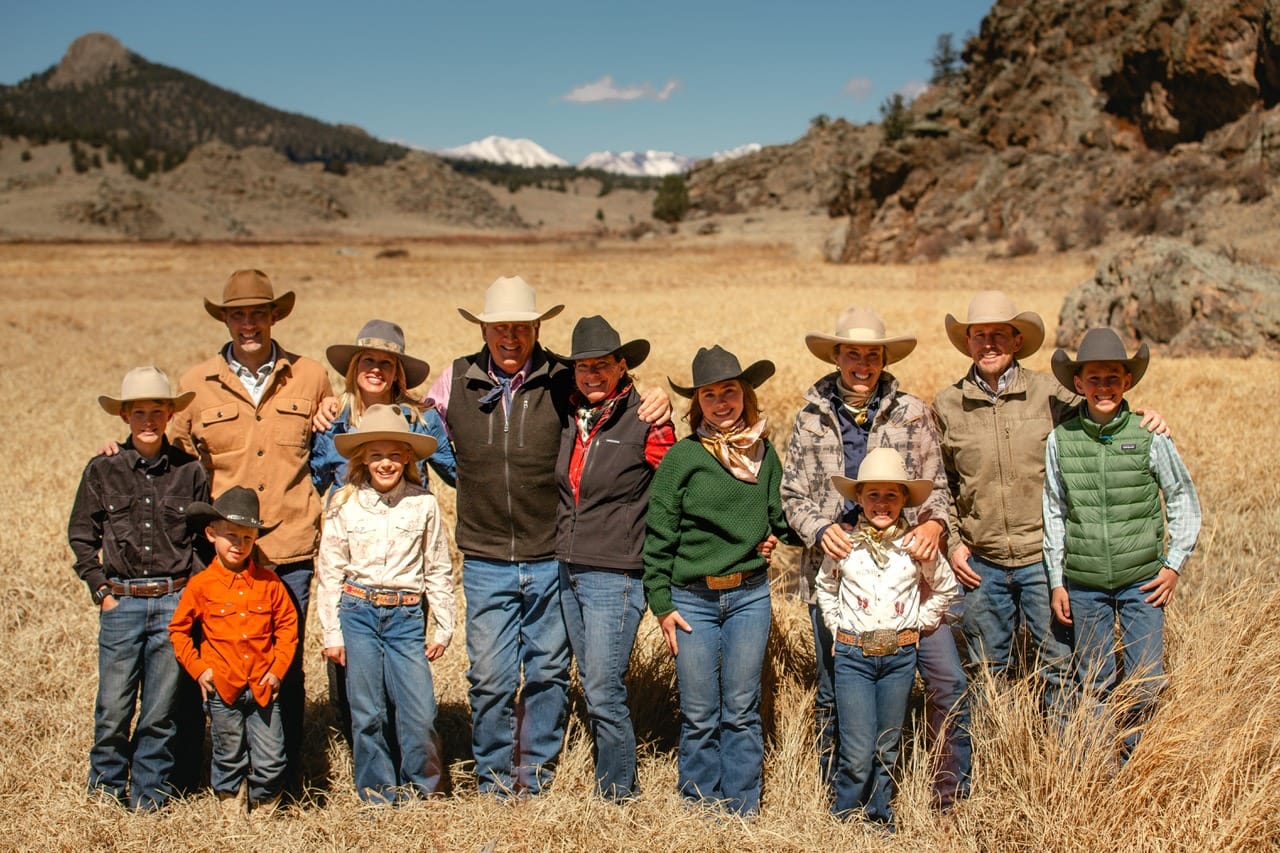
Dave and Jeannie Gottenborg are cattle ranchers and owners of Eagle Rock Ranch near Jefferson. They will be presented with the award in June at the Colorado Cattlemen’s Association’s Annual Convention. They receive $10,000 for being selected.
Sand County Foundation and national sponsor American Farmland Trust will present Leopold Conservation Awards to landowners in 28 states this year. In Colorado the award is presented annually with Colorado Cattlemen’s Association, Colorado Cattlemen’s Agricultural Land Trust, and USDA-Natural Resources Conservation Service of Colorado.
Eagle Rock Ranch was once, as Aldo Leopold described, a “wounded landscape.”
Just 15 years ago, Dave and Jeannie became owners of the ranch, which was suffering from a variety of wounds. Corrals were knee-deep with mud and manure. Creekside willows had been cut to grow more hay, and hay fields were always mowed to the ground to the detriment of wildlife, soil health and water quality.
Fencing was torn apart by migrating elk, even though propane cannons had been used to ward them off. The previous owner had feuded with state and federal personnel who managed the forests and wildlife areas on all sides of the ranch. There was literal and figurative fence-mending to do.
That was then. This is now.
After taking ownership, the Gottenborgs got to work removing garbage and rotted corrals. They restored the tired landscape by replanting native grasses. Rusty barbed wire was replaced with wildlife-friendly fencing.
Hay stubble is left long enough to trap blowing snow, slow erosion and increase infiltration, which improves soil quality. Clean water is now diverted from a settling pond to hay fields via an underground culvert system.
A solar pump powers miles of new underground pipe to carry fresh drinking water to 10 stock tanks. Their placement around the ranch allows a rotational grazing system to increase forage availability, while reducing impacts to the land.
A creek now runs clean and fish abound thanks to erosion prevention and fish habitat structures. Hundreds of willow saplings have been planted to naturally control erosion while providing shade for trout. New ditch screens keep fish from entering irrigation ditches, while fish ladders ensure trout have greater access to spawning habitat.
All stock tanks are equipped with ladders to prevent birds from drowning. Bird houses were built to attract the return of mountain bluebirds, along with bat houses for pollination and mosquito control and owl boxes for rodent control.
Eagle Rock Ranch’s economic resilience benefitted when the Gottenborgs’ daughter, Erin Michalski, a former Wall Street investment banker, returned home to handle the finishing, processing and marketing of beef sold at their retail store and through online sales.
The ranch’s quick comeback has been profound, but the Gottenborgs’ conservation achievements stretch far beyond Eagle Rock Ranch’s borders.
Dave initiated discussions that led to the nation’s first elk migration agreement. This voluntary, incentive-based, privately funded effort with Colorado Cattlemen’s Agricultural Land Trust and the Property and Environment Research Center (PERC), compensates landowners for facilitating the migration of elk and other ungulates across their properties. This program has proved to be popular with cattle ranchers and other landowners across the West.
Eagle Rock Ranch hosts research and development of elk and deer crossings along county roads and highways with PERC. Data collected with trail cameras may show that elk can be conditioned to cross roadways at certain areas with strategically placed wildlife-friendly fencing.
Dave’s insatiable curiosity about biological diversity led him to invite the Colorado Natural Heritage Program to survey and catalog all the plants, birds, and invertebrates found on the ranch.
Just as Aldo Leopold wrote about healing a wounded landscape in “A Sand County Almanac,” the leadership of the Gottenborgs is a testament to the idea that productive agriculture and ecological health can go hand in hand.
“Colorado’s farming and ranching families carry forward a legacy of stewardship, community support, and agricultural excellence. These characteristics are exemplified by all Leopold Conservation Award applicants,” said Curt Russell, Colorado Cattlemen’s Association CCA president. “CCA extends its congratulations to the Gottenborg family and Eagle Rock Ranch on their well-deserved recognition for their hard work and dedication to their land and livestock, and also for being leaders in Colorado’s conservation and ranching industry and beyond.” — Sand County Foundation