I started tracking the diet/health issue around 1972. Sen. George McGovern’s Senate Selection Committee Report on Human Nutrition in 1977 was government’s intrusion into American’s diets, recommending everyone eat less red meat, milk and eggs. The beef industry has been fighting against biased opinions from government agencies not backed up by cause-and-effect research for nearly 50 years.
The revised, “upside down” food pyramid recently released by the Department of Health and Human Services and USDA is a landmark revision of dietary recommendations. Telling the American people that eating red meat is smart nutrition, and that it is taking advantage of nutrient dense sources of protein, mineral and vitamins is a major step.
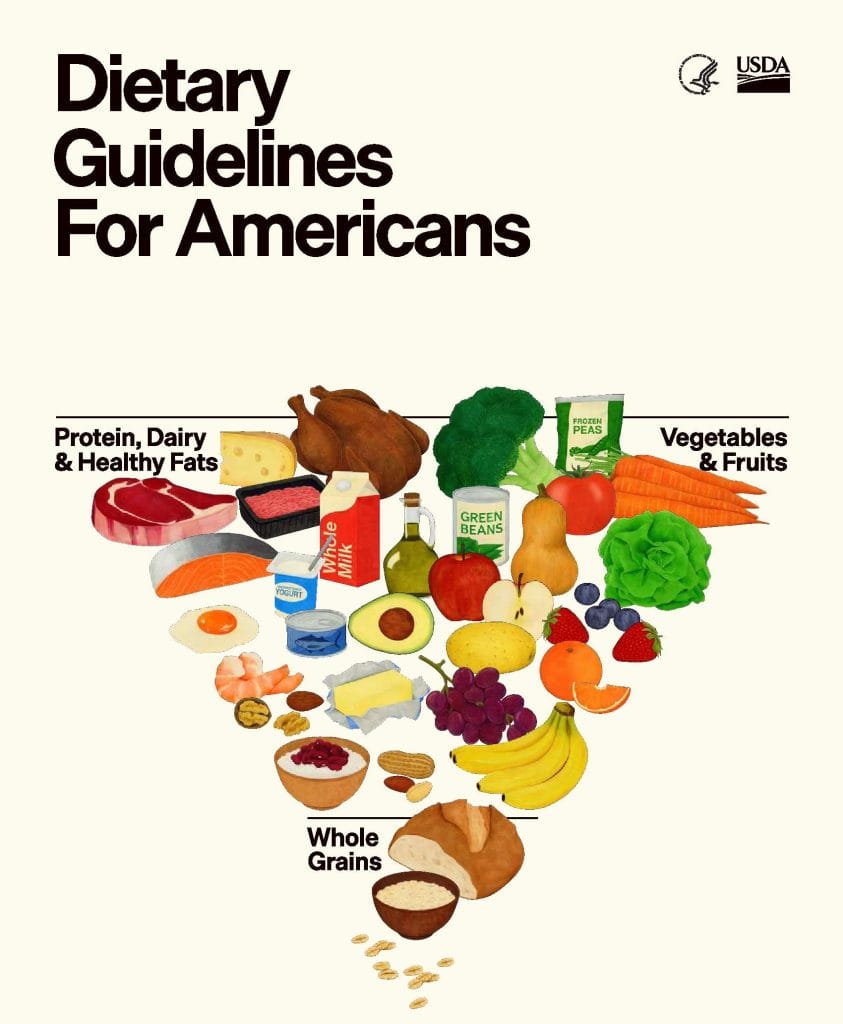
The effort was marred by putting a 10% dietary cap on saturated fat consumption. Besides that, the recommendation was laid out in grams of food and kilograms of body weight. The good thing is that the general public will hear the animal protein message and not hear anything about the 10% cap. Using unfamiliar measurements and the complication of determining one’s total consumption further obscures the cap message.
Animal product consumption opponents are screaming bloody murder, further confirming how important this event is. They are trotting out arguments like research—which has never existed—climate change, selective livestock breeding, creating “fake meat” and stigmatizing vegetarian lifestyles.
Many consumers have finally gotten the message that the primary driver of higher beef prices is the smaller supply of cattle, caused by drought. Looking at the situation critically, there is little likelihood of things changing soon. Drought is moving a bit across the country, and a look at the Drought Monitor shows there are only around eight states that show no or little effects of drought. Added to that is the high cost of replacement heifers or cows, the cost of capital for expansion and the high cost of keeping a cow due to increased costs of most things. Relatively less expensive feed is one help. Immediate 100% expensing for equipment or cattle in the new tax bill may help expansion.
Of course, the old saying that the best cure for high prices is high prices is a tremendous incentive. The beef demand at retail and foodservice levels has combined with the tight supply to provide cattlemen in all sectors of the business with higher prices faster than expected. The investment in research, promotion, merchandising, nutrition research and education through checkoffs; the tremendous progress in genetic capabilities; better health and disease prevention; and increased accuracy in quality grading and research and development at the packer level in pathogen interventions, cutting, packaging, preservation technology and merchandising are paying off big in demand despite higher consumer prices.
It’s taken a long time, but the industry can be proud of the progress we’ve made so far. Just the percentage of Choice and Prime carcasses alone is revelatory. We’ve gone from 1-2% Prime to 8-10% or more in a short period of time.
While prices have been hard on consumers, it would have been tougher if China had been in the market. Much of China’s imports were going into the high-end hotel, restaurant and institution trade, which would have put more pressure on premium beef prices.
Tyler Cozzens, director of the Livestock Marketing Information Center, analyzed the statistics for 2025 for a Stockmen at the Stockyards event at the National Western’s expanding new complex in Denver. The beef demand index was at 128 in 2024. Final 2025 numbers aren’t available yet but have to exceed that by a significant margin. Having broken through $8 a pound at retail in 2024, by the third quarter in 2025, the mark exceeded $9/lb.
Even with feeding animals longer, beef production was still down to 26 billion lbs., roughly 5 billion lbs. under 2024’s peak or down about 14%.
Beef cow numbers, replacements and the calf crop are all projected to increase less than 1%.
Returns for cow-calf operations are projected to be about the same as last year, close to $900/head. Cash costs to keep a cow will only be a little lower, at $1,100.
Heifers on feed decreased a little in 2025, to 38% by year’s end, down from 39-40% in 2023-24. There was a significant increase in cattle on feed for 180 days, given lower feed costs, good fed prices and tonnage needs. The increase was 800,000 by year’s end and dressed steer carcass weights averaged over 980 lbs. by then. All of this producing 26 billion lbs. of beef from 87 million total cows, the same inventory as 1953. — Steve Dittmer, WLJ columnist
(Steve Dittmer is the author of the Agribusiness Freedom Foundation newsletter. Views in the column do not necessarily represent the views or opinions of WLJ or its editorial staff.)