A federal judge has temporarily blocked the Bureau of Land Management (BLM) from requiring American Prairie to remove more than 900 bison from three federal grazing allotments in Montana while a lawsuit challenging the agency’s decision moves forward.
U.S. District Judge Brian Morris granted in part American Prairie’s request for a preliminary injunction and temporary restraining order, allowing its bison to remain on the Telegraph Creek, Box Elder and Whiterock allotments in Phillips County, MT. Morris declined to extend the injunction to three other allotments where American Prairie currently does not graze bison.
The ruling puts on hold portions of BLM’s May 8 decision that rescinded bison grazing authorizations and required the organization to remove the animals from federal allotments by Sept. 30.
BLM had concluded that American Prairie manages its bison primarily for conservation and ecological restoration rather than as part of a production-oriented livestock operation. The agency said the Taylor Grazing Act allows grazing permits only for domestic livestock managed primarily for production purposes.
Morris disagreed with that interpretation at this stage of the case, finding American Prairie had demonstrated a likelihood of succeeding on the merits of its challenge.
Court questions BLM interpretation
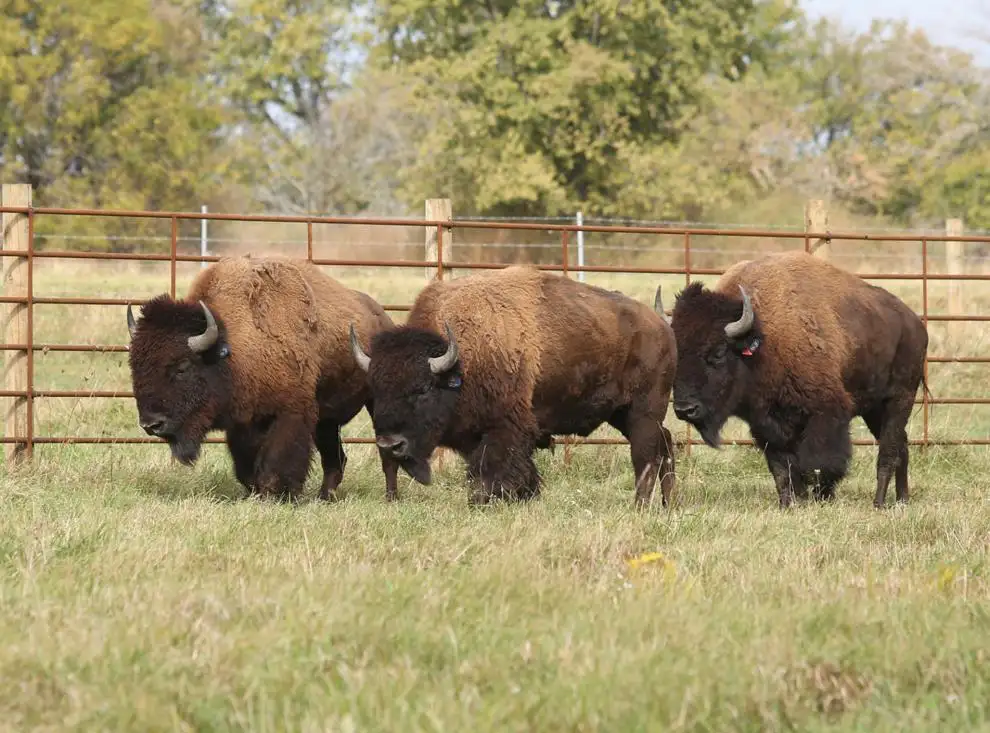
American Prairie owns approximately 940 bison and 8,000 cattle that graze across leased and deeded properties in Montana. Under Montana law, its bison are classified as livestock and are subject to livestock disease and sanitation requirements, according to court documents.
BLM first authorized American Prairie to graze bison on the Telegraph Creek Allotment in 2005 and Box Elder Allotment in 2008. In 2022, the agency approved bison grazing on additional allotments after completing an environmental assessment and finding no significant impact.
BLM reversed course this year, concluding that grazing authorized under the Taylor Grazing Act must involve domestic animals used for production-oriented purposes, such as meat, milk, fiber or other animal products.
Morris found that interpretation difficult to reconcile with the law and previous court decisions.
“No statutory language or judicial precedent exists that requires a livestock operation to focus exclusively on production and entirely ignore conservation, range improvement, preservation, or other values,” Morris wrote.
He also pointed to evidence that American Prairie uses its bison for production purposes. Since 2016, members of the public have harvested 370 bison, producing approximately 75,000 pounds of meat, while another 645 animals have been transferred to other herds for genetics, food sovereignty programs, herd expansion and other uses.
Morris wrote that the Taylor Grazing Act recognizes that livestock management can serve several purposes.
“Congress recognized livestock grazing and livestock management often includes and considers preservation, improvement, and thoughtful development, hand-in-hand with other uses,” he wrote.
Morris found BLM’s “production-oriented” requirement was not supported by the Taylor Grazing Act and that the agency overlooked evidence showing American Prairie’s bison are domestic livestock with both economic and production uses. He concluded BLM’s reasoning was lacking and found American Prairie had shown it was likely to succeed on the merits of its case.
Removal could cause harm
American Prairie argued that without an injunction it would have to cull or transfer approximately 300 bison by Sept. 30, or roughly one-third of its herd. The organization estimated replacement leases could cost about $105,000 annually, along with more than $200,000 for fencing and water infrastructure and another $100,000 for handling and transporting animals.
Morris found those potential losses, along with concerns about the herd’s genetic diversity and the cost of replacement leases, represented concrete and potentially irreparable injuries that monetary damages could not adequately remedy later.
The court also rejected Montana’s argument that allowing the bison to remain would create problems with animals trespassing on state trust lands. Morris noted that Montana had not identified specific instances of trespass on the Whiterock Allotment and found the state’s claimed harms more speculative. The court also cited BLM records indicating American Prairie’s bison grazing had not harmed public lands or increased disease transmission risks.
Earthjustice, which represents American Prairie with Cochenour Law Office, called the decision an important victory.
“This is an important victory in the fight to ensure American Prairie’s bison can continue grazing on Montana’s prairie, as they have for over two decades,” said Jenny Harbine, managing attorney with Earthjustice’s Northern Rockies Office.
The injunction does not settle the lawsuit but allows American Prairie’s bison to remain on the three allotments while its challenge to BLM’s 2026 decision moves forward. Morris said the court will consider the broader legal issues as the case proceeds. — Charles Wallace, WLJ contributing editor