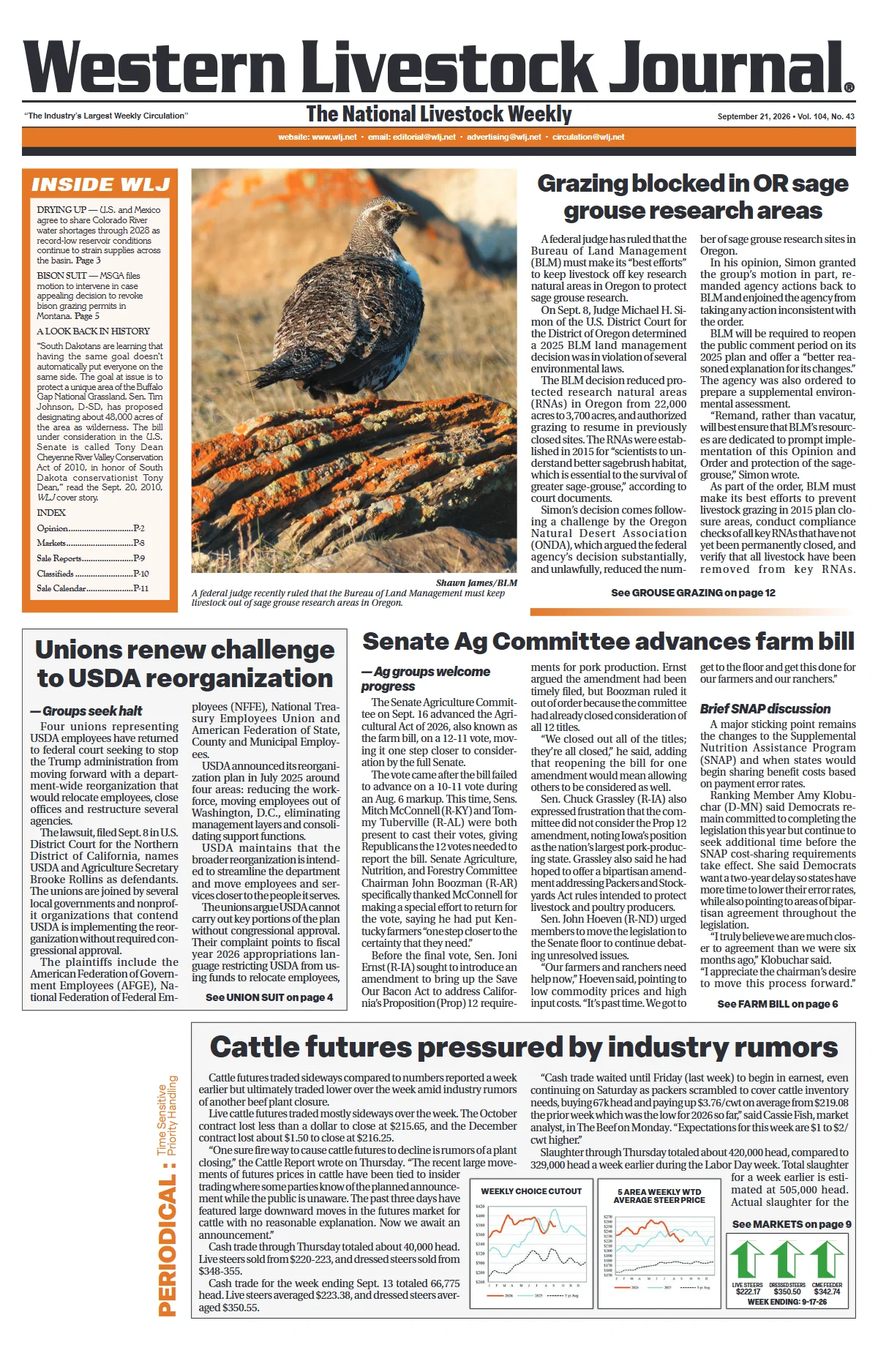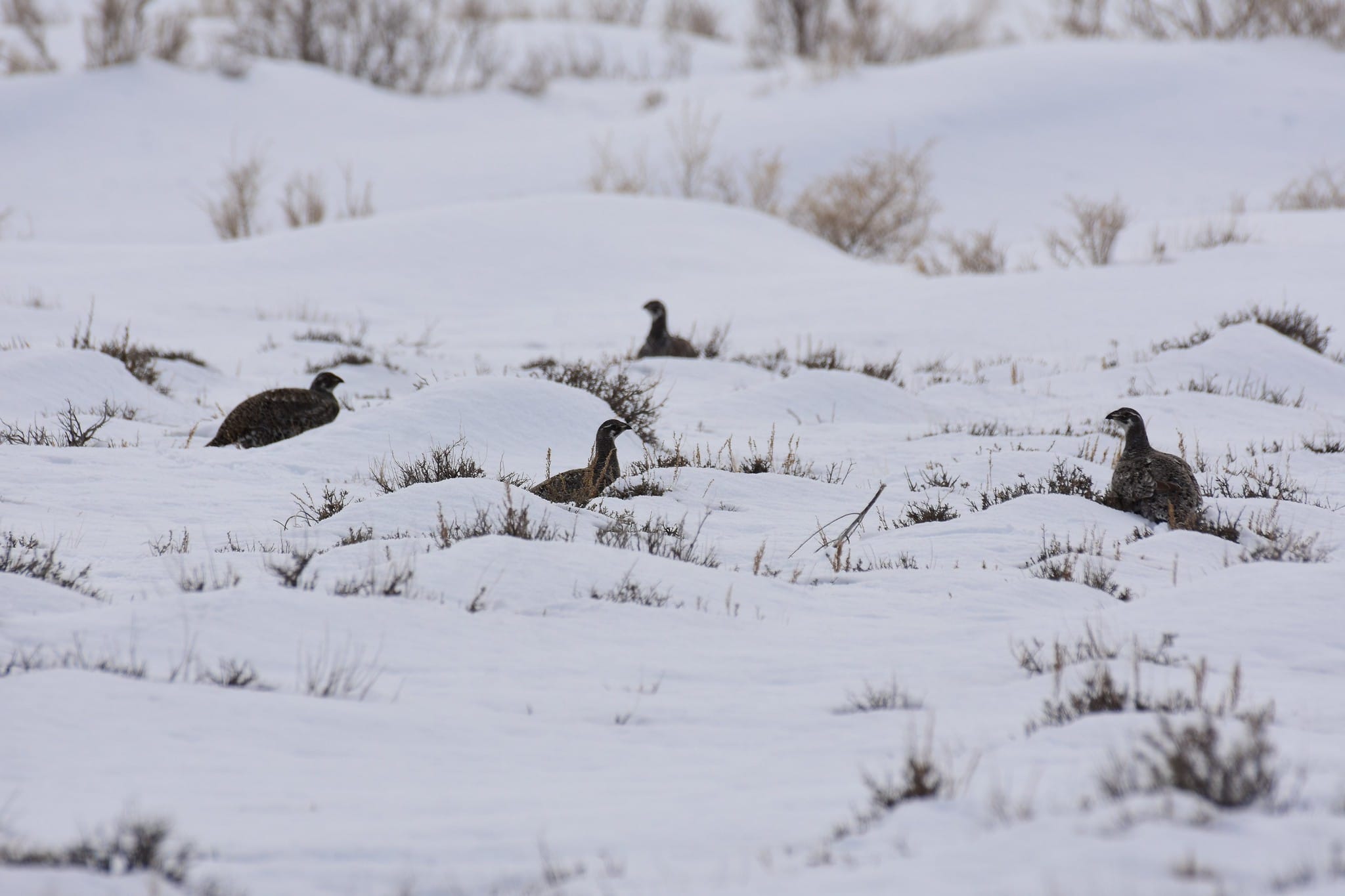
The Bureau of Land Management (BLM) finalized greater sage-grouse land-use plans across eight western states, reopening a debate over how to balance wildlife conservation, energy development and working landscapes on public lands.
The decisions apply to BLM-managed sage-grouse habitat in Idaho, Montana, North Dakota, South Dakota, Nevada, California, Utah and Wyoming, with plans for Colorado and Oregon completed in 2025. In total, the agency amended goals, objectives and management direction in 77 resource management plans across 10 states, building on the 2015 and 2019 sage grouse planning efforts.
BLM officials say the revisions strengthen conservation while restoring flexibility for responsible energy and mineral development.
“We are strengthening American energy security while ensuring the sage-grouse continues to thrive,” said BLM Acting Director Bill Groffy. “Healthy sagebrush country powers our communities, sustains wildlife and supports the economies that make the West strong.”
According to BLM, the updated approach makes more acres available for development in some areas than the 2015 plans, while continuing to protect key habitat across roughly 65 million acres of sagebrush lands that support more than 350 wildlife species.
Federal officials note the plans were developed in close coordination with western governors and state wildlife managers and were revised after public protest and consistency review periods. Supporters argue the changes correct years of overly rigid federal policy, while opponents see another rollback that edges the species closer to extinction.
Greens vow court challenge
Environmental organizations reacted swiftly, warning that the changes would strip critical protections and threaten an already imperiled species whose population has declined nearly 80% since the late 1960s.
“Trump’s reckless actions will speed the extinction of greater sage grouse by allowing unfettered fossil fuel extraction and other destructive development across tens of millions of acres of public lands,” said Randi Spivak, public lands policy director at the Center for Biological Diversity (CBD). “We’re not letting these dancing birds go without a fight, so we’ll see Trump in court.”
Among the most controversial changes, CBD said, is the elimination of an early-warning system designed to detect localized sage grouse population declines before they become irreversible. Environmental groups also argue the plans remove protections from roughly 4.3 million acres of prime habitat and weaken safeguards in Nevada to accommodate projects such as the Greenlink North transmission line. In mid-December, groups succeeded in delaying the project’s advancement.
The groups say the plans also drop science-based grass-height standards for nesting habitat in parts of Nevada, California and Idaho—changes conservation advocates claim were driven by livestock industry pressure.
American Bird Conservancy expressed those concerns in a Facebook post, warning that without stronger action, the bird and the broader sagebrush ecosystem could be lost.
“These plans mark another setback for sage grouse conservation and will need to be redone yet again to provide the declining population of greater sage grouse with a good chance for recovery,” said Steve Holmer, vice president of policy at American Bird Conservancy. “We will continue to encourage the BLM to follow the best available science which indicates the grouse need more conservation safeguards, not less.”
States, ranchers praise plan
Western governors and livestock groups, however, welcomed the final plans, saying they better reflect on-the-ground realities and state-led conservation strategies.
Wyoming Gov. Mark Gordon (R) said the record of decision affirms the state’s long-standing leadership on sage grouse management.
“Wyoming has consistently advocated for a finalized greater sage-grouse (plan) that recognizes the state’s management authority over the species utilizing the best-available science,” Gordon said. “We will continue to invest in sage-grouse conservation alongside responsible development in Wyoming.”
Idaho Gov. Brad Little (R) praised the updated greater sage-grouse plans on X as “a win for western states,” saying the revisions strike a balance between protecting key wildlife habitat and expanding opportunities for energy and mineral development. He added that when states and the federal government work collaboratively, public lands are better positioned to thrive.
The National Cattlemen’s Beef Association (NCBA) and Public Lands Council (PLC) said they have worked with BLM through multiple revisions since 2015, urging the agency to recognize livestock grazing as a conservation tool rather than a threat.
“The revised sage grouse management plans recognize the role of cattle producers, as the original conservationists, and follow the best available science,” said NCBA President Buck Wehrbein. “Without ranchers actively managing millions of acres of western rangeland, there would be less habitat and forage, and grouse populations would be substantially smaller.”
PLC President Tim Canterbury said the revisions remove what he described as unscientific constraints that hinder active land management.
“These plans unleash the conservation prowess of federal lands ranchers and allow critical conservation work that supports grouse habitat to continue without burdensome government red tape,” Canterbury said.
Grazing rules
While the debate often frames grazing as either a threat or a benefit, the updated plans continue to rely on detailed livestock grazing best management practices intended to reduce impacts to sage grouse habitat, BLM said. As a general overview, these practices emphasize site-specific management rather than one-size-fits-all restrictions.
Under the Idaho plan, for example, best management practices include adjusting timing, duration and intensity of grazing where habitat objectives are not being met; placing salt and mineral supplements away from leks, riparian areas and intact sagebrush stands; minimizing disturbance during lekking and nesting seasons; and using tools such as herding, water placement and virtual fencing to improve livestock distribution.
The guidance also calls for resting treated areas until habitat objectives are achieved, managing carcass disposal to reduce predator attraction and incorporating drought-response strategies into grazing authorizations. The best management practices are not automatically applied in every situation and are evaluated at the project or allotment level, depending on local conditions and monitoring results. — Charles Wallace, WLJ contributing editor