

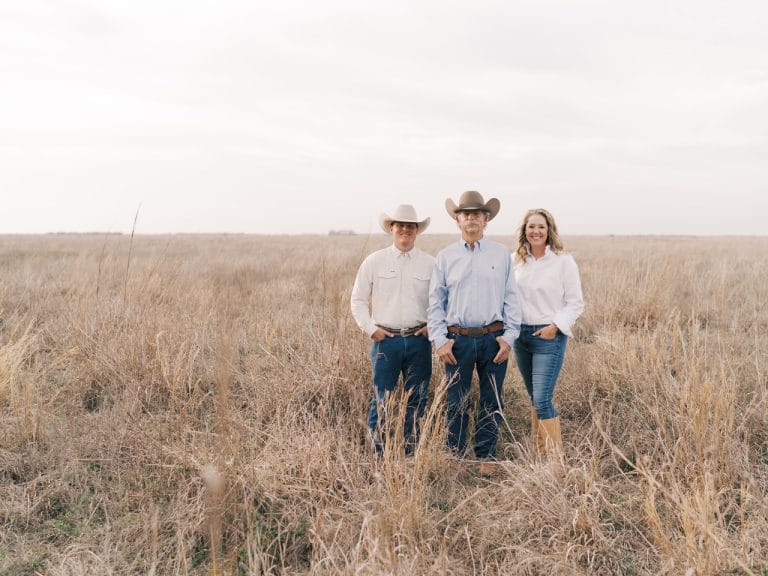
The 2025 Livestock Tours presented by Western Livestock Journal embarked on a week-long journey through the ranches and landscapes in “Beautiful British Columbia” from May 31 to June 6. The tours were led by Devin and Samantha Murnin, with 11 ranches visited, 120 people in attendance and 14 states represented.

Night 1
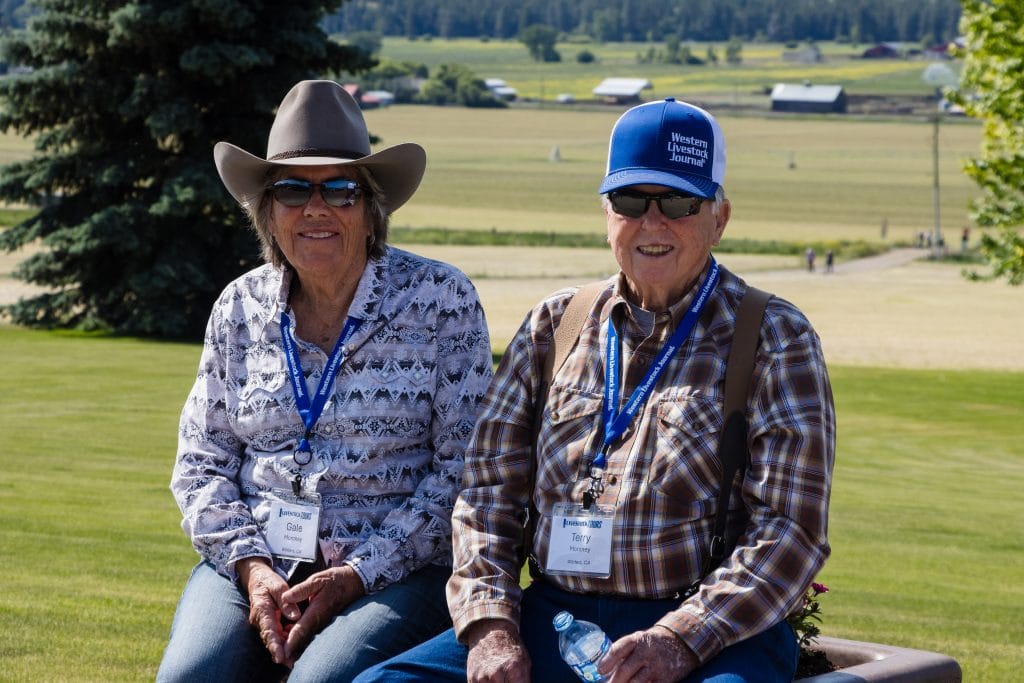
As attendees reunited with old friends and made new ones, night one kicked off with a delicious steak dinner. Devin Murnin presented awards to several attendees, including Terry Moroney for being the longest WLJ subscriber (60-plus years), Zeke and Susie Frost for being top recruiters, Rebecca Higgins for the longest drive (Tennessee to British Columbia), and Ron and Stephanie Sakugawa for celebrating their wedding anniversary. The group heard from Kevin Boon, general manager of British Columbia Cattlemen’s Association, as he dissected the history of ranching in British Columbia, as well as many of the problems that ranchers run into in the province, like fire, predators, water and urbanization.
Day 1
The first stop of the tour was the historic O’Keefe Ranch, founded in 1867 by three men, Cornelius O’Keefe, Thomas Greenhow and Thomas Wood. However, it has not been a working ranch since 1967 and was turned into a historic site owned by the city of Vernon, relying on donations for upkeep. The attendees were able to explore the property and look at houses from the 1800s, old schoolhouses, bunkhouses and many barns from that era. The general store on the property was a stop for the stagecoaches traveling through the area.

After a delicious lunch at Narrows Smokehouse, the tour traveled to Crystal Lake Ranch. This ranch is at the forefront of some innovative technologies for ranchers. Due to the ranch’s rough terrain and mountainous landscape, the ranch is in the beginning phases of testing virtual fencing. Virtual fencing uses GPS collars and towers, with the information being controlled from an app on a rancher’s phone. The Stump family at Crystal Lake Ranch says virtual fencing will reduce the need for building barbed fences in the rough terrain and allow them to track their cattle and graze their ground more efficiently.

In addition to exploring new fencing technologies, the family has added drones to their operations. They use a fertilizer drone on their own crops and also offer the service to surrounding farmers and ranchers. Crystal Lake Ranch is also home to many grizzly bears, but they are not huge predators to their cattle operation, but rather to their crops. A preventative option was to have an electric fence that would cover the height of the bears, but also prevent them from climbing under the fence.
Day 2
Day two started off at the Indian Gardens Ranch, a scenic 1,000-head cow-calf operation. The Haywood-Farmer family welcomed guests to their ranch that has been in the family since 1932. Now run by the third and fourth generations, their cattle are raised on grasslands and hay fields that they irrigate themselves.
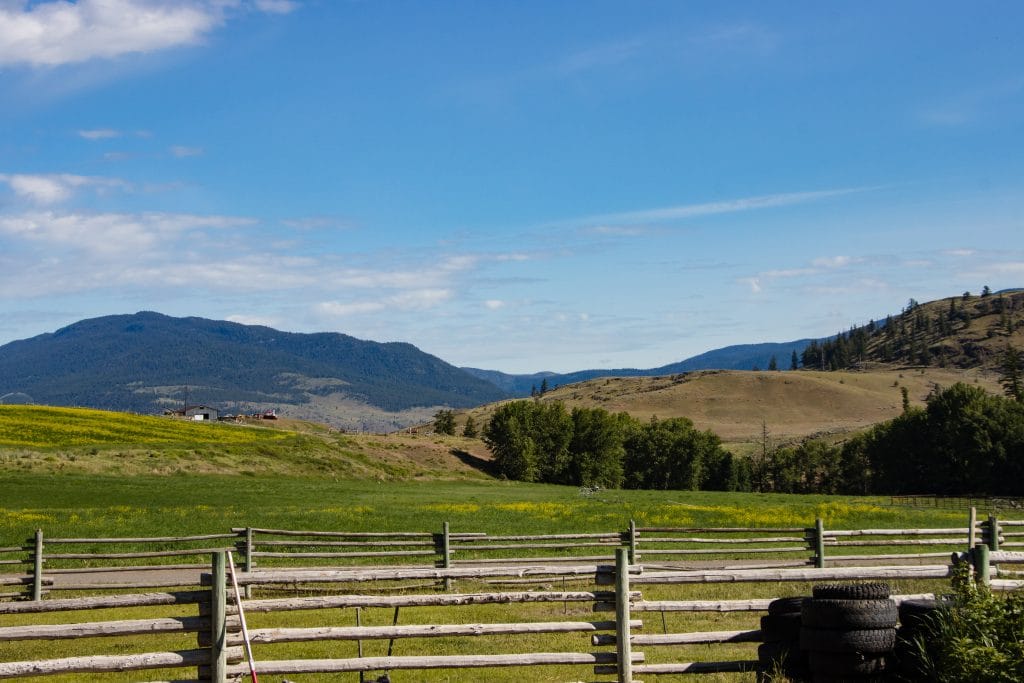
While speaking with attendees, David Haywood-Farmer spoke about how they manage predation from wolves to cougars. The family showed the group their headquarters, feedyards and a few of their replacement heifers, as well as a reservoir and dam that they control and get all their water from.

Following lunch, the group ventured to Rey Creek Ranch and Left Field Cider Co., a favorite spot. Gord and Dennis Garthwaite run the ranch and take care of the cattle, while sisters Theresa Pedersen and Kate Garthwaite run the cider mill.

On the ranching side of things, the attendees witnessed some beautiful scenery and rode the buses down a winding dirt road up the side of a mountain where the cattle are summered. The ranch runs 1,000 cow-calf Red Angus pairs and breeds to Charolais bulls. After learning about the cattle, the tour headed down the mountain to the cider mill. The generous hosts treated guests to a tasting of three different ciders. The attendees were able to sit, conversate and relax while drinking their cider.
Day 3
Day three took the tour to the historical Douglas Lake Cattle Co. Many of the attendees were excited to see where Peppy San, a famous cutting horse, called home. The group learned all about the long history of the ranch, which began in 1884.

The ranch town was a place full of history that the group was able to walk around and explore, complete with its own general store, cookhouse, employee housing and ranch office. Originally, the ranch started out as a Hereford operation, then moved to an Angus-Hereford cross operation. Now, the ranch is in its last year of having Herefords as a part of their herd as they transition to Angus and Charolais. The ranch is owned by Stanley Kroenke, who also recently acquired the Gang Ranch in British Columbia.

The Nicola Ranch was next on the journey. A bus tour through “Crown land,” deeded ranch land and beautiful scenery was narrated by those who work at Nicola Ranch and their neighbor. With 1,400 black Angus cow-calf pairs running on deeded land and Crown land—land owned by the government—the ranch is an impressive 300,000 acres. The tour was able to see some beautiful views at this ranch and a stop at the corrals on the mountain provided a breathtaking backdrop.

Day 4
The fourth day was a bit of a change in operations and took attendees to a feedlot and dairy. Westwold View Farms is a family-operated feedlot in Westwold. Started in 1983, it is now managed by siblings Dylan Keenan and Andrea van Iterson.

The motto on this farm is, “Do more with less.” They are a smaller operation, so they have to purchase inexpensive resources and also reuse their resources. Everything they finish on their farm is processed locally and the meat is only sold in British Columbia. The tour was treated to some of their delicious hamburgers for lunch.
A family-owned and operated dairy, H.S. Jansen & Sons Farm LTD, was next. This operation is a 1,400-cow dairy that has been in production for the last 19 years. They use a lot of advanced procedures to get all of these cows milked, like a 50-stall GEA parlor, as well as a geothermal system to cool the milk.
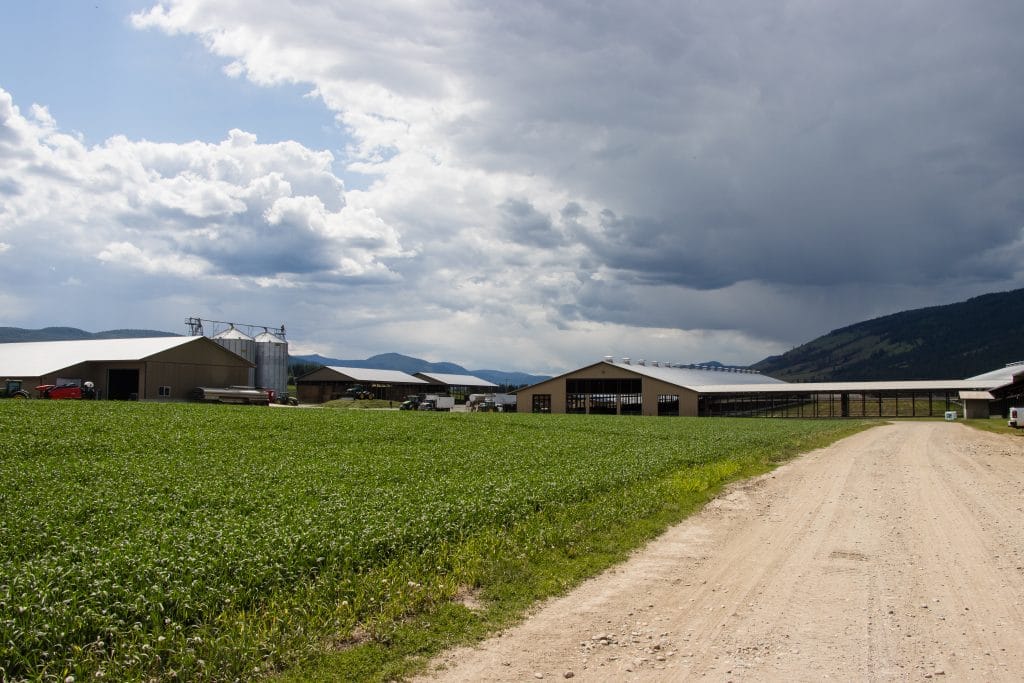
The family let the attendees walk around the whole dairy at feeding time, so the group was able to see how their feeding was done with their calves and cows.

Day 5
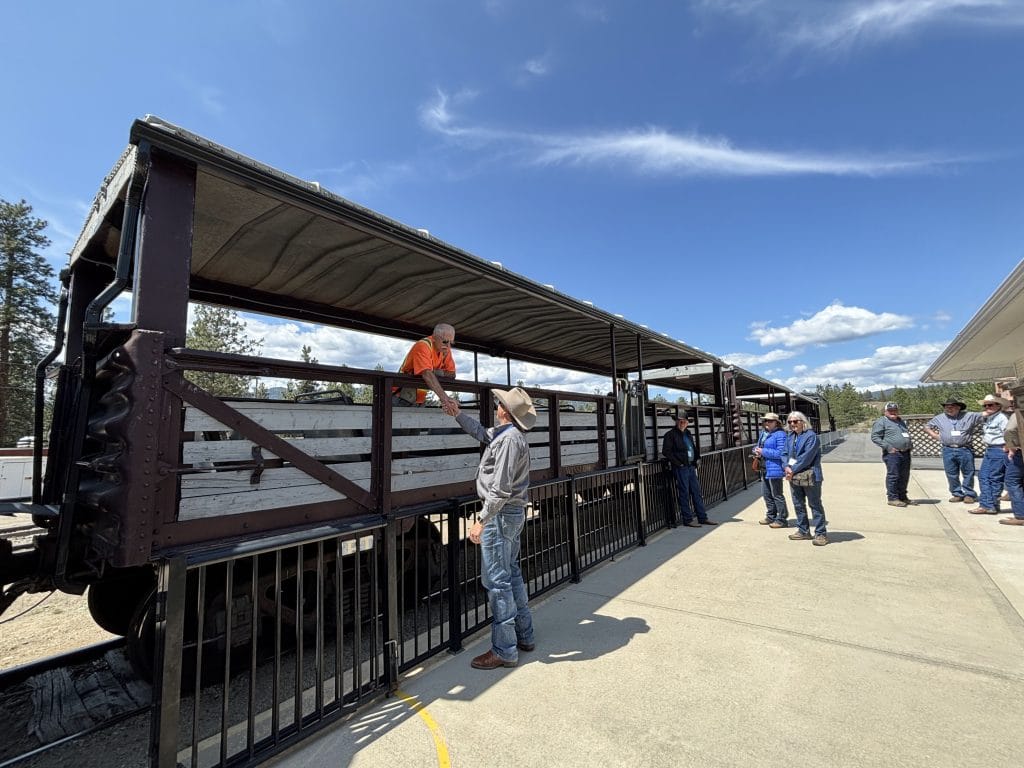
Day five introduced a new experience for many people, a ride on the Kettle Valley Steam Railway, built between 1910 and 1916. On this ride, the group was able to see gorgeous scenery and many different orchards.

The conductor spoke of the history of this railway, and played the part of conductor perfectly. Some of the tour group sat on outdoor open-air cars that used to be double-decker cattle carts. The other half sat on seats inside and could open their windows.
Clifton Ranch was the last stop on day five, which has 500 cow-calf pairs and 70,000 acres of rangeland. While the group was at the ranch, everybody learned a lot about The Nature Trust of British Columbia and how the ranch has been involved with the trust. The ranch has worked on their rotational grazing, keeping the grasslands and the species that live on them alive.

Day 6
KT Ranches, a purebred Angus and Simmental operation, was the last ranch of the tour. Managed by Geoff and Lacey Anderson and owned by Kevin and Tracy Carson, this seedstock operation utilizes embryo transfer and hosts an annual bull sale.
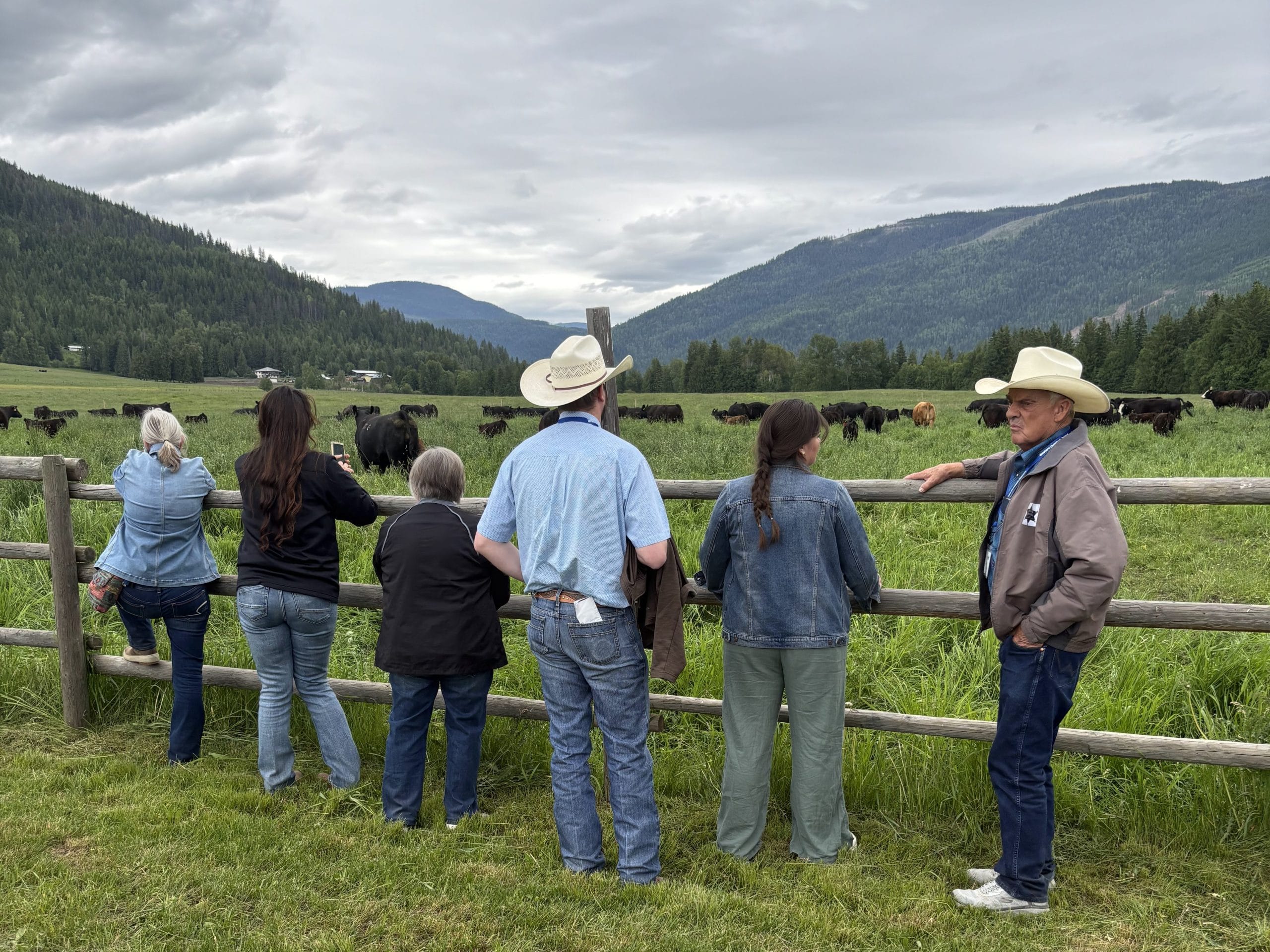
The group was able to see some of their cows and heifers and how the genetic programs are implemented at KT.
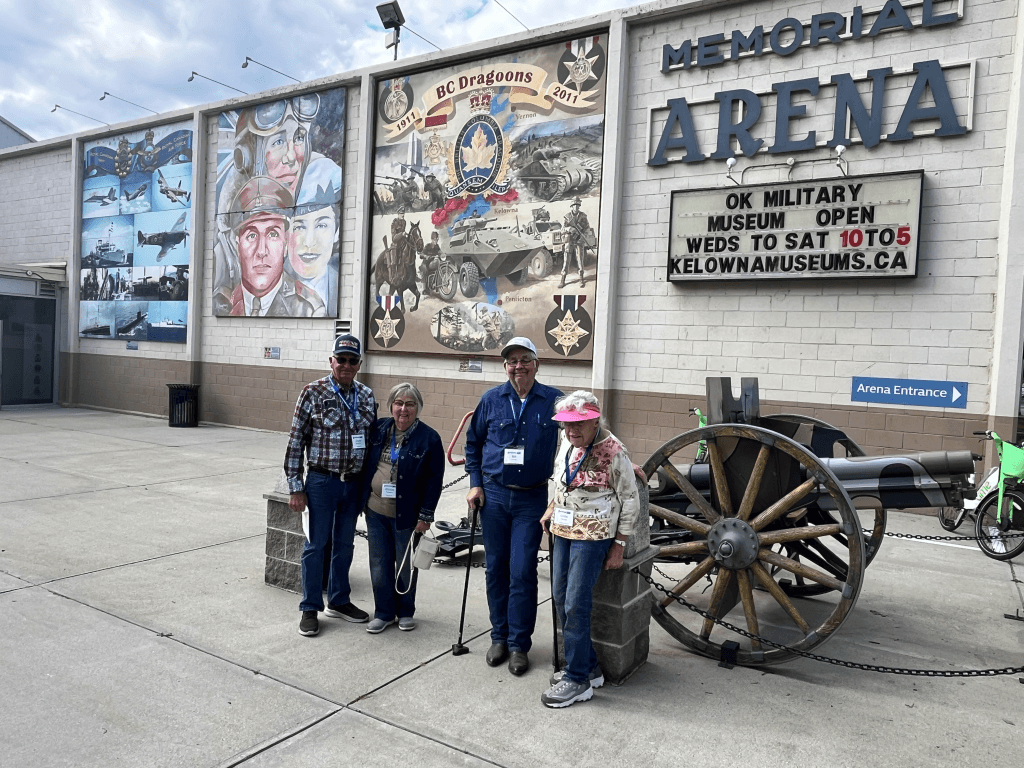
That afternoon, attendees had the option of going to a local winery, Quail’s Gate Winery, or the Okanagan Military Museum and Okanagan Heritage Museum.

Both groups had a tremendous amount of fun at both places, and they all learned so much more about British Columbia. It was a perfect day to round out the tour.
The Livestock Tours’ “Beautiful British Columbia” trip was a once-in-a-lifetime opportunity. Patti Foard, an attendee from California, loved getting to see the differences and similarities within the ranches in British Columbia compared to ranches in the U.S.
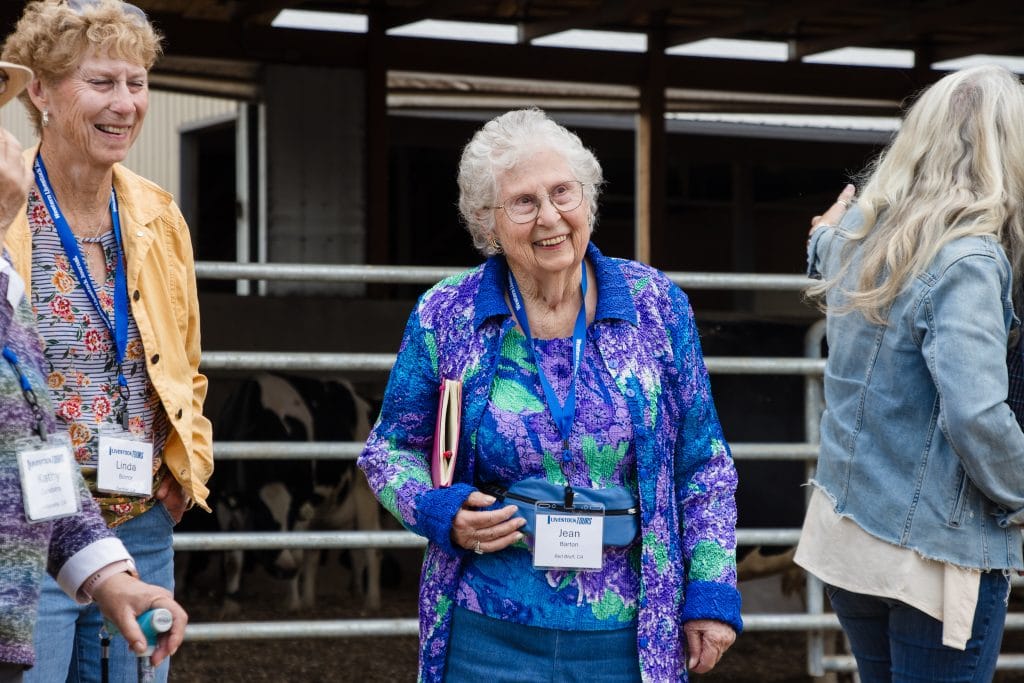
Also from California, Jean Barton got to cross something off of her bucket list: seeing Douglas Lake Cattle Co. Everyone the group met along the way was very welcoming and passionate about their operations.
These tours are the perfect opportunity to learn about ranches all across the world. Stay tuned to hear where Livestock Tours will be heading next year and keep up to date at livestocktours.com! — Charley Maranville, WLJ correspondent
A note from Charley: As a 19-year-old college student, this trip was the best experience. I loved seeing the relationships that have formed because of these tours and hearing all the attendees’ stories about their own ranches. Every day I learned something new from one of the attendees. I now want to visit all of their ranches and see all of their hard work. It was such a fantastic experience that I will remember forever.




1 Comment