
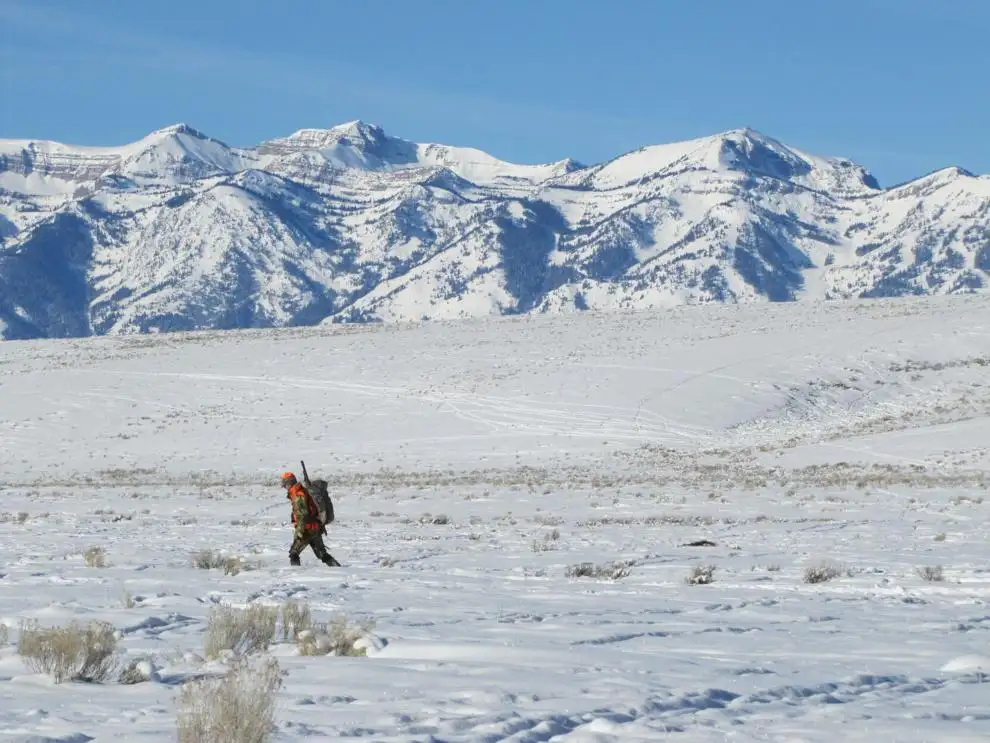
Lawyers for Iron Bar Holdings LLC are urging the Supreme Court of the U.S. to overturn a recent ruling by the 10th Circuit Court of Appeals that they say undermines private property rights across the American West.
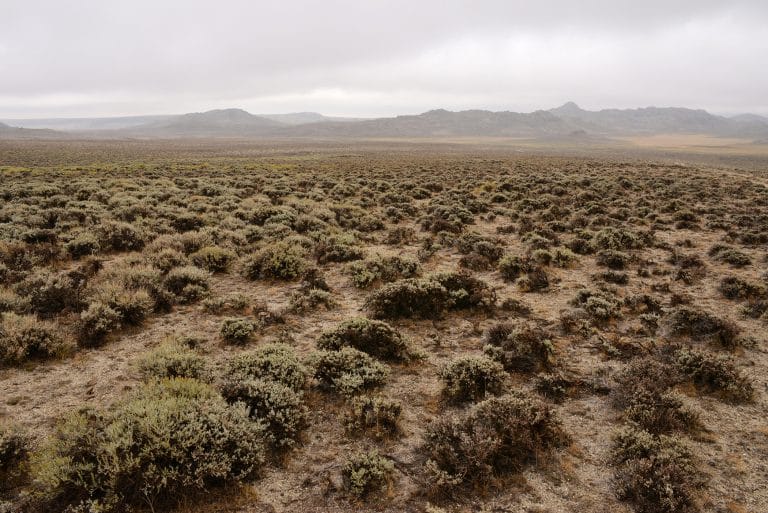
In a petition for a writ of certiorari, lawyers argue the appellate court’s decision “effected an uncompensated taking of unprecedented scale” by granting hunters what the court described as a “limited easement” across private lands to access public parcels in the checkerboard land pattern of the West.
Iron Bar’s petition to SCOTUS frames the broader question as one of federalism and legal clarity. “This case presents an important and recurring federalism question that affects property rights in 150 million acres of land in the Western United States,” the petition states. The company warns that unless the high court intervenes, the appellate decision will upend long-held understandings of private land rights, sparking confusion and conflict across millions of acres of checkerboarded terrain.
Iron Bar Holdings, which owns roughly 22,000 acres of Elk Mountain Ranch in Wyoming, claims the decision violates its constitutional right to exclude others from its property—a principle the Supreme Court reaffirmed in its 2021 decision Cedar Point Nursery v. Hassid, calling it “one of the most treasured rights of property ownership.”
Lawyers also argue whether the 1885 Unlawful Inclosures Act (UIA)—a federal statute that prohibits the fencing of public lands—implicitly nullifies state trespass laws in cases involving “corner-crossing,” a practice in which a person steps diagonally from one public land parcel to another at the shared corner point, passing through the airspace of two adjoining private parcels.
The 10th Circuit ruled in March that while the four hunters who crossed Iron Bar’s land in Carbon County had indeed violated state trespass law, the UIA preempted that law and rendered the property owner’s trespass claim legally invalid. The court held that enforcing state trespass law in such cases would fully enclose federal land and create a “virtual wall,” in violation of the UIA’s intent to ensure public access to public lands.
But attorneys for Iron Bar argue the appellate decision misinterprets both the UIA and Supreme Court precedent, particularly the court’s 1979 decision in Leo Sheep Co. v. United States. That case, which also arose in Carbon County, rejected the government’s argument that the checkerboard land grants to railroads in the 19th century included an implicit federal easement allowing public access to otherwise landlocked public parcels. The court ruled then that Congress had not reserved such rights and that if access was desired, the government must use eminent domain and compensate the landowners.
Background
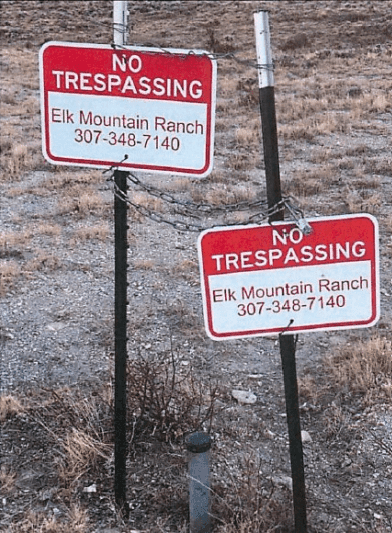
The legal dispute began in 2021, when four hunters used a ladder to cross from one public land parcel to another at a shared corner surrounded by Iron Bar Holdings’ private land, despite the presence of posted “No Trespassing” signs. Although they were cited for criminal trespass, a Wyoming jury acquitted the hunters in 2022. Iron Bar then pursued a civil trespass case, which U.S. District Judge Scott W. Skavdahl dismissed, concluding that the company’s claim to exclusive control over the airspace did not support a finding of trespass under federal law.
The 10th Circuit Court of Appeals upheld Skavdahl’s ruling, with Judge Timothy Tymkovich writing the opinion. The court leaned heavily on the UIA, stating that private landowners may not use physical or legal means to obstruct lawful public access to federal lands. Tymkovich framed the issue within a broader history of land use in the West and acknowledged the legal ambiguity surrounding corner-crossing, suggesting that ultimate clarity may have to come from Congress or the U.S. Supreme Court.
The case has drawn national attention from both public access advocates and private property rights groups. According to the petition, an estimated 9.5 million acres of public land are currently landlocked by private property, leaving landowners facing legal uncertainty across vast stretches of the West. The 10th Circuit’s ruling has already “sow(n) confusion among landowners and recreationists,” with one recent Wyoming legislative hearing highlighting proposals to develop a ladder system for motorized corner-crossing.
The case also carries immediate consequences for millions of outdoor enthusiasts. The petition cites that of the 54 million Americans who hunted or fished in 2022, nearly 10 million were from checkerboard states, and the ruling now “leaves tens of millions of outdoor recreationists in limbo about how and where they may access public land.” As the petition notes, the case presents a clean and timely opportunity for the Supreme Court to resolve these legal uncertainties, with Tymkovich expressly inviting the Court to “reconsider the scope of Leo Sheep as it applies to this case.” — Charles Wallace, WLJ contributing editor


1 Comment