Ever wonder what would happen to the U.S. cattle and beef industry if the border with Mexico closed entirely?
The possibility was raised on Friday, March 29, when President Donald Trump announced he would close the border with Mexico if certain immigration-related demands of his aren’t met. He acknowledged that the move could harm trade and the U.S. economy, but said, “We’re going to have security in this country. That’s more important than trade.”
Trump took to Twitter on the morning of March 29 to blast congressional Democrats for what he called “the weakest immigration laws anywhere in the world” and issue an ultimatum.
“If Mexico doesn’t immediately stop ALL illegal immigration coming into the United States throug [sic] our Southern Border, I will be CLOSING the Border, or large sections of the Border, next week.”
Later in the day, he reiterated this ultimatum repeatedly during White House press conferences. At one point, when asked if he would close the border to all trade with Mexico, he said that the potential border shut down “could be to all trade.”
Later in the week—both on Twitter and in interviews—Trump’s focus seemed to shift from Mexico to Congress. Early on the morning of April 3, he tweeted:
“Congress must get together and immediately eliminate the loopholes at the Border! If no action, Border, or large sections of Border, will close. This is a National Emergency!”
Still later, on the morning of Thursday, April 4, the president seemed to soften his threat. During a meeting with reporters that morning, he said he would give Mexico a year before he would close the border.
Trade with Mexico
“The North American cattle and beef picture is fairly heavily integrated at this point,” noted Katelyn McCullock, director and senior economist at the Livestock Marketing Information Center.
The U.S. and Mexico trade cattle and beef back and forth. In general, Mexico sends the U.S. a lot of feeder cattle and some muscle cuts, and the U.S. sends Mexico beef—muscle cuts, but especially offal and variety meats.
In terms of market share, the Mexico is the top destination for U.S. beef variety meats exports and third largest destination for U.S. muscle cut exports, both by volume. In terms of imports into the U.S., Mexico is our number one source of imported cattle, and the overwhelming majority of Mexico’s processed beef comes to the U.S.
“It’s a two-way trade on everything,” said Erin Borror, economist with the U.S. Meat Export Federation. Though she commented to WLJ that she does not see a shutdown as a realistic possibility, she spoke of the possibility in no uncertain terms.
“Closures would be devastating.”
Feeders from Mexico
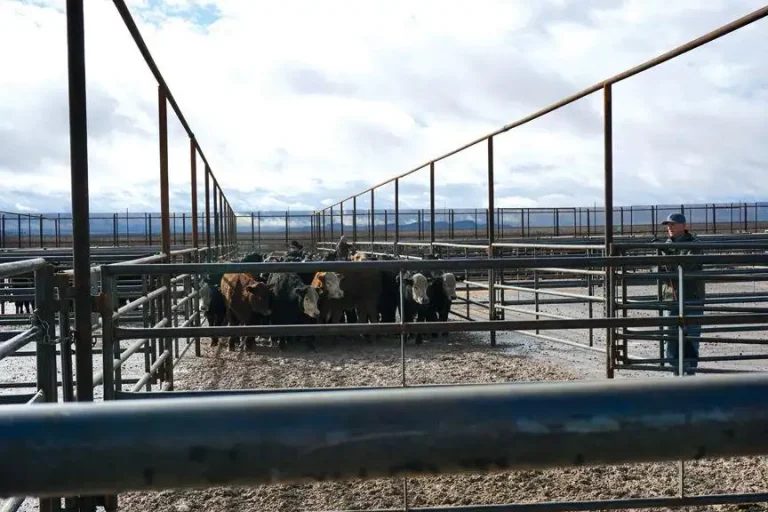
In 2018, the U.S. imported 1.27 million head of cattle from Mexico. Though USDA records do not break down the exact make up of imported cattle in the consolidated reports, the majority—759,755 head, or about 60 percent of total Mexican cattle imports—weighed between 400-700 lbs.
“Many of those come across as feeder cattle and how that flows into our system is that those go to a variety of operations,” explained McCullock. “That is part of our supply chain in a pretty real way.”
She added that a closing of the border with Mexico “would have pretty big impacts on both sides of the border.”
“Mexico is not set up to finish out those feeder cattle and then slaughter all of them in their own market. It would likely drive feeder prices up here because there would just be significantly less cattle available in terms of a market flow standpoint.”
She acknowledged that the domestic cattle population is historically high, but that a sudden shift in the flow of feeder cattle would still have an impact, particularly on a regional level in the southern border states.
“I think the live side would have a pretty immediate impact if trade flow dried up. Essentially, Mexico prices of live cattle would probably suffer a fairly large price adjustment to the downside with that many more cattle trying to find homes. On the other side of the border, we would be bidding up the price of lighter weight cattle to try to find more. Again, we have more cattle on hand but that’s not going to take the place of a supply that totals 1.2 million head a year.”
Beef from the U.S.
In 2018, the U.S. exported 239,110 metric tons (about 527 million pounds) of beef muscle cuts and variety meat to Mexico. This was valued at about $1.1 billion. Overall, Mexico represented the third largest destination for U.S. beef products by both volume and value, behind Japan and Korea.
However, Mexico is the top destination by volume for U.S. offal, taking 96,596 metric tons (about 213 million pounds, 31 percent) of the total in 2018. Mexico was second by value on beef offal items ($229.5 million) behind Japan ($342.6 million) due to the difference in value of the items each country buys.
“The tricky thing with trade is that it’s not just one product,” explained Borror. “Mexico buys a lot of things that Japan does not buy, like tripe, lips, and hearts. Japan is No. 1 on a value basis because the high price of tongues, which is a lot of the [offal] volume that they buy.”
When asked if other international markets might be able to absorb the products—both muscle cuts and variety meats—Mexico buys, both economists explained that, while possible in the long run, it would be difficult and damaging in the short run.
“We have other trading partners other than Mexico, and—as the pork side has found out—when you change the tariffs or change the trade situation, there is a point at which other countries will buy it if you take the price low enough,” McCullock pointed out.
“That obviously wouldn’t be good for our domestic market in terms of what is the market-clearing price, but I think if you are closing the border to a relatively good-sized market, that product does need to find a home. It could find a home here or elsewhere, but sometimes the question is ‘at what price?’”
Borror said simply that, “There’s not another Mexico as far as the mix of the products that they buy.”
She also added that trade to Mexico is unique from a logistical standpoint; they are a physical neighbor. Beef is shipped into Mexico via trucks on a daily basis.
“The trucks to Mexico are likely going to be diverted here in the short run because they’re not going to contract to Korea or Japan the Philippines or even further south,” she explained.
“The problem is, if the border is shut down, the product is still coming at us—every minute, every hour. You can’t just, all of a sudden, develop a new market to replace your top customer.”
She said simply that, “The impact could definitely be huge.” — Kerry Halladay, WLJ editor