Nearly a quarter of an enterprise’s annual income is derived from marketing of cull breeding stock. While we often overlook marketing of these females, value can be added to cull cows and impact the overall profitability of the operation. While adding weight improves dressing percentage of the carcass, the real advantage and profit margin in feeding cull cows is the improved quality grade of the non-fed beef from converting yellow fat to white fat.
Historically, November and December are market lows in cull cattle prices, with highs happening in February-April. Early pregnancy diagnosis is critical to allow marketing of open cows before the market is flooded with cull cows and prices are reduced. Generally, adequate weight and fat conversion from yellow to white can be added within 50-70 days depending on cow size and body condition score at the time determining pregnancy status. Thinner cows may require more time on feed, and then the advantages of adding value to these females may be outweighed by feed cost expenses and rapid decline in feed conversion. With current hay prices high, inventorying existing forage and feed resources will help dictate whether to dump those females now or prolong the feeding period. Many herds across the southern half of the Iowa are already supplementing with grain or hay to stretch remaining grass supplies.
In addition to open cows, dams of the tail-enders of the calf crop should be the first to be considered for culling. Some females may have been kept last year knowing that they would calve late in the calving season with the intent of culling after the calf is weaned. These females are ideal candidates for early weaning, prior to the calf reaching 180 days of age. While it is possible to successfully wean calves as early as 45 days of age, the health risks are greatly reduced when the calf reaches 90 days of age. Both the cow and the calf can be fed more efficiently individually, rather than feeding the cow to feed the calf. In addition, research has shown early-weaned calves placed on a high energy ration near weaning typically have higher marbling at harvest and are more feed efficient in the feedlot.
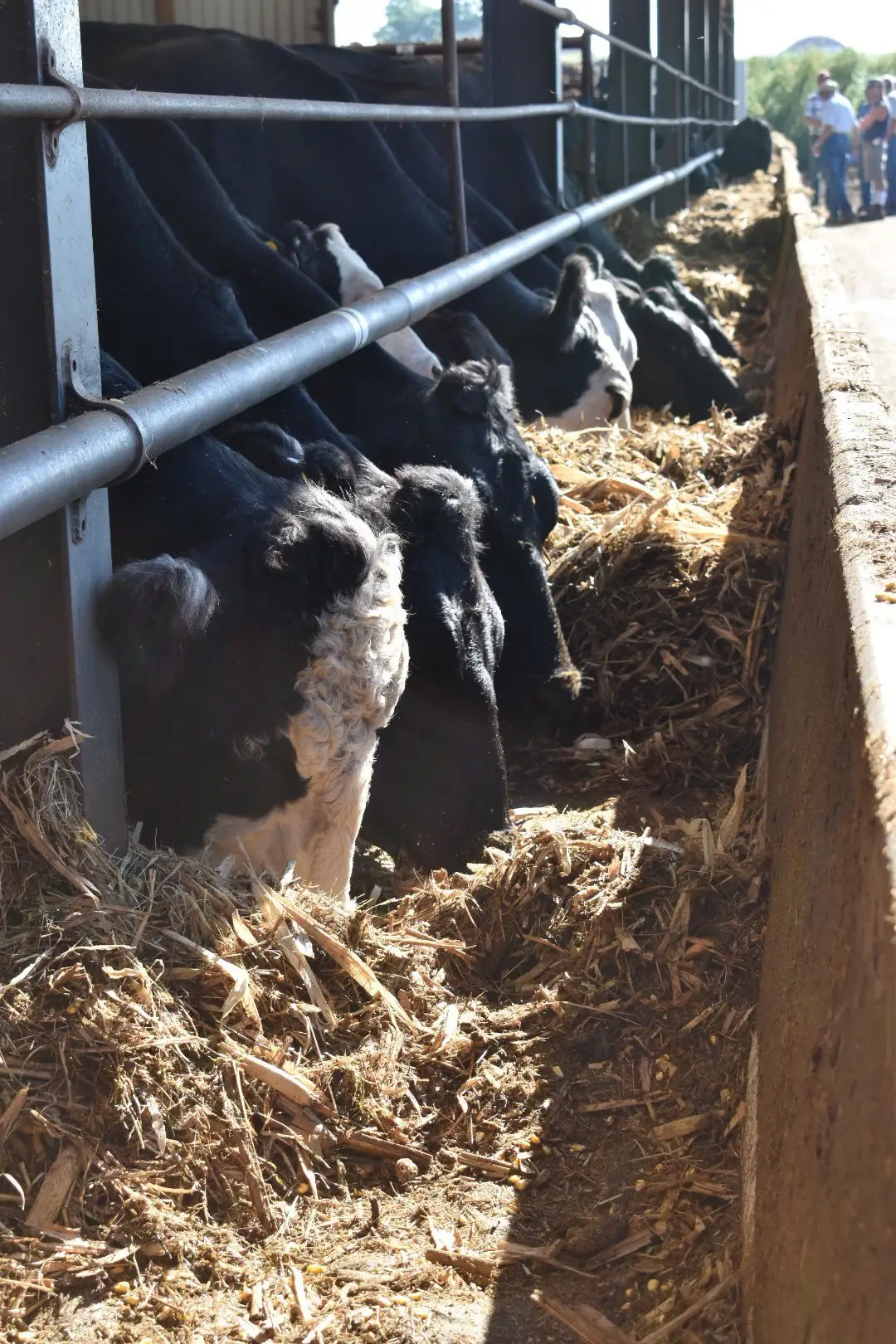
If the decision is made to add weight to cows, controlling feed costs is an important component. Managing feed waste may be the single biggest benefit to controlling feed costs. Dry-lotting cows and providing a total mixed ration (TMR) is an effective way to minimize feed waste and control intake. If a TMR is not an option in your operation, consider limiting cow access to the bale ring. Research from Purdue University has shown that cows can consume their maximum daily intake of dry matter in as little as six hours per day. Limiting hay access and providing a grain supplement will likely be a cheaper alternative to ad libitum hay, especially if hay prices remain high.
As a general rule of thumb, a 1,400-pound cow consuming 2.5 percent of her body weight is eating 35 pounds of dry matter per day with high feed-to-gain conversion. However, by introducing grain into her diet, feed efficiency rates can be improved early in the feeding period. Closeout data from the Iowa Beef Center Feedlot Monitoring Benchmark Report in the spring of 2018 indicated that some pens of cows were achieving average daily gains near 5.0 pound per head per day and had feed conversions below 10.0 pounds of feed per pound of gain during the first few weeks on feed. However, after about 60 days on feed, feed efficiency and rate of gain rapidly starts to decline, and after more than 100 days on feed, average daily gains dropped to 3.0 pound per head per day and feed conversions were 11.0 pounds for the total feeding period. Use of growth-promote technologies such as those commonly used in the feedlot industry can further improve feed efficiency rates of cull cows.
Providing an ionophore is an effective way to improve feed efficiency by 5-10 percent in mature beef cows not only on pasture but also in confinement setting. Adequate bunk space (recommended 2 feet per dry cow) is important to ensure all cows can eat at once. Other options for improving feed efficiency and weight gain include the use of implants or beta-agonists such as ractopamine hydrochloride. Research has shown that while mature cows have minimal response to an estrogen-based implant, the use of androgenic (trenbolone acetate or TBA) or combination implants does improve growth rates. However, the goal of an implant is to increase muscle area, so it may be counterintuitive to white fat deposition as fat deposit occurs after muscle area increase. It is important to ensure you are reading and following the labels when implementing these strategies to add value to market cows.
With a well-balanced ration and proper use of technology tools, value can be added to breeding stock destined for cull market efficiently and in a timely manner. If resources are sufficient, feeding cull cows for approximately two months can yield profits from adding weight and conversion of yellow fat to white fat in non-fed beef. However, keep in mind that after about 100 days on feed, feed efficiency and rate of gain of mature cows will decline and the concern of discounted prices from carrying too much fat cover increases. For more information on feeding cull cows, consult with your local extension beef specialist, nutritionist, and veterinarian. —Erika Lundy, Iowa State University Extension beef specialist