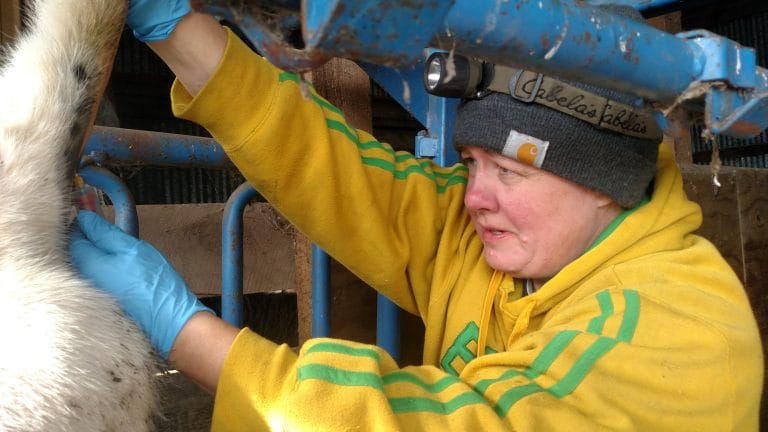
This time of year, as you are chipping away at the inches-thick ice atop the water trough, you may catch that little voice in the back of your mind asking ‘Why?’ Why do I put myself through this? The thought probably dances through your wool-capped head for a brief moment, but then you remember: It’s the lifestyle. The heritage. The connection to the land and livestock. The pride in what you’ve built and what you will pass along to the next generation. Yet, these pleasures of ranch life simply wouldn’t exist if it weren’t for the millions of people who choose to buy and eat beef.
When it comes down to it, our day-to-day lives revolve around consumer demand for beef and their confidence in our product. Of the various components that contribute to beef demand, ensuring that consumers trust beef production is where producers can have a big impact.
Recent data from the Consumer Beef Tracker found that 71% of consumers consider how food was raised or grown when making a purchasing decision, but only 26% said they know about how cattle are raised. In the same study, 35% of consumers noted they had a concern with how cattle are raised, with animal welfare topping the list. They had the same perspective on sustainability, listing animal welfare as the most important component, even ahead of water usage and climate change.
Based on this data, there are clear conflicts between consumer perception and the reality of how we raise cattle. However, when those same consumers were asked what sources they find to be credible regarding beef production, their No. 1 response was farmers and ranchers. Cattle producers have an incredible opportunity to enhance consumer trust by improving our visibility and demonstrating our commitment to cattle care.
From my perspective, there is an easy way to do both of these things. Participating in the Beef Quality Assurance (BQA) program provides a platform for producers to share their commitment to raising cattle “the right way.” BQA is designed to not only enhance cattle wellbeing, which consumers are apprehensive about, but it also improves meat quality and safety—both key components in maintaining beef demand. By educating producers on scientifically proven cattle management standards, the BQA program has helped the industry grow beef demand from its steep declines in the 1980s to the new heights we see today. The best part is that BQA can be easily implemented and maintained on cattle operations across the U.S., no matter the industry segment, operation size or business structure.
BQA doesn’t teach you how to chop ice, rather it makes sure that all cattle producers are on the same page about the importance of always providing fresh water and feed to cattle—and avoiding feed and water disruption for longer than 24 hours. Our friends in Minnesota have defrosting water down to a science, while those in Mississippi have other challenges that BQA can help address. Consumers don’t need to know the nuances of cattle production, but we have to share the basics. BQA is the vehicle that carries our message. It shares the fact that we care for our cattle, we prioritize their wellbeing, provide healthcare via licensed veterinarians, keep detailed records on each animal in our care, ensure proper nutrition, provide safe transportation, and that cattle producers are just good stewards of our land and livestock.
As an industry, let’s unite around building consumer trust in beef production. Get BQA certified. It’s an easy step that shows your commitment to doing the right thing. Even if you are already practicing BQA, put an official BQA stamp on your operation by attending a training or completing the free online educational modules. The more beef producers under the BQA umbrella, the more positive influence this program can have on enhancing consumer perception of our industry. Don’t forget the small things, like brief conversations at the gas pump, or donating beef to the school lunch program, that play a big role in enhancing the beef industry’s image.
Consumers probably don’t know that you’ve been chopping ice in sub-zero temperatures, but that information would likely change their perspective. After all, people don’t care what you know, they care how you make them feel. We can make them feel our commitment to providing safe, nutritious beef, even on the hardest (and coldest) days. Let’s help them to trust our practices, our product and our way of life. — Libby Bigler, Eaton, CO
(Libby Bigler is the Colorado BQA coordinator.)