We always hear about endangered species of the West, but what about endangered livestock breeds? The Texas Longhorn is one of the most recognizable breeds across the nation. But this iconic breed could go extinct in a few generations.
According to the Livestock Conservancy, a group dedicated to protecting and conserving endangered livestock breeds, the Texas Longhorn is a critically endangered breed. The group estimates the global population of Texas Longhorns to be just over 3,000 animals, with approximately 1,200 Longhorns existing within the U.S.
The group also says losing the breed would mean losing its “unique genetic variations and adaptions.” These include disease resistance, high fertility, longevity, calving ease, and ranging ability “that surpasses other breeds that were selected by man,” according to the group.
The University of Cуrdoba, Spain, has documented that true purebred Texas Longhorns have a unique “New World Criollo” makeup that is rare throughout Europe, Asia, and Africa. The breed is descended predominantly from historic lines of Spanish and Portuguese breeds introduced to the Americas around 500 years ago with some other minority influences.
The Cattlemen’s Texas Longhorn Registry has strict guidelines to determine animals’ eligibility for purebred registration. In addition to a visual assessment, cattle must pass a DNA test that proves no genetic impurity.
A partnership of God and cowboy
David Holmgren, owner of Rawhide Ranch in Luning, NV, just may well be one of the last large operations of purebred Longhorns. His cattle have remained isolated from any other herd or breed so far, a detail that led the Livestock Conservancy to describe Holmgren’s herd as “of great potential conservation importance” when it comes to purebred genetics.
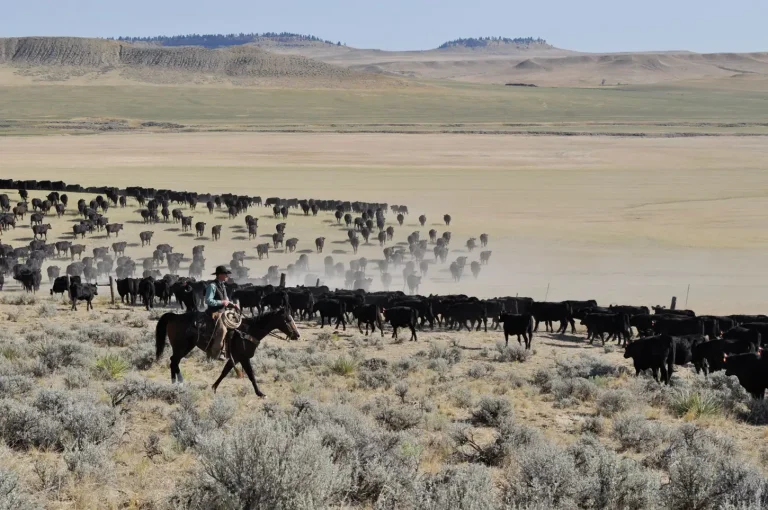
Holmgren’s 540,000-acre ranch “doesn’t have a cross fence on it,” and he thinks it is likely the “biggest single cow pasture left in America.” The allotment consists of more than 90 wells and springs, and somewhere around 400 mother cows and company run freely throughout the property.
His family began using Longhorn bulls on their heifers for calving ease on the Montana family ranch back in 1978. Holmgren purchased his own herd of Longhorns from a producer in St. Louis, MO in 1997.
Holmgren told WLJ he does not supply any feed or mineral supplements, utilize antibiotics or hormone implants, or keep records.
“God runs the herd,” Holmgren said, “and I run the herd. I give God his part as much as I can and then I cull them and harvest them.”
“Man spends too much time making cattle into what they want instead of allowing them to be free and not intervened with as much,” he continued. “They run as if they were on the range of Montana in 1880.”
Holmgren has also developed a small business out of selling Longhorn beef, claiming he even has a lifetime dental program with payment by way of trading meat for service.
Even though the cattle roam freely on a massive land allotment, Holmgren said they take care of predators themselves. Although the ranch hasn’t encountered a wolf problem, he said, feral horses can cause a challenge when they arrive and take over water wells, kicking the cattle out of the area.
Conserving the breed
The Livestock Conservancy classifies Holmgren’s herd as a high priority for conservation due to its foundation decades ago and its isolation from other herds within the breed. The entire Holmgren herd originates from an “important Texas Longhorn root,” and the unique situation of isolated sub-herds within the ranch has allowed for genetic distinctions to persist.
The herd is in the beginning stages of a documentation process, estimated to take several years. The process utilizes DNA to identify which portions of the herd are most integral to conservation of Texas Longhorns, according to a letter the Livestock Conservancy sent Holmgren.
The group recommends Holmgren continue management as he has, because any changes to infrastructure could “upset the natural subdivisions within the population, erasing the genetic uniqueness of the important portions of the herd.”
Following results of the DNA documentation process, efforts will be focused on expanding the conservation population, and diminishing or eliminating the others.
“These genetics will prove of economic value and may be found to possess traits capable of saving more delicate breeds from disease outbreaks,” the letter read. “In the absence of conservation through isolation, that option will no longer be as advantageous as now.” — Anna Miller, WLJ editor