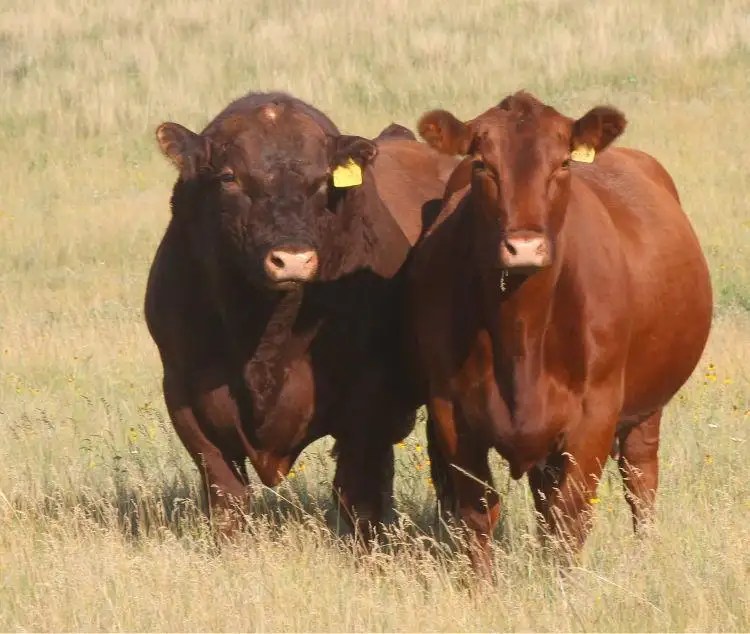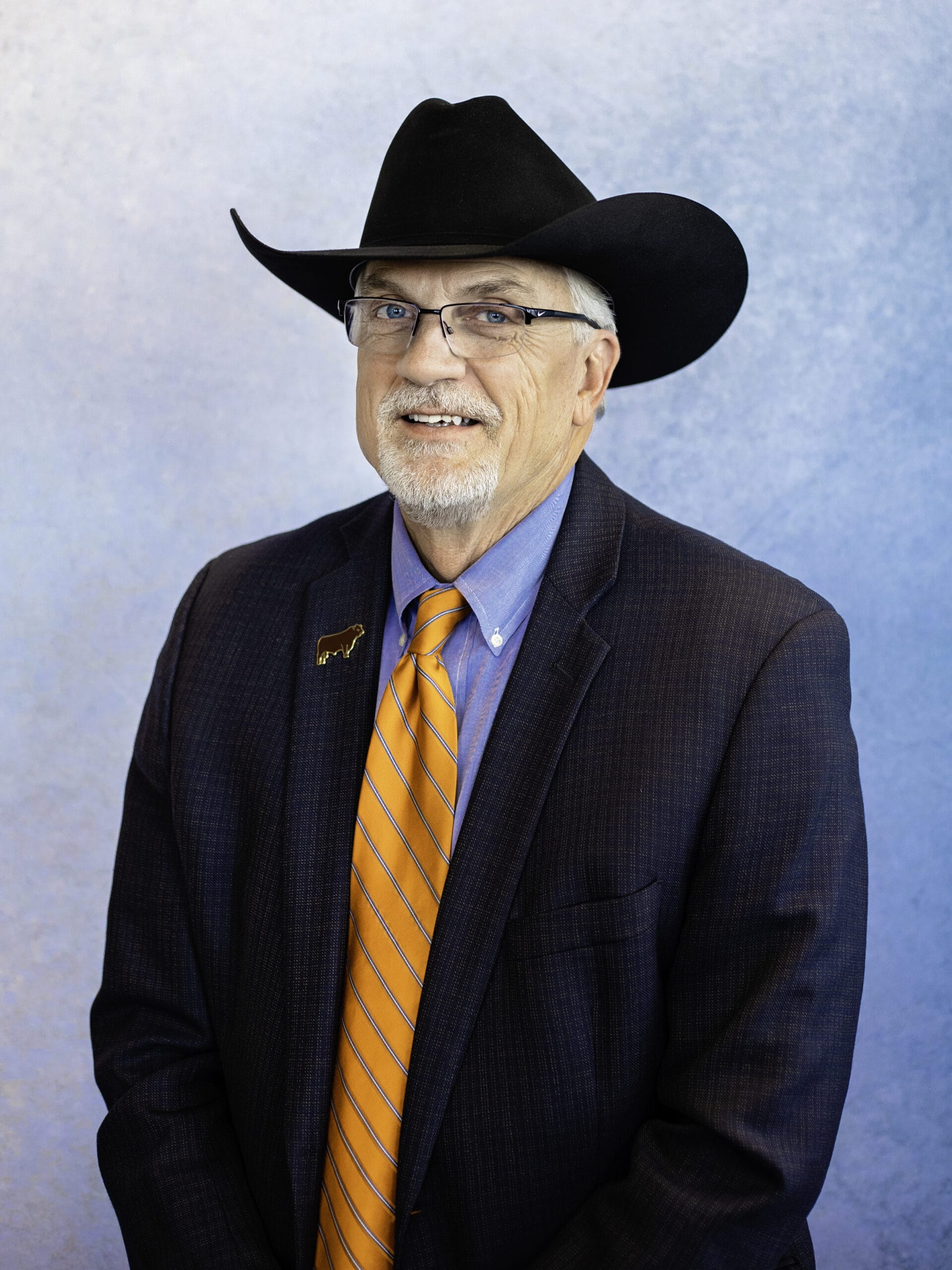
This past fall, the Red Angus Association of America (RAAA) welcomed Greg Ruehle as its new executive vice president, bringing fresh energy and a wealth of experience to the breed’s leadership.
Greg stepped into his role at RAAA at a pivotal time. At this point in the cattle cycle, we are faced with the smallest U.S. cow herd in 75 years but also have record-high consumer demand for beef. As Greg explains, this makes the perfect storm for the breed.
“We’ve seen strong industry acceptance for the breed producing high-quality feeder calves and meeting consumer demand in a way that few other breeds can,” he told WLJ.
“The challenge and the opportunity is how do we capitalize on that right now—when there is such a clear signal sent up from the consumer—in a meaningful way back through the breed and have it touch the commercial breeder and the seedstock producer so that they all benefit through the process,” Greg continued.
Growing a passion for the industry
Today, Greg and his wife, Kari, have two children, Grace and Kyle, and live in Stillwater, OK, on a small cattle operation. Although now a proud Oklahoman, Greg’s roots in agriculture were first planted in northwest Iowa, where he grew up on a diversified livestock and grain farm raising cattle, hogs and row crops.
“It was always a challenge for me that tractor seat never fit me quite as well as a saddle on a horse,” Greg said. “The tug for me always was a little bit further south.”
That pull led him, straight out of high school, to enroll in the ranch management program at Texas Christian University. And so began his interest and passion for the cattle industry. From there, Greg went to work on two purebred Limousin operations, one in Oklahoma and another in Virginia, where he managed show and sale cattle. After nearly five years, he felt drawn back to the classroom and enrolled at Oklahoma State University (OSU), earning a degree in animal science while competing on the meat judging team.
It was the summer between his junior and senior years at OSU, however, that Greg credits with shaping his long-term career trajectory. As an intern with the National Cattlemen’s Beef Association in Washington, D.C., he worked on issues surrounding the farm bill and quickly found a passion for policy and advocacy.
“I really enjoyed representing producers and being their voice in those discussions,” he said.
After graduation, Greg returned to NCBA full time, spending the next five years in the policy division working on environmental and regulatory issues ranging from the farm bill to the Clean Water Act and Endangered Species Act.
His next chapter brought him back closer to the countryside as he took the helm of the Nebraska Cattlemen. The role, he said, proved formative.
“That role really set the course for where I wanted to go from a career standpoint,” he said. “To be able to take that practical experience from being a farm and ranch kid and apply it at a business level for the association.”
After a decade in Nebraska, Greg stepped outside the cattle industry to serve as CEO of ServiTech, a crop consulting and laboratory testing cooperative. The position broadened his perspective, giving him experience managing a larger organization and a more expansive workforce. Still, he felt the pull to explore new ground, leading him into the startup space as an agricultural liaison focused on sustainability and carbon sequestration.
While those roles expanded his view of the agriculture industry, the opportunity to return to cattle proved irresistible. When the executive vice president position at RAAA opened in October, Greg didn’t hesitate.
At the helm of opportunity
Over the years, Greg has watched the Red Angus breed grow and progress. “Red Angus has evolved from a respected commercial breed—which it continues to be—to much more than that,” Greg explained. “It’s grown to a breed where the females are recognized for their contribution to the beef industry, to bulls that cross well with a number of breeds, to a breed that contributes high-quality product to meet consumer demands and does so in an efficient way.”
He has seen demand for Red Angus grow steadily, with show numbers and ratings climbing each year. At the 2026 Cattlemen’s Congress in Oklahoma City, OK, nearly 600 entries competed in the Red Angus show, and the Red Angus Youth Expo drew more than 250 junior entries in its second year.
“Things are going right in the Red Angus breed, and for me, that’s where you want to be,” he said. “You want to be on the team that is doing things well and making a difference. And that’s exactly how I view Red Angus today.”
Greg said his leadership at Red Angus has been shaped by his time at each of his previous associations and companies, particularly his early years with Nebraska Cattlemen. Those years helped to instill a servant-leadership mindset that continues to guide how he works with staff and association members.
He also emphasizes the importance of constant learning, whether through new programs, services or ideas from industry conversations, it is essential to keeping the association relevant and valuable to its members.
“It’s vital to make sure that we are always at the cutting edge in terms of the services we provide to our members and what we can do to help them be as proactive and successful as they can be in the cattle industry,” he said.
Advancing the breed
Red Angus has long prioritized data-driven breed improvement, with perhaps the best example being that the breed was the first to require mandatory reporting of all cows and calves through Total Herd Reporting (THR). Three decades later, THR has paved the way for continued advancements in genetic tools and tests.
“I see us building on those successes from the early days, continuing to be the champion of THR, explaining to producers why it’s valuable and making sure commercial cattlemen understand the benefits they could get by relying on Red Angus genetics and the related EPDs and genomically enhanced EPDs,” Greg said.
For Greg, these tools are only as valuable as the results they deliver. He noted feeder cattle being pushed to heavier weights over the past few years due to straining cattle supplies. “This can’t be the new norm,” Greg said, adding that heavy carcasses strain retail and foodservice and ultimately impact consumer beef demand.
As the industry looks to rebuild the cow herd, the focus is going to be on moderate-sized, highly efficient animals that can contribute high cutability and high carcass value to their offspring, Greg said. And to him, there’s only one breed that fits the bill: Red Angus, either as a purebred or within a crossbreeding system.
Red Angus can serve as a cornerstone in several crossbreeding programs. One of those efforts was recently revamped in the fall. Previously limited to a narrow Santa Gertrudis-Red Angus cross, the American Reds program now allows for a wider range of Bos indicus influence. Under the updated framework, qualified cattle can be 25-75% Red Angus and 25-75% Bos indicus influence.
“We’re looking forward to some really great opportunities, especially as we rebuild the cow herd in the South or areas that have been decimated by drought,” Greg said. “We know that type of cow can make a very positive contribution to the cow herd.”
Greg sees the breed’s next opportunity in leveraging both Red Angus sires and Red Angus-influenced cows and to help rebuild and improve the national cow herd.
But without the people that make up the organization, the breed improvement wouldn’t be possible. As Greg puts it, “Great cattle, better people.” — Anna Miller Fortozo, WLJ managing editor